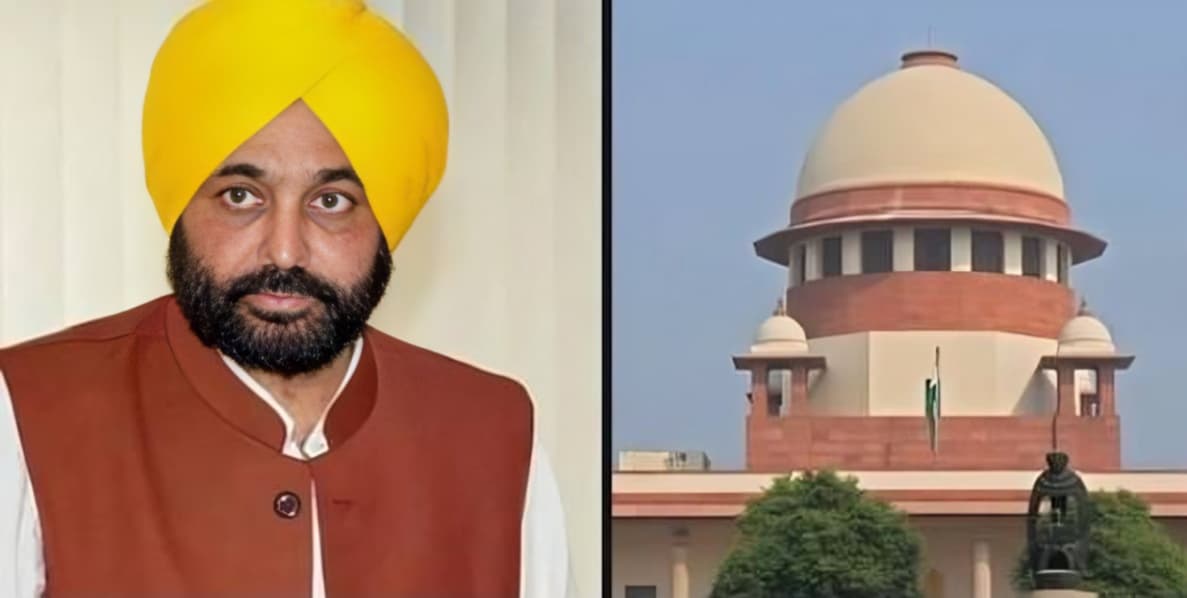

The Supreme Court has criticised the practice of what it described as luxury litigation, warning that prolonged and avoidable legal battles can occupy valuable judicial time and delay cases involving genuine grievances.
A bench comprising Justices Vikram Nath and Sandeep Mehta made the observations while dealing with a dispute that had continued for nearly 11 years before different legal forums. The court ultimately rejected the pleas and imposed costs of Rs 5 lakh on each of the two litigants.
The case involved actress Rehana Khan and her lawyer Rizwan Siddique, who had pursued legal proceedings relating to their dispute before several forums, including the Bar Council of India, the Bombay High Court and the Supreme Court. The bench noted that both sides had spent a significant amount of judicial time pursuing their respective claims.
According to the court's observations, each side had approached the courts alleging that the other had committed a wrong. However, the bench noted that both parties had also contributed substantially to the continuation of the dispute. The court therefore viewed the prolonged proceedings as an example of litigation that had placed an unnecessary burden on the judicial system.
The Supreme Court highlighted the wider impact of such litigation on other people waiting for their matters to be heard. The bench observed that many ordinary litigants, including those who may have limited financial resources, remain in queues for years before their cases receive judicial attention.
The court's remarks underline the principle that judicial time is a limited public resource. When courts are required to repeatedly examine disputes that could otherwise have been resolved earlier, other cases may face delays. Such delays can be particularly serious for litigants seeking relief in matters involving personal rights, employment, property, family disputes or other urgent concerns.
The expression luxury litigation has previously appeared in Indian judicial discussions concerning cases pursued because of personal grievances, ego, greed or attempts to delay proceedings. The Supreme Court has in earlier judgments also stressed the importance of realistic costs as a possible deterrent against vexatious litigation and unnecessary use of court proceedings.
In the present case, the bench's decision to impose Rs 5 lakh on each litigant sends a clear message that parties cannot expect courts to repeatedly entertain prolonged disputes without consequences. The financial costs imposed by the court are intended to reflect the seriousness with which unnecessary consumption of judicial resources is viewed.
The court also emphasised the importance of approaching the judiciary with clean hands. The principle requires litigants to present relevant facts honestly and transparently and avoid withholding information that could affect the court's assessment of a dispute.
The ruling has broader significance for the judicial system because the Indian courts continue to deal with substantial litigation across civil, criminal, constitutional and commercial matters. Efficient use of court time is therefore important for ensuring that genuine cases are heard without unnecessary delay.
The Supreme Court's observations do not mean that individuals who have sufficient financial means are barred from approaching courts. Rather, the concern expressed by the bench was directed at prolonged, avoidable or improperly pursued litigation that consumes judicial resources without proportionate justification.
The decision also reinforces the role of costs as a judicial tool. Traditionally, courts have often imposed relatively modest costs in many matters. However, Indian courts have repeatedly acknowledged that insufficient costs may not effectively discourage vexatious or strategic litigation designed to delay proceedings.
The latest Supreme Court order therefore places renewed emphasis on responsible use of the judicial process. Litigants are expected to pursue genuine legal remedies while avoiding unnecessary proceedings, repeated challenges or conduct that unnecessarily prolongs disputes.
For ordinary litigants waiting for their cases to be heard, the court's comments underline an important principle of access to justice. Court time is not unlimited, and its efficient use is essential to ensure that cases involving genuine and pressing grievances are not pushed further down the queue.
The Rs 5 lakh costs imposed on each party also serve as a reminder that prolonged litigation can have consequences beyond legal expenses. Courts may take into account the wider impact of unnecessary proceedings on the justice delivery system when deciding whether costs should be imposed.
The Supreme Court's latest observations are therefore likely to add further momentum to the debate over judicial efficiency, realistic costs and the need to discourage vexatious or avoidable litigation in India.