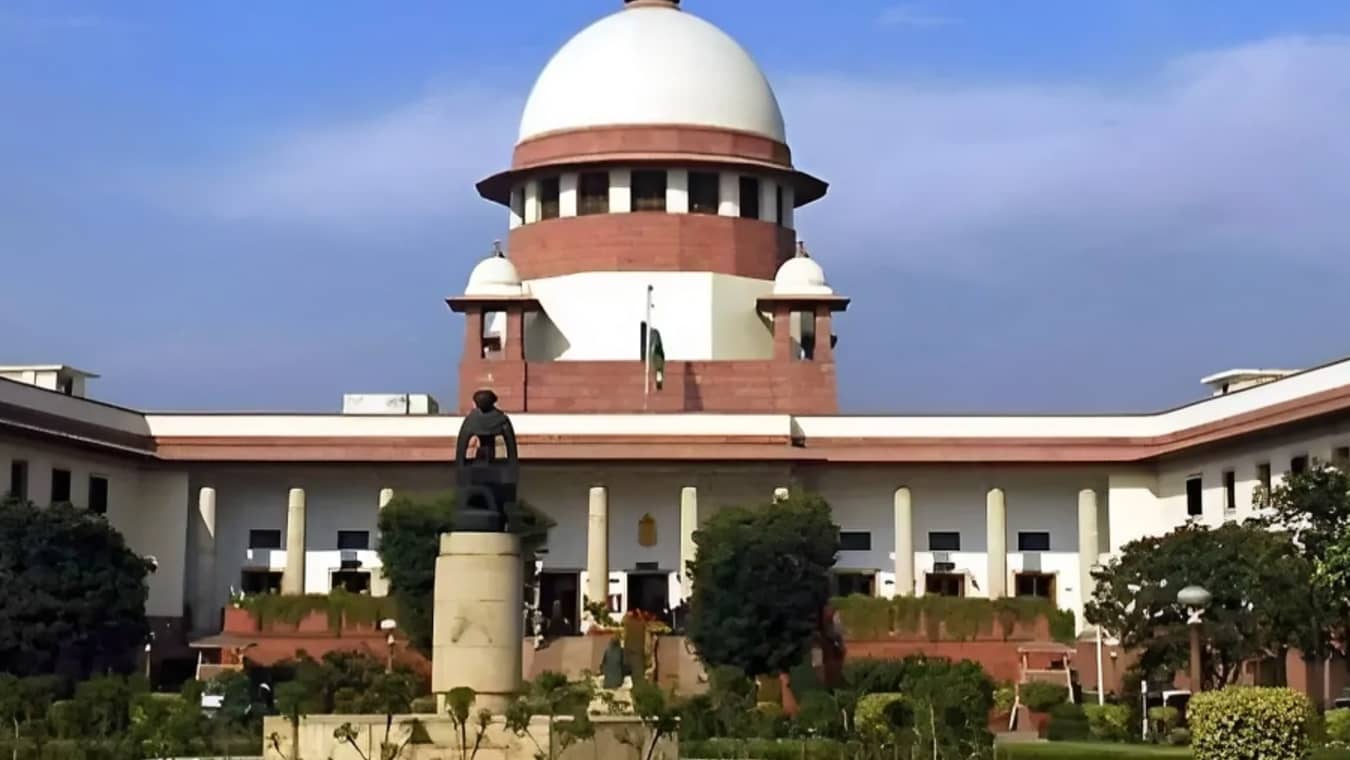
The Supreme Court of India has referred the issue of the two-child norm for contesting local body elections to a larger bench, raising questions about whether restrictions on candidates having more than two children remain relevant in the country's changing demographic conditions.
A bench comprising Justice P.S. Narasimha and Justice Alok Aradhe made the observations while hearing a petition filed by Mangala Bhimrao Ingle, a former sarpanch from Maharashtra. She had challenged her disqualification under the Maharashtra Village Panchayats Act, 1959, after authorities held that she had incurred disqualification for having a third child.
During the proceedings, the Supreme Court expressed the view that laws penalising people for having more than two children have lost their relevance. The bench pointed to India's declining total fertility rate and noted that the demographic situation has changed considerably since the court upheld the two-child norm in 2003.
The court referred to its judgment in Javed v. State of Haryana, delivered in 2003. In that case, a three-judge bench of the Supreme Court upheld provisions of the Haryana Panchayati Raj Act, 1994, which disqualified individuals with more than two living children from contesting certain local body elections.
At the time, the restriction was considered a measure intended to encourage family planning and address concerns about population growth. However, the present bench observed that India's total fertility rate had declined from approximately 3 in 2003 to 1.9, below the replacement fertility level of 2.1.
The replacement fertility rate is the average number of children per woman required for a population to replace itself from one generation to the next, in the absence of migration. The court noted that a sustained decline below this level could contribute to demographic changes, including an ageing population and a reduction in the proportion of working-age people.
The bench also raised constitutional concerns about excluding people from democratic participation because they have more than two children. It observed that such restrictions could affect reproductive autonomy, which is connected to the right to life and personal liberty under Article 21 of the Constitution.
According to the court's observations, disqualifying individuals from contesting elections on the basis of family size raises questions about whether the restriction has a reasonable connection with a person's ability to hold public office. The bench also noted that such provisions could place individuals in a difficult position between decisions about having children and their opportunity to participate in local democracy.
The case originated from Mangala Bhimrao Ingle's election as sarpanch of Kakoda Gram Panchayat in Maharashtra. Proceedings were initiated against her under Section 14(1)(j-1) of the Maharashtra Village Panchayats Act, 1959. The provision disqualifies a person from holding the relevant elected position if they have more than two children, subject to the conditions prescribed by the law.
The authorities disqualified her, and her challenge was subsequently rejected by the Bombay High Court. She then approached the Supreme Court, questioning the decision. The Supreme Court had earlier stayed the operation of the High Court's order while considering her appeal.
The larger issue before the court extended beyond the individual dispute. During earlier hearings, the bench sought information about similar two-child restrictions in different states. Advocate Rukmini Bobde assisted the court as amicus curiae, helping compile information about the laws and their current status.
The material placed before the court indicated that several states had repealed such provisions, while others did not have a comparable policy. Some states, including Assam, Goa, Gujarat, Maharashtra, Odisha and Uttarakhand, were identified as continuing to retain two-child restrictions in certain contexts.
By referring the issue to a larger bench, the Supreme Court has opened the way for a broader examination of the legal principles established in the Javed judgment and their application in present-day circumstances.
The reference does not mean that the two-child norm has been automatically abolished across India. The constitutional validity and continued applicability of such provisions will require consideration by the larger bench. The proceedings could have implications for state laws that impose disqualifications based on the number of children, particularly in elections to panchayats and other local bodies.
The development has brought renewed attention to the relationship between family planning policies, changing population trends, reproductive autonomy and democratic representation in India.