
Vande Mataram emerged as a central cultural element during this year’s Republic Day celebrations, with special emphasis placed on the national song as part of the commemoration of its 150th anniversary. The celebrations began with a soft flute rendition of Vande Mataram, setting a solemn and patriotic tone for the parade along Kartavya Path.
The closing segment of the event further highlighted the song’s significance, as nearly 2,500 artistes from across India’s states and union territories came together to perform a specially composed version. The large scale performance symbolised national unity and cultural diversity, drawing attention to the enduring relevance of the song in India’s freedom movement and national identity.
The milestone anniversary of Vande Mataram has been actively highlighted by the ruling National Democratic Alliance, which has consistently emphasised the song’s historical and cultural legacy. The focus on the national song during the Republic Day programme reflected a broader effort to underscore its role in shaping patriotic consciousness during the independence struggle.
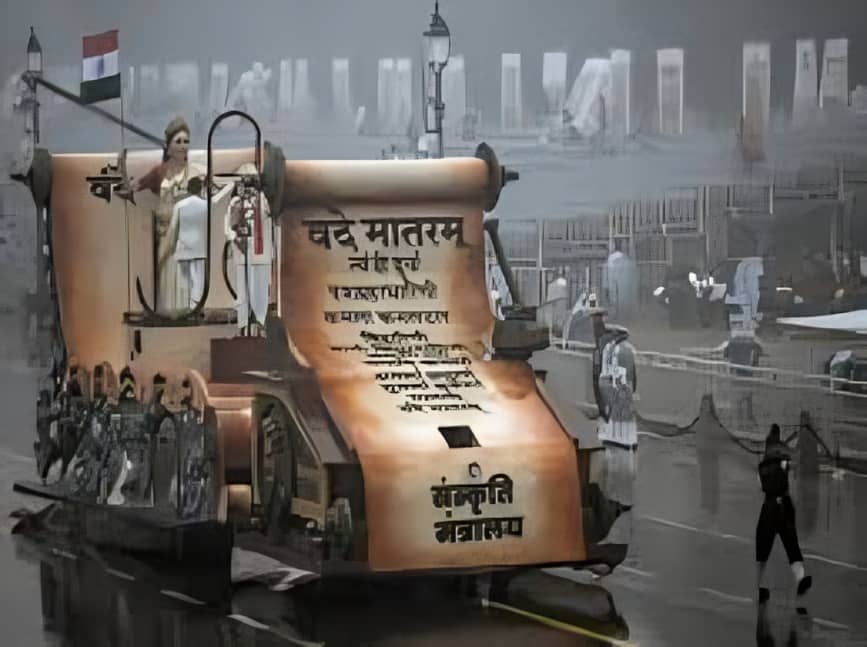
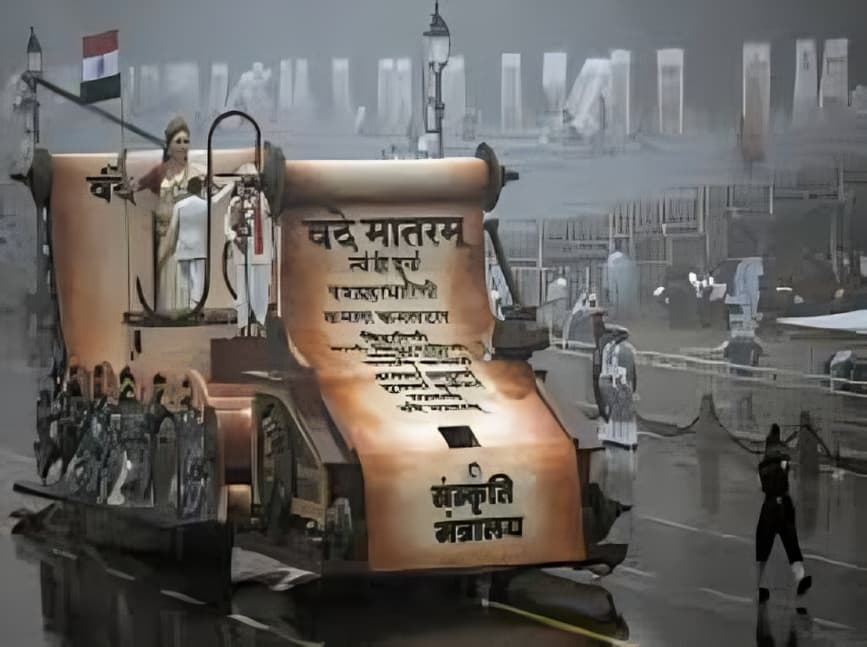
West Bengal’s tableau drew particular attention for its thematic connection to Vande Mataram. The tableau showcased the state’s association with the national song and paid tribute to its author, Bankim Chandra Chatterjee. Alongside his statue, the tableau featured prominent figures from Bengal’s intellectual and freedom movement history, including Swami Vivekananda, Rabindranath Tagore and Netaji Subhas Chandra Bose.
The choice of theme by the Mamata Banerjee led West Bengal government was seen as highlighting the state’s cultural and historical contributions to the national movement. The tableau reflected Bengal’s long standing role in shaping India’s political, spiritual and literary traditions, many of which influenced the freedom struggle.
Observers noted that the emphasis on Vande Mataram at the national event came amid ongoing political discussions over cultural symbolism and heritage. While the Republic Day programme remained focused on unity and national pride, the presentation of historical narratives through music and tableaux also reflected broader political and cultural conversations.
The Republic Day celebrations concluded with the mass performance of Vande Mataram, reinforcing the song’s place as a unifying force that transcends regional and linguistic boundaries. The carefully choreographed presentation highlighted how cultural heritage continues to play a central role in national events, blending history, art and patriotism.
As India marked another Republic Day, the spotlight on Vande Mataram served as a reminder of the country’s shared past and the enduring symbols that continue to shape its national identity.


