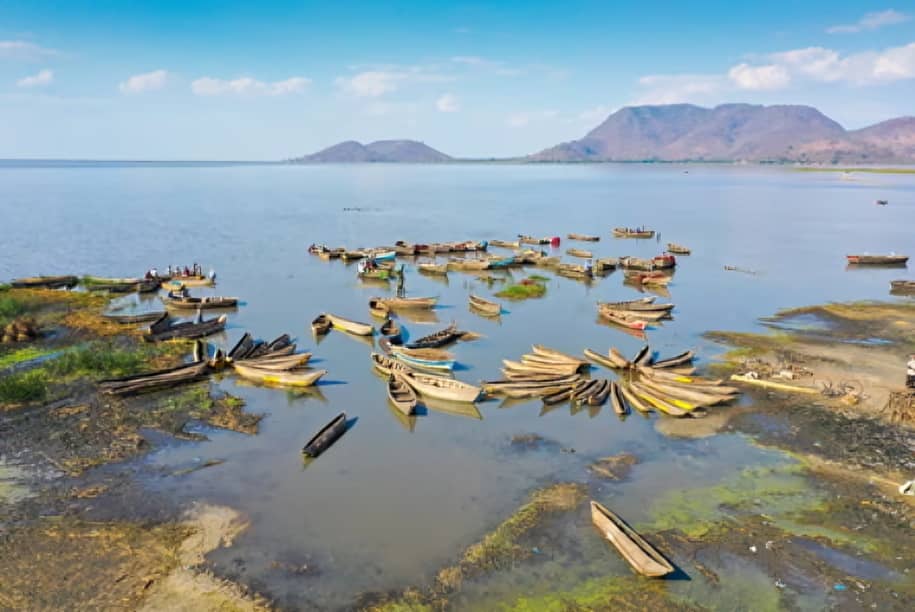
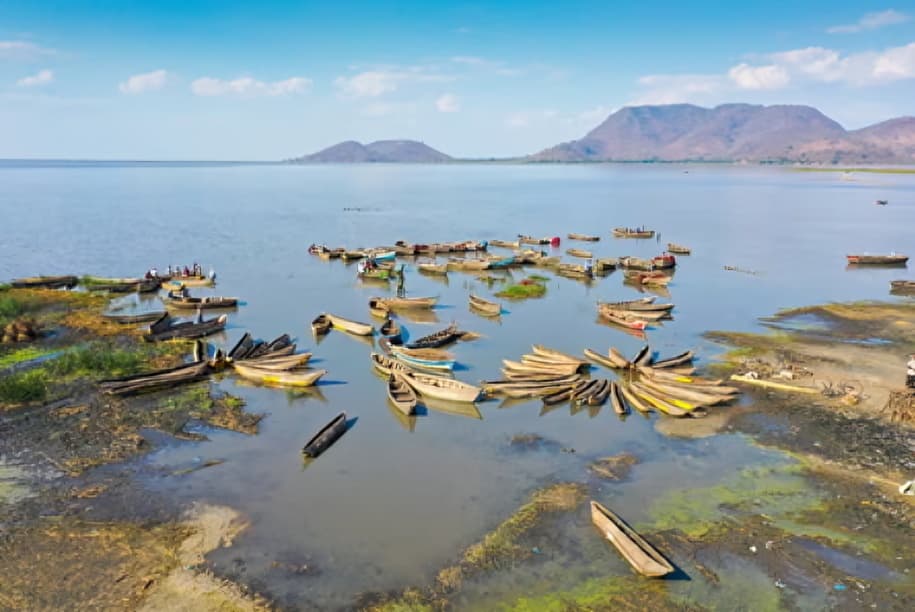
Lake Chilwa in southern Malawi has begun to refill after enduring two years of severe drought, bringing renewed but cautious optimism to local communities that rely heavily on fishing. The shallow, rain fed lake is one of the most important sources of livelihood in the region, supporting thousands of families through fishing and related businesses. However, recent climate extremes have exposed the vulnerability of this fragile ecosystem.
During the prolonged drought, Lake Chilwa dried up significantly, disrupting economic activity and daily life. At one point, residents were able to walk to Chizi Island, a destination typically accessible only by boat. The drying of the lake severely impacted fish stocks, local markets and household incomes. Many fishing families were forced to seek alternative sources of income as boats remained idle and nets went unused.
With the return of rainfall, water levels have improved and fishing has resumed. However, fishermen report that catches are smaller and less consistent than before. The size and quantity of fish have declined, affecting overall earnings. Some fishermen say that on a good day they now earn between 15 and 25 dollars, far below what they made prior to the drought. For many households, the lake no longer provides the financial stability it once did.
Environmental researchers attribute the dramatic fluctuations in Lake Chilwa’s water levels to increasingly erratic rainfall patterns linked to climate change. The lake naturally experiences cycles of expansion and contraction, but scientists warn that climate variability is intensifying these swings. Irregular rainfall, rising temperatures and shifting weather systems are placing additional stress on already fragile ecosystems across southern Africa.
Local officials and community leaders are calling for stronger environmental protection measures and better enforcement of fishing regulations to preserve remaining fish stocks. They emphasize the need for sustainable management practices to prevent overfishing and environmental degradation. Conservation efforts, they argue, are essential to ensuring that the lake can continue to support future generations.
At the same time, community leaders are encouraging residents to diversify their livelihoods. With uncertainty surrounding future rainfall patterns, many are being advised to explore alternative economic activities. Rice farming in the exposed mudflats has emerged as one potential option, offering a supplementary income source during periods when fishing is less viable.
Despite the challenges, the return of water has restored a sense of temporary relief. Boats are once again visible on the lake, and markets are gradually reopening. Yet uncertainty persists for the thousands who depend on Lake Chilwa for survival. Experts caution that without long term climate adaptation strategies and sustainable resource management, recovery may remain fragile.
For now, Lake Chilwa has returned, but the long term stability of this vital ecosystem and the communities it sustains remains uncertain.