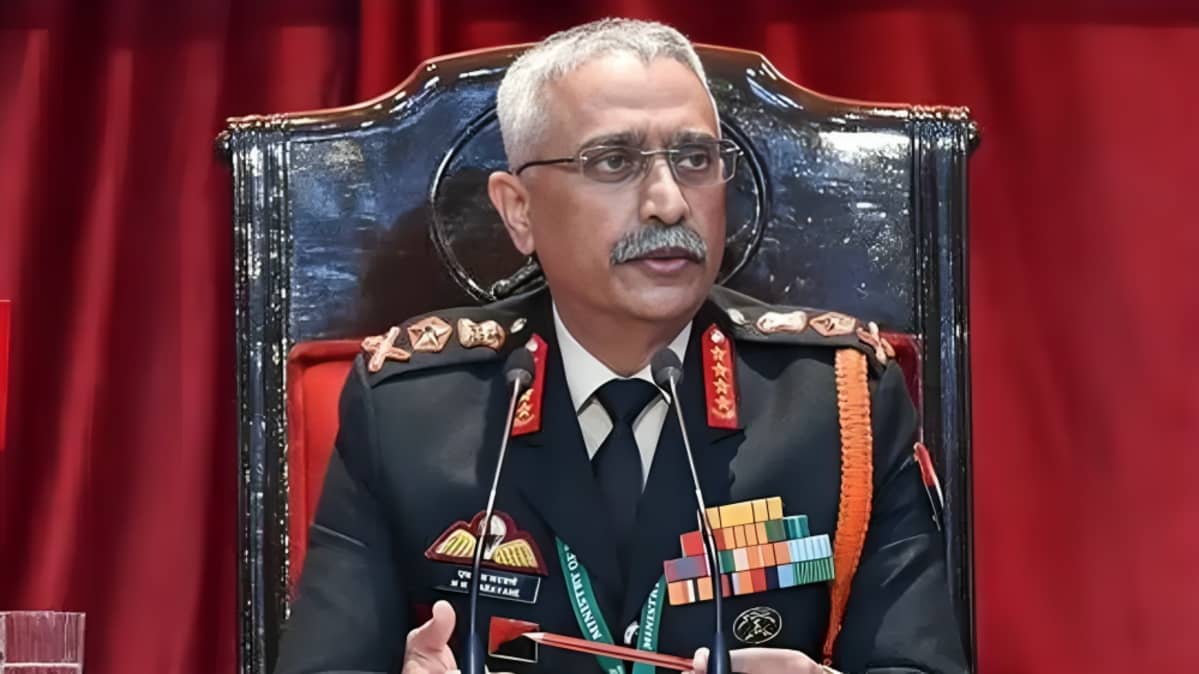
Former Indian Army Chief General Manoj Naravane has described China as India’s main long term competitor, saying the relationship between the two countries will involve competition across political, economic, trade and military areas.
Naravane made the remarks while speaking at the launch of his book, The Curious and the Classified: Unearthing Military Myths and Mysteries, in Pune. He distinguished between the security challenges posed by China and Pakistan and said both countries would continue to remain important considerations for India because of their unsettled borders and history of military conflict with India.
According to Naravane, Pakistan and China represent different kinds of challenges. He said India's immediate attention towards Pakistan has largely been driven by the continuing threat of terrorism, while China is expected to become the country's principal competitor over the longer term.
Naravane deliberately described China as a competitor rather than an enemy. He said the competition would extend well beyond military affairs and would involve political influence, economic activity, trade and strategic interests.
The former Army chief said competition between major countries can sometimes result in differences and conflict. However, he stressed that India should attempt to manage such differences through dialogue and diplomatic mechanisms rather than immediately turning to military force.
At the same time, Naravane emphasised that diplomatic engagement should be supported by credible military preparedness. He argued that India's armed forces need to remain ready to respond to potential security challenges and that strong deterrence can discourage an adversary from considering military action.
His comments come against the backdrop of India's complicated security relationship with China. India and China have unresolved boundary issues, particularly along the Line of Actual Control. The relationship witnessed serious tensions following the 2020 military confrontation in eastern Ladakh.
Naravane served as Chief of the Army Staff from December 2019 to April 2022 and was Army chief during the period when the India China military standoff in eastern Ladakh began. His assessment of China's long term role therefore comes from his experience of India's security environment during a period of heightened tensions along the northern border.
Naravane's remarks also highlight the broader nature of India's competition with China. Economic and technological capabilities are increasingly important components of national power, alongside conventional military strength. Competition between the two countries could therefore extend into areas such as trade, infrastructure, technology and geopolitical influence.
Despite the strategic competition, Naravane argued that India should continue using diplomatic channels to manage differences. He said force should remain the last option and that dialogue should be used wherever possible to prevent disagreements from escalating.
His comments underline the importance of maintaining a balance between engagement and preparedness. India needs to maintain diplomatic communication with Beijing while ensuring that its armed forces have sufficient capabilities to protect national interests.
Naravane also spoke about India's wider neighbourhood and the importance of stability in countries surrounding India. He referred to countries including Nepal, Bhutan, Bangladesh and Myanmar and said India cannot choose its neighbours but must work with them to promote stability.
According to the former Army chief, instability in neighbouring countries can have direct consequences for India. Such instability can contribute to refugee movements, smuggling, drug trafficking and the illegal movement of weapons across borders.
He cited developments involving Myanmar as an example of how instability in a neighbouring country can create challenges for India. In his view, supporting stability in neighbouring countries is therefore also connected to India's own security and development.
Naravane's remarks present a broader strategic approach in which military preparedness, diplomacy and regional engagement work together. While India must be prepared for potential security threats, diplomatic mechanisms remain important for preventing unnecessary escalation.
The former Army chief's distinction between Pakistan and China is also significant. While Pakistan continues to be associated with India's immediate security concerns, particularly terrorism and developments along the western border, Naravane views China's growing economic, political and military capabilities as creating a more extensive long term strategic challenge.
He said India should therefore prepare for sustained competition while avoiding an approach that automatically treats China as an enemy. The distinction between competitor and enemy reflects his emphasis on managing rivalry while protecting India's interests.
Military deterrence is central to this approach. A strong and well prepared armed force can reduce the possibility that another country might believe military action against India could succeed. At the same time, maintaining dialogue can provide mechanisms for addressing disputes without resorting to force.
India's security strategy therefore faces the challenge of balancing preparedness with diplomacy. The country's armed forces need to remain capable of responding to threats, while political and diplomatic channels must continue operating to manage differences.
Naravane's assessment also reflects the changing nature of international competition. Major powers increasingly compete across multiple domains rather than only through conventional military confrontation. Economic strength, technological capability, trade relationships and political influence can all shape a country's strategic position.
For India, the long term relationship with China will therefore involve managing competition across several areas while seeking to prevent border tensions from escalating into conflict.
The former Army chief's comments have added to the ongoing strategic debate about India's relationship with its two major neighbouring countries. His central message is that Pakistan and China should not be viewed through exactly the same security framework.
While Pakistan remains an immediate security concern because of terrorism, Naravane expects China to become India's principal long term competitor. He has called for India to combine diplomatic engagement with strong military deterrence and sustained preparedness.
The comments underline the importance of a balanced approach in India's foreign and defence policy. Dialogue can help manage disagreements, while credible military capabilities can ensure that India remains prepared to protect its interests if diplomacy fails.
As India continues to navigate relations with China and Pakistan, the strategic challenge will be to maintain security, economic growth and regional stability while managing competition with its neighbours.
Naravane's assessment ultimately emphasises preparedness without abandoning diplomacy. His view is that India should seek peaceful solutions to differences wherever possible, but must simultaneously maintain sufficient military strength to deter potential threats