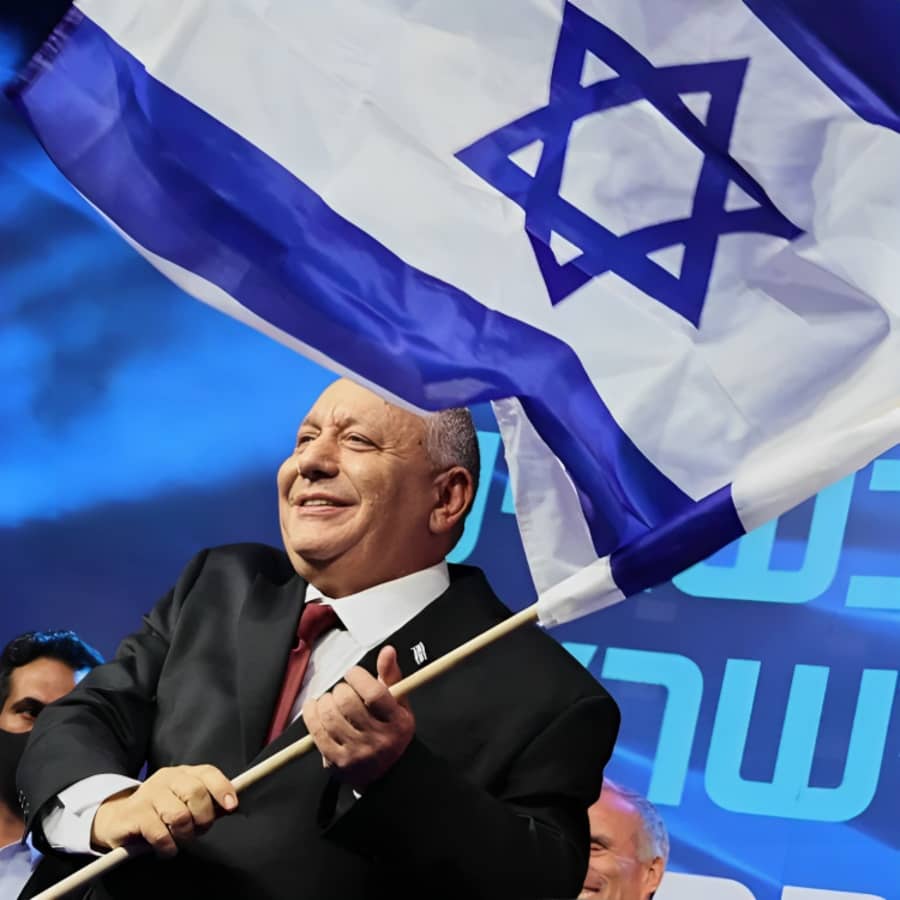
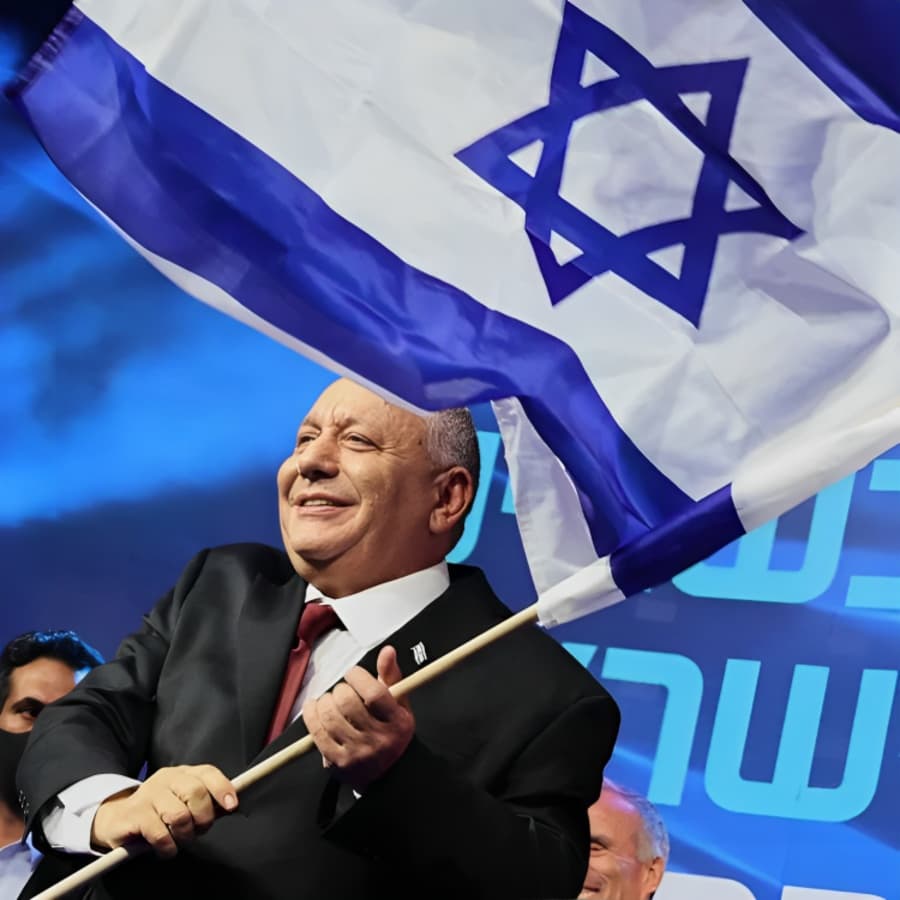
Israeli opposition leader Gadi Eisenkot has gained the backing of 67 lawmakers, compared with 46 lawmakers supporting Benjamin Netanyahu, as he seeks the mandate to form Israel’s next government. The reported figures place Eisenkot ahead in the current political contest and raise questions about whether he can turn this support into a functioning government.
The development represents an important moment in Israel’s political landscape, where the ability to secure parliamentary backing plays a central role in determining who can lead the government. Although Eisenkot appears to have an advantage in the reported support count, the process of forming a government involves more than simply receiving the support of a larger number of lawmakers.
His next challenge will be to bring different political groups together, agree on a common programme and establish a coalition capable of maintaining parliamentary support. The outcome will depend on whether the backing he has received can be translated into a stable governing arrangement.
Eisenkot Gains an Advantage Over Netanyahu
The reported figures show that 67 lawmakers support Eisenkot, while 46 are backing Netanyahu. This difference gives the opposition leader a stronger position in the current effort to determine who should form Israel’s next government.
The support count is politically significant because parliamentary backing is a key factor in Israel’s government formation process. A leader seeking to become prime minister must demonstrate that they can command sufficient support in the Knesset, Israel’s parliament.
For Eisenkot, the reported backing could strengthen his position as he seeks the mandate to form a government. It also indicates that a substantial group of lawmakers is prepared to support his effort to replace the existing leadership.
However, the figures alone do not establish that a new government has been formed. Political support can depend on negotiations, agreements and the willingness of different parties to work together. Lawmakers may support a particular leader during an initial political process without necessarily agreeing on every aspect of a future coalition.
Therefore, Eisenkot’s reported lead is an important development, but the final outcome will depend on the next stages of the political process.
Why Coalition Building Matters in Israel
Israel follows a parliamentary system in which governments are generally formed through cooperation among political parties. The Knesset has 120 seats, and a government normally needs the support of at least 61 lawmakers to maintain a parliamentary majority.
This system means that a political leader may need to negotiate with several parties to secure enough support to govern. Even when one leader receives backing from a large group of lawmakers, the process can involve difficult discussions over policy priorities, ministerial responsibilities and the terms of a coalition agreement.
For Eisenkot, the reported support of 67 lawmakers is an encouraging position if those lawmakers remain committed to his leadership. However, he would still need to ensure that the support is organised into a workable parliamentary coalition.
Coalition partners may have different political priorities and expectations. Reaching agreement can require compromises on domestic policy, security, economic matters and other national issues. The ability to balance these interests can determine whether a government remains stable after it takes office.
The challenge is therefore not only to secure enough initial support but also to maintain cooperation among the parties throughout the government’s term.
The Political Challenge Facing Netanyahu
Benjamin Netanyahu has the backing of 46 lawmakers, according to the reported figures. The comparison with Eisenkot’s 67 supporters places Netanyahu behind in the current support count.
The development could create additional pressure on Netanyahu as political discussions over the next government continue. His position will depend on the support available to him and the ability of his political allies to maintain their influence in the Knesset.
A lower reported support count does not automatically mean that Netanyahu has lost every possibility of remaining politically influential. The government formation process can involve further negotiations, changes in party positions and discussions about possible coalition arrangements.
The available report does not provide details about the identities of all lawmakers included in either support group or whether the figures represent a formal parliamentary recommendation. Those details are important for understanding the exact political significance of the numbers.
For now, the reported figures indicate that Eisenkot has a numerical advantage over Netanyahu in the effort to secure support for forming the next government.
What the Mandate to Form a Government Means
In Israel, the process of forming a government involves a formal mandate and negotiations with political parties. A leader who receives the opportunity to form a government must work towards establishing a coalition that can command the necessary support in parliament.
The mandate is therefore an important step, but it is not the same as becoming prime minister. The person tasked with forming a government must complete the required negotiations and demonstrate that a viable administration can be established.
This distinction is particularly important in Eisenkot’s case. Although the reported support of 67 lawmakers places him ahead of Netanyahu’s 46, the figures do not by themselves confirm that he has completed the government formation process.
The next phase will depend on the formal political procedure, the positions taken by individual parties and the outcome of coalition negotiations. If Eisenkot can bring the necessary lawmakers together under a common agreement, he may be in a position to form the next government.
If negotiations fail, the political situation could become more complicated. Further discussions or alternative arrangements may be required before a government can be established.
Can Eisenkot Form a Stable Government?
The central question is whether Eisenkot can convert his reported parliamentary backing into a stable coalition. A government needs more than an initial majority. It must also maintain cooperation among its participating parties when important legislation, budgets and national decisions come before parliament.
Differences between coalition partners can create challenges, particularly when parties have competing political priorities. A leader seeking to form a government must manage these differences while maintaining the support required to govern.
Eisenkot’s reported backing of 67 lawmakers gives him a potentially important starting point. However, the strength of that support will depend on whether it remains consistent during negotiations and after a coalition is established.
The available report does not specify which parties have agreed to join a possible Eisenkot-led government, what policy commitments may be involved or when the formal mandate process will be completed. These details will be essential in assessing his prospects.
What Happens Next in Israeli Politics?
The next developments will centre on the formal government formation process and the negotiations required to build a parliamentary majority. Eisenkot will need to demonstrate that the reported support can translate into a functioning coalition.
Netanyahu and his political allies will also remain part of the political picture as the contest develops. The balance of support could influence negotiations and determine which political leader has the strongest opportunity to form the next administration.
For now, Eisenkot leads Netanyahu in the reported count, with 67 lawmakers backing the opposition leader compared with 46 supporting Netanyahu. This gives Eisenkot a numerical advantage, but it does not guarantee that he will become Israel’s next prime minister.
The final outcome will depend on the formal mandate process, coalition agreements and the ability to maintain parliamentary support. Whether Eisenkot can turn his current advantage into a stable government remains the key question in Israel’s unfolding political contest.