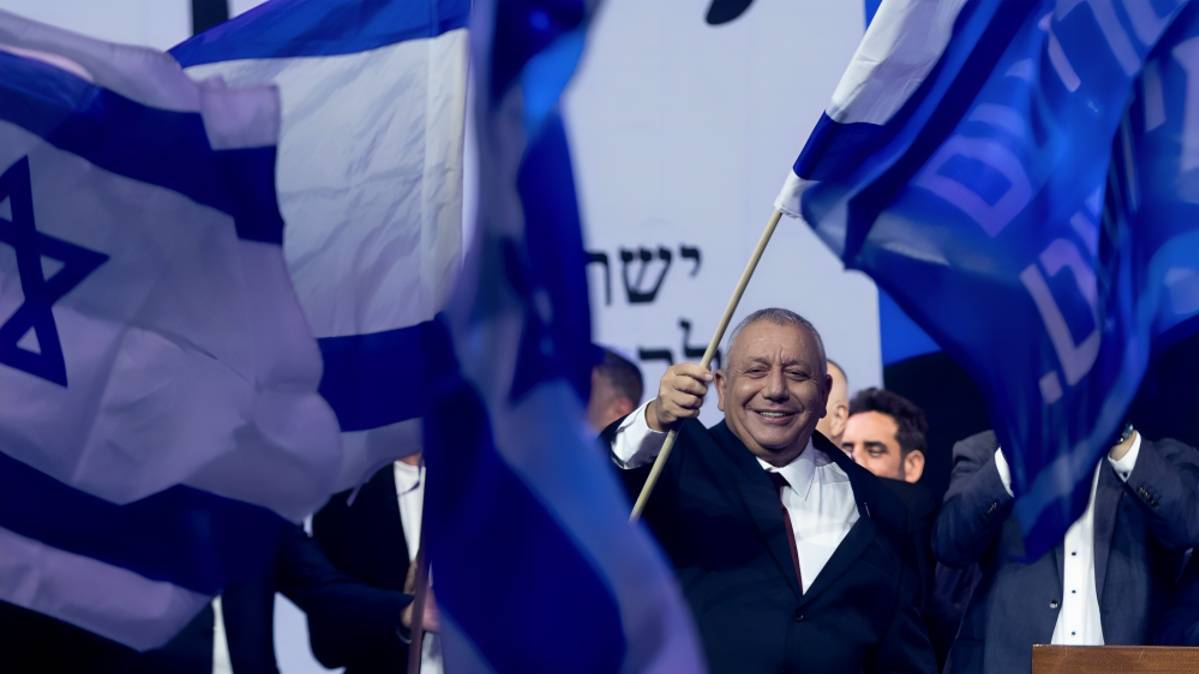
Former Israeli military chief Gadi Eisenkot has secured his first coalition partner as efforts to form Israel’s next government continue following the inconclusive parliamentary election held on October 27. His Yashar party has signed a coalition agreement with the right wing opposition party Israel Our Home, led by Avigdor Lieberman.
According to the Yashar party, Eisenkot met Lieberman before the two political leaders reached an agreement. The arrangement marks the first reported coalition agreement since the election and represents a development in Eisenkot’s efforts to establish a government.
The political situation in Israel remains uncertain as no party secured the parliamentary majority required to form a government independently. Meanwhile, Prime Minister Benjamin Netanyahu is seeking to retain power despite losing his previous parliamentary majority.
Gadi Eisenkot Secures Coalition Agreement
Gadi Eisenkot’s Yashar party has announced a coalition agreement with Avigdor Lieberman’s Israel Our Home party as negotiations over the formation of Israel’s next government continue.
The agreement provides Eisenkot with his first confirmed coalition partner following the October election. However, additional parliamentary support would be necessary to establish a government with a stable majority.
The complete terms of the agreement, including possible ministerial responsibilities and shared policy commitments, were not included in the available information.
Further announcements from the two parties could provide greater clarity regarding their political priorities and plans for government formation.
Avigdor Lieberman Joins Eisenkot’s Coalition Efforts
Avigdor Lieberman, leader of the Israel Our Home party, has agreed to cooperate with Eisenkot in efforts to establish a new government.
Lieberman is an experienced Israeli politician who has previously held senior government positions, including serving as defence minister and foreign minister.
His party has maintained a distinct political identity within Israel’s parliamentary system and has participated in coalition negotiations during previous elections.
The agreement between Lieberman and Eisenkot brings together two political leaders with experience in national security and public administration.
However, the arrangement alone does not establish that Eisenkot has secured sufficient parliamentary support to become Israel’s next prime minister.
October Election Results in Hung Parliament
Israel’s parliamentary election on October 27 resulted in a political deadlock after no individual party secured the 61 seats required for an outright majority.
The Israeli parliament, known as the Knesset, consists of 120 members. Political parties generally need to establish alliances to secure sufficient parliamentary support and form a government.
Israel’s newly elected parliament was sworn in on November 10 without a new government being formed.
The election outcome left competing political groups without a clear parliamentary majority, increasing the importance of negotiations between party leaders.
Although Eisenkot has secured his first coalition partner, the overall distribution of parliamentary support remains an important factor in determining whether he can establish a government.
Benjamin Netanyahu Seeks to Retain Power
Prime Minister Benjamin Netanyahu remains involved in efforts to secure political support and retain his position following the election.
According to the available information, Netanyahu lost his previous parliamentary majority after the October election. However, rival political groups have also been unable to establish a clear majority.
The situation has created uncertainty regarding the future leadership of Israel and the composition of its next government.
Netanyahu has extensive experience in coalition negotiations, having led several Israeli governments during his political career.
The outcome of the current negotiations will depend on the willingness of political parties to cooperate and agree on a common governing arrangement.
The available information does not specify whether Netanyahu has reached any new coalition agreements following the election.
Understanding Israel’s Coalition Government System
Israel operates under a parliamentary system in which members of the Knesset are elected through proportional representation.
Under this electoral system, multiple political parties generally secure parliamentary representation. As a result, coalition governments are common because individual parties rarely obtain an outright majority.
Government formation typically involves negotiations over policy priorities, leadership responsibilities, ministerial appointments and legislative commitments.
Political parties participating in coalition discussions must balance their individual objectives with the requirements of establishing a functioning government.
A coalition supported by at least 61 members of the Knesset would have a parliamentary majority.
Eisenkot’s agreement with Lieberman represents an initial step in this process, but further negotiations remain necessary.
Challenges Facing Gadi Eisenkot
Despite securing his first coalition partner, Gadi Eisenkot faces several challenges in his efforts to form Israel’s next government.
Establishing a parliamentary majority would require cooperation from additional political parties, which may have different policy positions and political priorities.
Issues such as national security, economic development, foreign relations and domestic governance could influence coalition negotiations.
Reaching agreements on these matters may be important for establishing a government capable of maintaining parliamentary support.
The available information does not identify which additional parties Eisenkot intends to approach or whether further coalition agreements are being considered.
His ability to secure broader political support will be important in determining the outcome of the government formation process.
Political Uncertainty Continues in Israel
The absence of a clear parliamentary majority has prolonged uncertainty regarding Israel’s next government.
While Eisenkot’s agreement with Lieberman represents progress in his coalition efforts, it does not guarantee that he will become prime minister.
Netanyahu and other political leaders may continue negotiations with potential coalition partners as they seek sufficient parliamentary support.
The formation of a new government could have implications for Israel’s domestic policies, international relations and approach to regional security.
However, the direction of future government policies cannot be determined until a governing coalition is established and its political programme becomes available.
Further Coalition Negotiations Awaited
Gadi Eisenkot’s agreement with Avigdor Lieberman marks the first reported coalition arrangement following Israel’s October 27 parliamentary election.
The development comes as competing political groups attempt to resolve the election deadlock and establish a government capable of securing majority support in the Knesset.
With Benjamin Netanyahu seeking to retain power and Eisenkot pursuing additional coalition partners, the contest over Israel’s future leadership remains unresolved.
Further announcements from political parties and official developments concerning government formation are expected to provide greater clarity.
The eventual outcome will depend on parliamentary support, coalition negotiations and the ability of political leaders to reach mutually acceptable agreements.