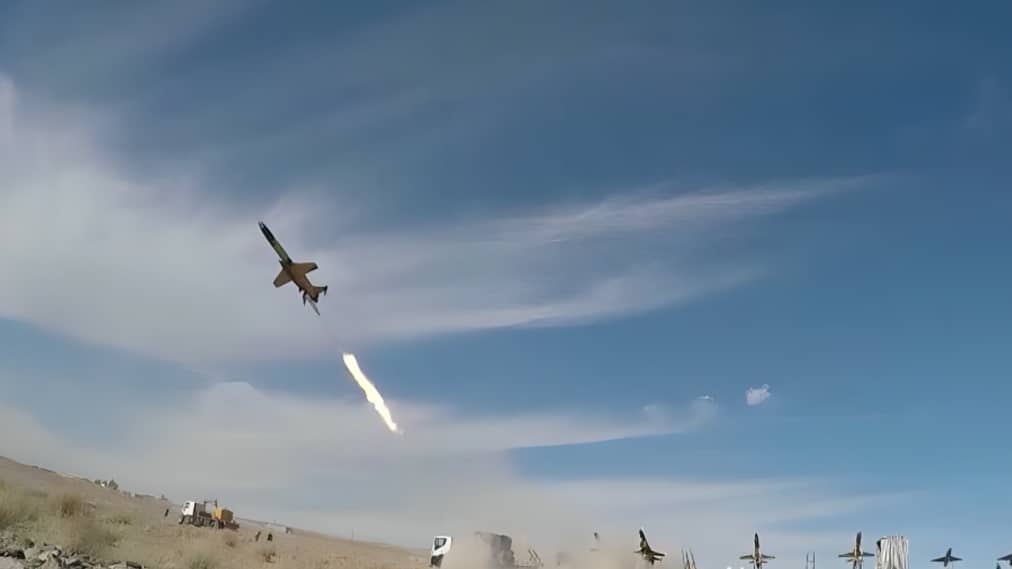
Yemen’s Iran aligned Houthi group has claimed that it carried out another ballistic missile attack targeting King Khalid International Airport in Riyadh, Saudi Arabia. The group also issued what it described as a final warning to international airlines operating in Saudi airspace.
Houthi military spokesperson Yahya Saree said on Thursday that the group had targeted the airport with a ballistic missile. He claimed that the missile struck its intended target and caused disruption to airport operations. However, there was no immediate confirmation from Saudi authorities regarding the latest Houthi claim.
The latest statement adds to growing concerns over the safety of civilian aviation in Saudi Arabia as fighting involving the Houthis intensifies. The Houthi warning specifically called on international airlines to reconsider continuing flights through Saudi airspace. Saree described the airspace as an area being used for the group’s military operations.
The warning comes after a series of attacks on Saudi airports in recent days. Saudi authorities have confirmed casualties from earlier attacks involving King Khalid International Airport in Riyadh and Abha International Airport in southern Saudi Arabia.
According to Saudi Arabia’s General Authority of Civil Aviation, attacks on the two airports killed three people and injured 36 others. Two women, identified as Moroccan and Algerian nationals, were killed in the attack involving Abha International Airport. Another person was killed in the attack involving King Khalid International Airport in Riyadh.
The latest Houthi claim therefore comes against the backdrop of an already serious disruption to air travel in the kingdom. Reports indicated that operations at Riyadh airport were affected following earlier missile and drone attacks.
Flight tracking information reported delays and cancellations at King Khalid International Airport on Thursday. Several international services were affected, highlighting the potential impact of the conflict on commercial aviation. The disruptions have also raised concerns among passengers travelling through one of Saudi Arabia’s major international airports.
The Houthis have repeatedly targeted Saudi territory during periods of heightened conflict. The current escalation is linked to the wider conflict in Yemen and increasing military activity involving Saudi backed forces and the Houthi movement.
The Houthi movement controls large parts of northern Yemen, including the capital Sanaa. The group has been fighting the internationally recognised Yemeni government for years. Saudi Arabia previously led a military coalition supporting the Yemeni government after the Houthis seized Sanaa and expanded their territorial control.
The conflict entered a period of relative calm following a United Nations brokered truce in 2022. However, fighting has intensified again in recent months, with Saudi backed Yemeni forces launching operations against Houthi positions. The renewed fighting has increased the possibility of further attacks on infrastructure in the region.
The latest aviation warning is significant because Saudi Arabia is an important regional air transport hub. Riyadh and other Saudi cities handle large volumes of international passenger and cargo traffic. Any prolonged closure or restriction of airspace could affect airlines, passengers and regional flight schedules.
Airlines operating through the region may have to monitor developments closely and make operational decisions based on security assessments and instructions from aviation authorities. Any decision to reroute flights can also increase travel times and operating costs.
The latest situation also comes at a time when several airports in Saudi Arabia have already experienced disruptions. The National reported that dozens of departures at Riyadh airport were delayed or cancelled following the recent attacks. Some international services to cities including Cairo, Aden, Dubai and Istanbul were reportedly affected.
The United States embassy in Riyadh has also warned its citizens about the possibility of flight cancellations, airspace closures and other travel disruptions. Travellers were advised to check flight information directly with airlines and airports.
The aviation impact is not limited to Saudi Arabia. The broader conflict has implications for regional transport and trade because the Middle East is an important centre for international aviation and energy markets. Continued military escalation could create additional uncertainty for airlines operating across the region.
India has also reacted to the attacks. The Indian government condemned attacks on civilian infrastructure in Saudi Arabia, describing the targeting of such facilities as unacceptable. The statement reflects concerns over the protection of civilians and critical infrastructure amid the escalating regional violence.
For now, the latest attack remains a Houthi claim that has not received immediate confirmation from Saudi Arabia. This distinction is important because statements issued by parties involved in an active conflict can differ from independently verified information.
The Houthi statement also does not necessarily mean that Saudi airspace has been completely closed to international airlines. Flight operations depend on decisions by Saudi aviation authorities, individual airlines and security assessments. Passengers travelling to or through Saudi Arabia should therefore rely on official airline and airport updates rather than unverified social media reports.
The warning from the Houthis nevertheless represents a significant escalation in rhetoric toward international aviation. By directly warning global airlines, the group is seeking to discourage commercial flights through Saudi airspace while continuing its military campaign against Saudi linked targets.
The latest developments could further complicate air travel in the region if attacks continue. Airlines may consider temporary schedule changes, rerouting or additional security measures depending on how the situation develops.
Saudi authorities are expected to continue monitoring the threat to airports and other civilian infrastructure. The situation remains fluid, and further developments could affect airport operations, flight schedules and regional security.
The immediate priority for passengers is to verify flight status through official airline and airport channels before travelling. The latest Houthi claim should be treated as an allegation until independently confirmed by Saudi authorities or other reliable sources.
The continuing attacks demonstrate the wider risks created by the renewed conflict in Yemen. As fighting intensifies, civilian infrastructure including airports can become increasingly vulnerable, raising concerns for passengers, airline employees and residents.