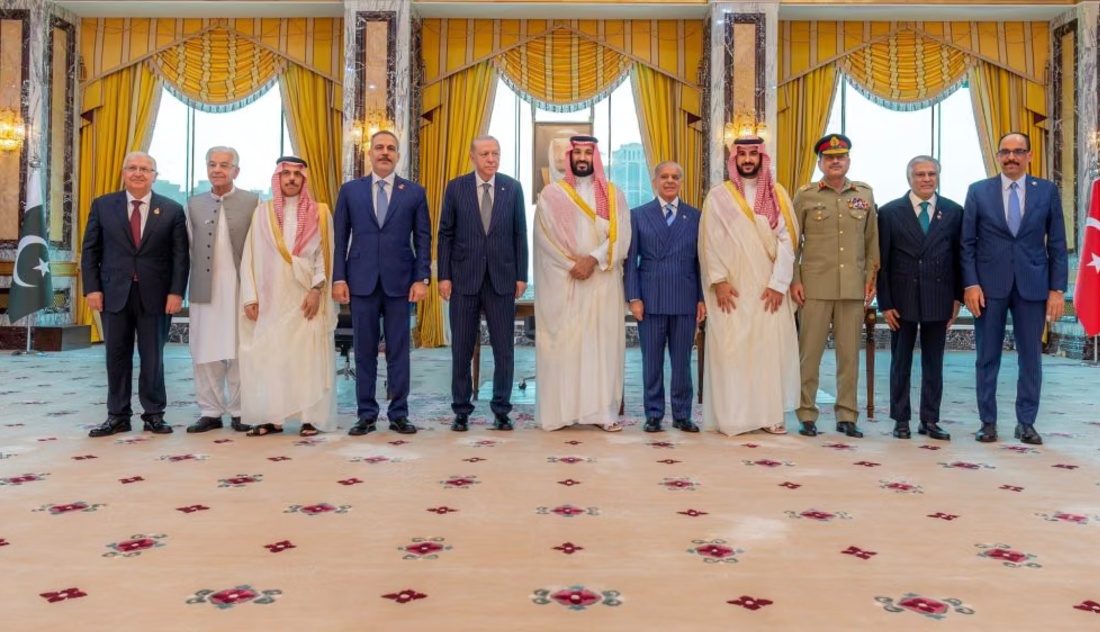
Pakistan has confirmed that its military personnel are already present in Saudi Arabia as the newly established Makkah Joint Defence Agreement faces its first major security test amid escalating attacks by Yemen's Houthi movement.
Lieutenant General Ahmed Sharif Chaudhry, Director General of Pakistan's Inter Services Public Relations, said Pakistani forces were already in Saudi Arabia and had been present in the kingdom for decades. He said the troops were operating in multiple capabilities and across multiple domains.
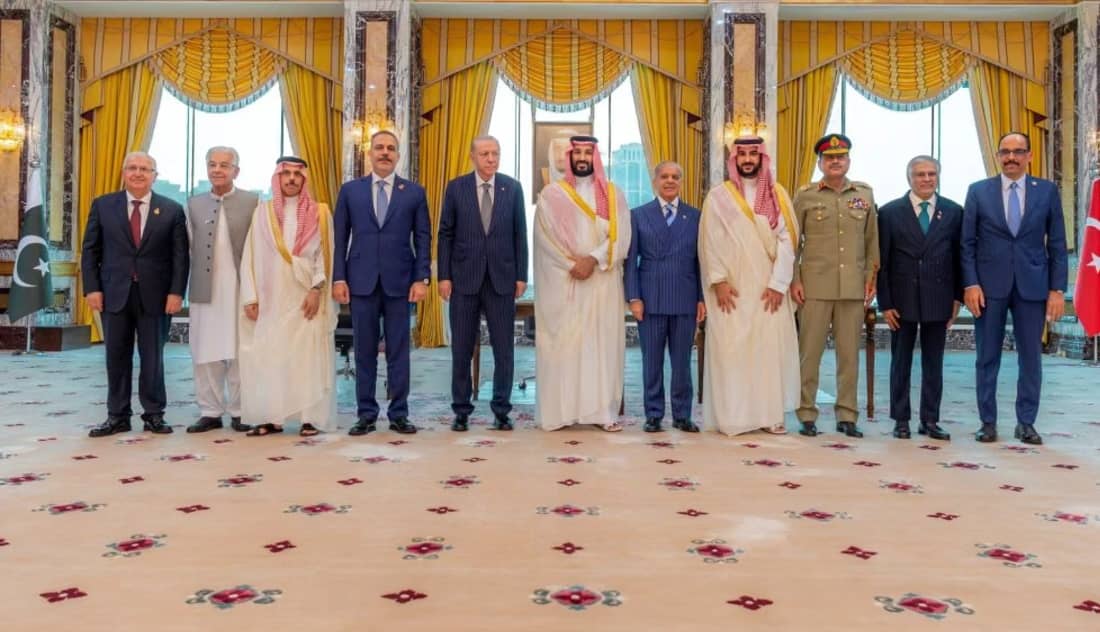
The confirmation comes days after Saudi Arabia, Pakistan and Türkiye agreed to begin practical implementation of their collective defence commitments under the Makkah Joint Defence Agreement. The agreement was signed in August and provides for collective action if one of the participating countries comes under armed attack.
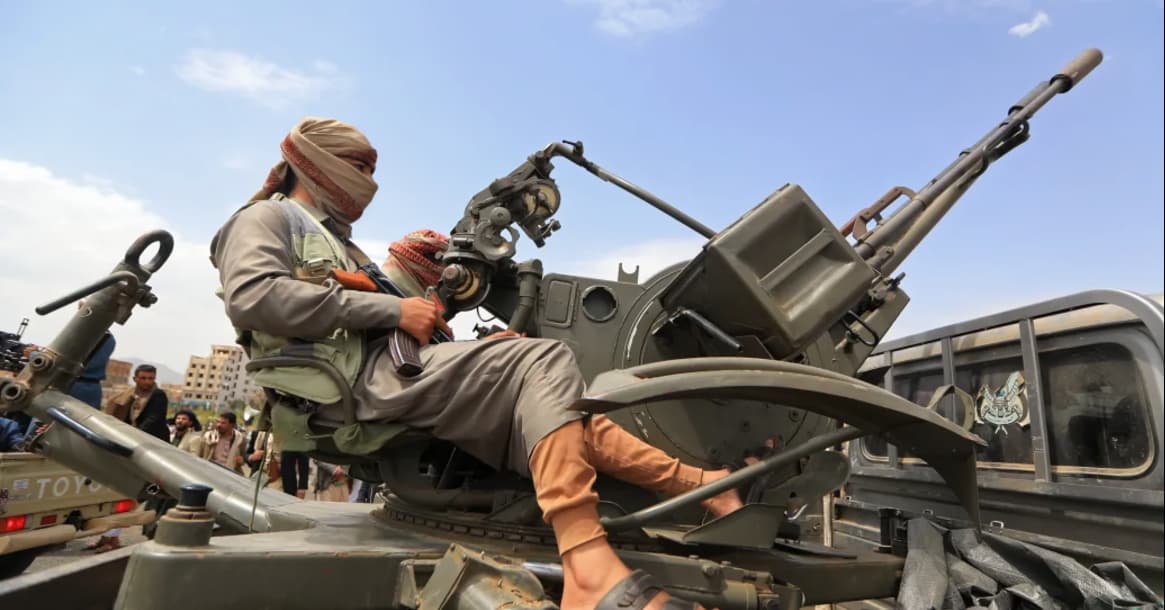
The latest development follows a sharp escalation in fighting between Saudi backed Yemeni government forces and the Iran aligned Houthi movement. Houthi attacks have targeted Saudi territory, while Saudi backed forces have launched military operations inside Yemen.
The three countries held an emergency meeting of the Strategic Political and Defence Committee in Riyadh on October 5. According to the joint statement issued after the meeting, the members decided to move immediately towards practical implementation of their collective defence commitments and to take necessary measures to provide agreed military forces and capabilities for rapid deployment in Saudi Arabia.
The statement did not disclose the size, composition or precise operational role of the forces that could be deployed under the agreement.
Pakistan's confirmation has therefore added clarity to one aspect of the arrangement. Pakistani troops are already in Saudi Arabia under longstanding defence and military cooperation arrangements. However, Pakistani authorities have not publicly disclosed the number of personnel involved or provided detailed operational information about their current role.
Pakistan's military spokesperson said the presence of Pakistani forces in Saudi Arabia was not a new development created solely by the Makkah pact. He described the military relationship between Pakistan and Saudi Arabia as longstanding and said Pakistani personnel have served in the kingdom in different capacities for many years.
Pakistan has historically provided military training and advisory assistance to Saudi Arabia. The two countries have maintained close defence relations, including the presence of Pakistani military personnel in the kingdom.
The Makkah agreement now provides a broader trilateral framework involving Pakistan, Saudi Arabia and Türkiye. The arrangement is intended to strengthen collective deterrence and military coordination between the three countries.
Türkiye's role, however, is currently different from Pakistan's. Turkish officials have said Ankara is providing mainly defensive and technical assistance to Saudi Arabia. This includes military equipment, intelligence sharing, air defence capabilities, logistical assistance and other forms of technical support.
According to officials cited by Reuters, Turkey is also providing drone operators and assistance with strategic planning and intelligence, surveillance and reconnaissance capabilities. Turkish support is currently being provided largely on a bilateral basis because the Makkah pact has not yet been ratified by the Turkish parliament.
This distinction is important because reports suggesting that Turkey has already committed ground troops to Saudi Arabia could overstate the current situation. Turkish officials have not confirmed a formal deployment of combat troops under the Makkah agreement.
The Turkish government has nevertheless expressed strong support for Saudi Arabia's security. Turkish Foreign Minister Hakan Fidan has discussed the country's defensive requirements with Saudi officials, while Turkish military officials have taken part in consultations on operational and technical issues.
The immediate trigger for the activation of the Makkah pact has been the deteriorating security situation involving the Houthis.
The Iran aligned Houthi movement has intensified attacks against Saudi targets as fighting has increased inside Yemen. Saudi backed Yemeni government forces have launched a counteroffensive aimed at regaining strategic territory from the Houthis.
The fighting has particular significance because some of the contested areas are close to the Bab el Mandeb Strait, one of the world's important maritime routes. The waterway connects the Red Sea with the Gulf of Aden and is used by commercial vessels transporting energy and other goods between Asia, Europe and the Middle East.
Any major disruption in the area could have consequences for international shipping and energy markets. The escalation has therefore attracted attention from governments beyond the immediate region.
The Makkah pact's activation represents a significant development in the regional security environment. Saudi Arabia, Pakistan and Türkiye have traditionally maintained bilateral military and political relationships, but the new agreement creates a formal framework for collective defence.
Under the agreement, an armed attack against one member is treated as an attack against all three. The arrangement is designed to strengthen deterrence and ensure that the participating countries can coordinate their response to security threats.
The agreement was signed on August 7, 2026, in Makkah. Its first major test has come much sooner than might have been expected, following the renewed escalation in Yemen.
The three governments have stressed the defensive nature of their cooperation. Pakistan has also maintained that operational details relating to the implementation of the collective defence mechanism are confidential.
Pakistan's Ministry of Information and Broadcasting has rejected speculative reports about the exact scale and nature of its deployment. The ministry said operational details should not be the subject of media speculation and reiterated Pakistan's commitment to the security of Saudi Arabia and the holy sites.
This means that reports about a specific number of Pakistani troops being sent to Saudi Arabia should be treated cautiously unless officially confirmed. Pakistan has confirmed that its forces are already in the kingdom, but it has not publicly released a detailed breakdown of the personnel or capabilities involved in the latest implementation of the pact.
The situation also raises questions about the future role of the alliance if the Yemen conflict continues to intensify.
Saudi Arabia is currently supporting Yemeni government forces in their efforts to recover territory from the Houthis. The Saudi led military campaign has involved air power and other capabilities, while Yemeni government forces have been conducting operations on the ground.
Pakistan's Defence Minister Khawaja Asif has previously indicated that Pakistani and Turkish forces were providing supporting roles, including reconnaissance and other assistance, while Saudi forces remained responsible for combat operations.
The distinction between defensive assistance and direct combat involvement could become increasingly important if the conflict expands. Pakistan has historically been cautious about becoming directly involved in military conflicts outside its borders, while Türkiye must also complete its domestic legal procedures before any formal troop deployment under the new agreement.
The alliance therefore faces a complicated test. It must demonstrate collective defence while balancing national laws, political considerations and the risks of becoming directly involved in the Yemen conflict.
For Saudi Arabia, the agreement provides additional military and technical support at a time when the kingdom faces threats from missiles, drones and other attacks linked to the Yemen conflict.
For Pakistan, the pact strengthens its strategic relationship with Saudi Arabia and Türkiye while creating new responsibilities under a collective defence framework.
For Türkiye, the agreement expands its role in Middle Eastern security and creates another channel for military cooperation with Saudi Arabia and Pakistan.
The development also comes at a time of wider instability across the Middle East. Tensions involving Iran, Israel, the United States and several regional groups have created a complicated security environment.
The Houthi conflict is particularly sensitive because of its connection to Iran and because of the Houthis' ability to threaten regional infrastructure and maritime routes.
Saudi Arabia has sought to protect its cities, airports, energy infrastructure and other strategic facilities from attacks. The additional support from Pakistan and Türkiye could strengthen the kingdom's defensive capabilities.
At the same time, any expansion of the conflict carries risks for civilians in Yemen. The country has already suffered years of war, displacement and humanitarian hardship. A prolonged military escalation could worsen the humanitarian situation and make diplomatic efforts more difficult.
The Makkah pact's first operational test is therefore being watched closely by regional and international observers.
For now, the confirmed facts are that Pakistani military personnel are already present in Saudi Arabia, the three countries have agreed to implement their collective defence commitments, and Türkiye is providing defensive and technical support. The exact scale of any new deployment and the future combat role of the alliance remain less clear.
The coming weeks will determine whether the Makkah alliance remains primarily a defensive and deterrence arrangement or becomes more directly involved in the military campaign against the Houthis.