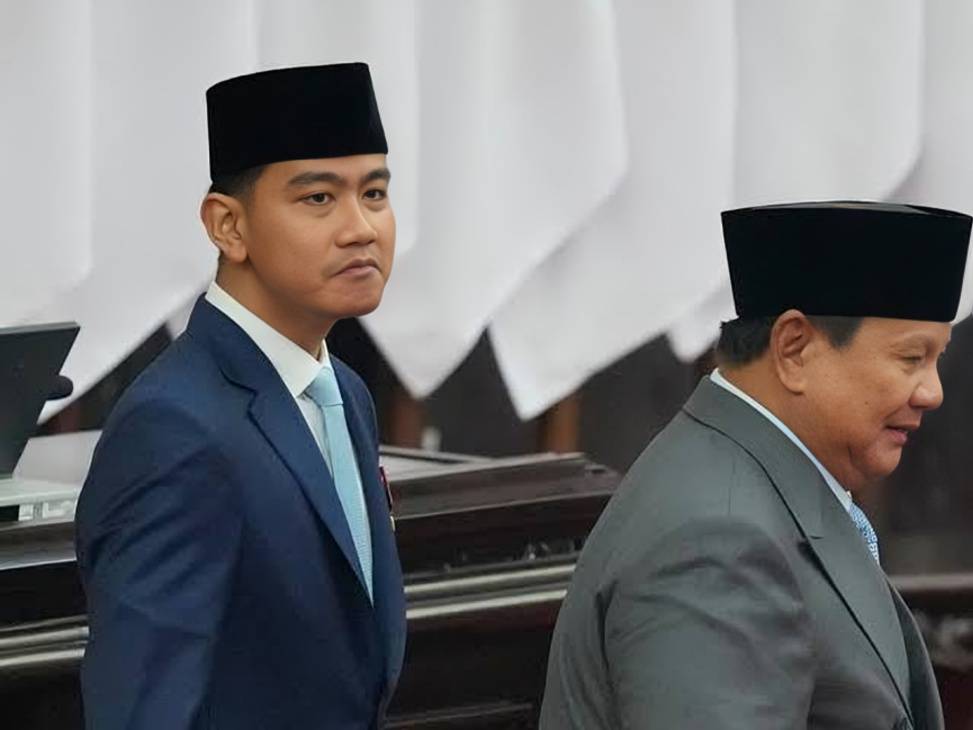
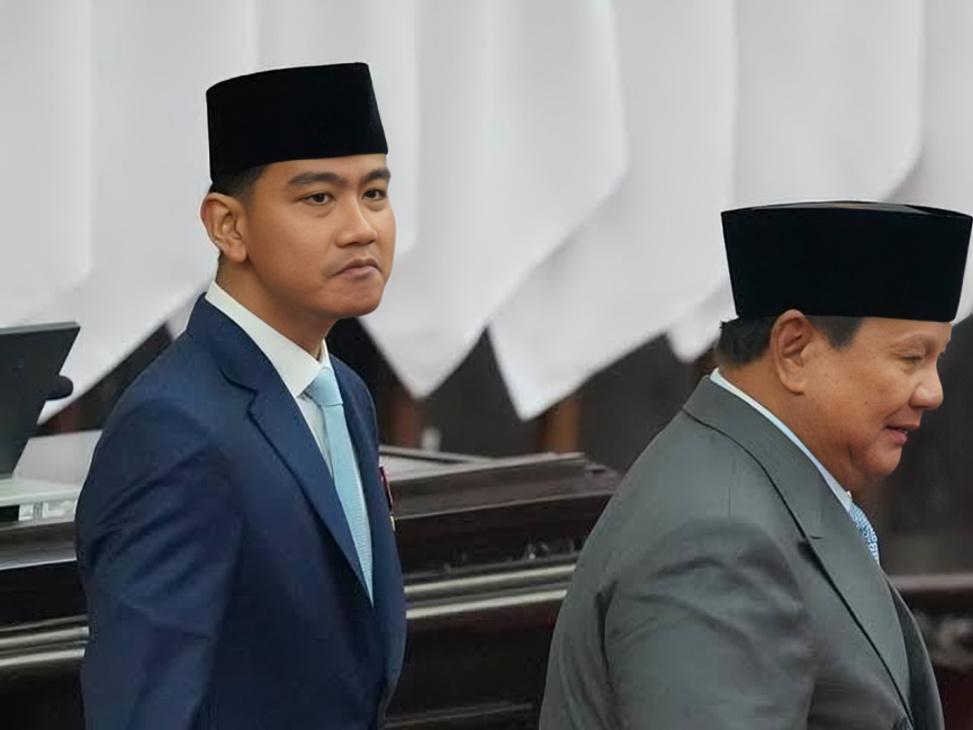
Indonesia's Vice President Gibran Rakabuming Raka has formally submitted his resignation amid a growing controversy over his educational qualifications and eligibility to hold the country's second-highest constitutional office. The development follows legal challenges to the documents he used to establish that he met the educational requirements for contesting the 2024 presidential election.
The 39-year-old politician submitted his resignation to the leadership of the People's Consultative Assembly, known as the MPR, in Jakarta on Thursday, November 12, 2026. He had earlier expressed his intention to resign during a meeting with President Prabowo Subianto. His formal submission came after 120 lawmakers from eight political parties initiated a parliamentary process that could have resulted in his impeachment.
The controversy has attracted considerable political attention in Indonesia because it involves questions about constitutional eligibility, judicial decisions and the future of the country's political leadership.
Why Gibran's Educational Qualifications Became Controversial
The dispute centres on the educational documents submitted by Gibran to establish his eligibility for the vice-presidential election. Indonesian election law requires candidates for the country's presidency and vice-presidency to have completed senior secondary education or an equivalent qualification.
Gibran studied overseas, including in Singapore and Australia. He relied on an educational equivalency certificate to demonstrate that his overseas studies satisfied the required educational qualification.
However, the country's Constitutional Court and Supreme Court issued rulings in October 2026 that raised questions about the documents used to establish his eligibility. The courts found that the submitted records did not adequately demonstrate that his overseas education met the applicable election requirements.
The Supreme Court subsequently annulled the equivalency certificate and instructed the relevant education authorities to withdraw it. The ruling intensified demands for Gibran to explain his eligibility to remain in office.
The controversy is not simply about where Gibran studied. It concerns whether the documents he submitted provided sufficient legal evidence that he had completed the required level of education under Indonesian election law.
120 Lawmakers Initiate Impeachment Process
The resignation controversy developed alongside a parliamentary initiative seeking action against Gibran. On November 11, approximately 120 lawmakers representing eight political parties submitted a petition to the leadership of the House of Representatives.
The lawmakers sought to invoke the House's constitutional right to express an opinion, a parliamentary mechanism that can lead to impeachment proceedings. Their petition argued that Gibran no longer met the constitutional requirements for serving as vice president in light of the recent court rulings.
The Indonesian Democratic Party of Struggle, or PDI-P, played a significant role in the initiative. Its parliamentary faction leader, Utut Adianto, confirmed that the party's lawmakers had agreed to pursue the constitutional mechanism.
The petition was significant because the minimum number of lawmakers required to propose the motion was 25. The support of 120 representatives from eight political parties therefore gave the initiative considerable parliamentary backing.
However, the petition itself did not automatically remove Gibran from office. It initiated a process requiring further examination, legal review and constitutional procedures.
Gibran's Resignation Submission to the Upper House
Before formally submitting his resignation, Gibran met President Prabowo Subianto on Tuesday. During the meeting, he reportedly expressed his intention to step down to prevent the controversy from continuing and creating further political uncertainty.
Prabowo reportedly advised him to defend himself against the allegations and pursue available legal options. Gibran subsequently indicated that he intended to challenge the court decisions concerning his educational records.
On Thursday, he submitted his resignation to the leadership of the People's Consultative Assembly in Jakarta. MPR Speaker Ahmad Muzani confirmed that Gibran had informed the parliamentary leadership of his decision to resign and that the same letter had also been submitted to the president.
Under the reported constitutional procedure, the upper house must formally process the resignation. The MPR has three days to approve it, after which the process of selecting a replacement is expected to follow.
The resignation submission is therefore an important development, but the formal constitutional steps are necessary to complete the transition.
How Indonesia Will Select a New Vice President
Indonesia's constitutional framework provides a procedure for filling a vacancy in the vice-presidential office. A resignation does not automatically trigger a fresh presidential election.
Instead, the People's Consultative Assembly is responsible for selecting a replacement from two candidates nominated by the president. The selection process is expected to take place within 60 days after the vacancy is formally established.
This procedure means that President Prabowo Subianto will have an important role in proposing potential candidates for the vacant position. The parliamentary assembly will then follow the constitutional process to select the next vice president.
The appointment will be closely watched because the new vice president will assume office during a politically sensitive period. The government will need to maintain administrative continuity while addressing questions surrounding the resignation and the earlier eligibility controversy.
Political Background and Family Connections
Gibran Rakabuming Raka is the eldest son of former Indonesian President Joko Widodo, popularly known as Jokowi. His political rise attracted national attention, particularly during the 2024 presidential election.
Gibran became the running mate of Prabowo Subianto after a controversial Constitutional Court ruling in 2023 created an exception to the minimum age requirement for presidential and vice-presidential candidates. The usual minimum age was 40, but the ruling allowed candidates who had previously held elected regional leadership positions to contest the election.
Gibran was 36 at the time and was therefore eligible under the revised interpretation. His candidacy attracted criticism from political opponents and legal observers, who raised concerns about the circumstances surrounding the court ruling and the role of family connections in Indonesian politics.
Prabowo and Gibran subsequently won the 2024 presidential election and assumed office. The latest educational qualification dispute has now created another major challenge for the political leadership.
The controversy has also developed amid reported tensions between Prabowo and Jokowi, adding further uncertainty to Indonesia's political environment.
What Happens Next?
Gibran's formal resignation submission marks a significant turning point in the controversy. The next steps involve the MPR's decision on the resignation and the constitutional process for filling the vice-presidential vacancy.
The earlier impeachment initiative also demonstrates the level of political pressure that had developed around the educational qualification dispute. Although the parliamentary petition could have led to impeachment proceedings, Gibran's resignation has changed the immediate political situation.
The controversy has raised wider questions about the verification of educational qualifications, eligibility requirements for public office and the responsibility of political institutions to uphold constitutional standards.
For Indonesia, the immediate priority will be completing the resignation process and ensuring a smooth transition to a new vice president. The selection of a replacement within the prescribed constitutional period will be an important next step for the Prabowo administration.
Gibran's departure, once formally approved, will be a significant political development in Indonesia, particularly because it follows a dispute involving the country's highest judicial institutions and a major parliamentary challenge.