Japan Successfully Launches MMX Mission to Mars’ Moon Phobos to Bring Samples Back to Earth
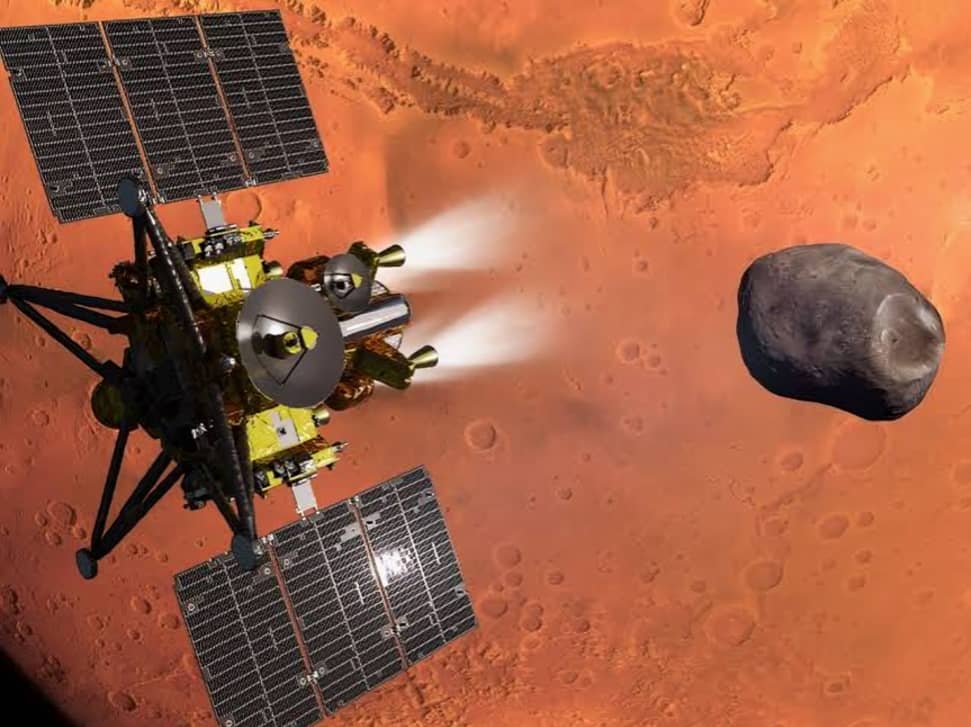
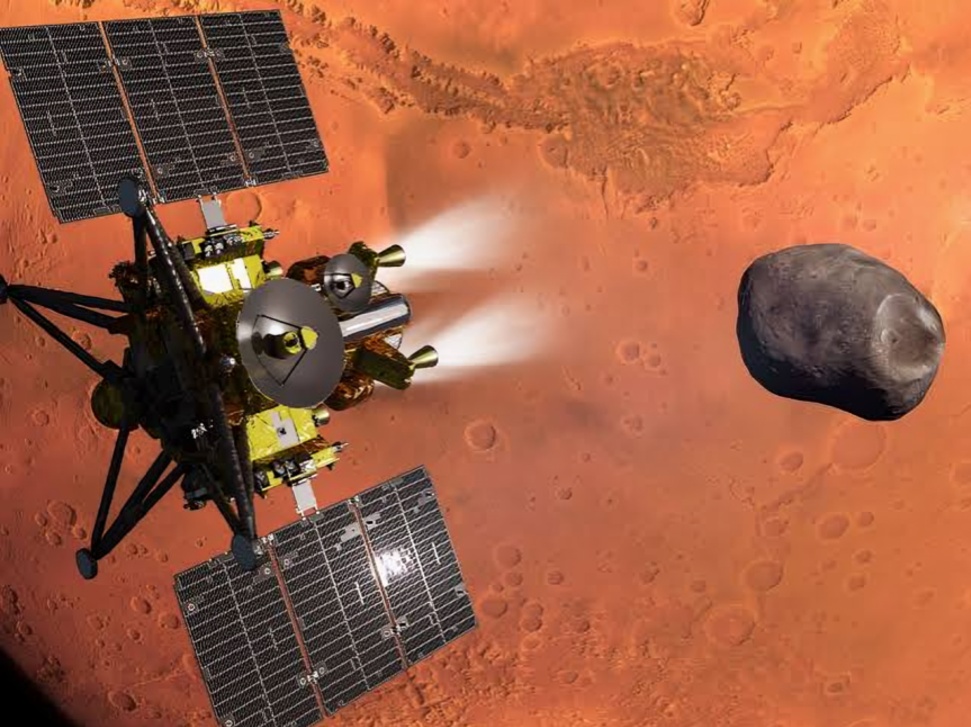
Tokyo, October 20, 2026: Japan has successfully launched its Martian Moons eXploration (MMX) spacecraft on a landmark mission to investigate the moons of Mars and bring samples back to Earth. The mission is led by the Japan Aerospace Exploration Agency (JAXA) and aims to collect material from Phobos, one of Mars’ two natural satellites, to help scientists understand the formation and evolution of the Martian system.
The spacecraft lifted off aboard Japan’s H3 rocket from the Tanegashima Space Center at 4:41 a.m. Japan Standard Time on October 20. JAXA confirmed that the rocket followed its planned flight path and that the spacecraft separated successfully and entered its intended trajectory approximately 71 minutes after launch.
The mission is expected to take about five years. The spacecraft is scheduled to reach the Martian system in 2027, study Phobos and Deimos, collect samples from Phobos and return the material to Earth in 2031.
Why is the MMX mission important?
Phobos and Deimos are the two small moons that orbit Mars. Although they have been observed through telescopes and spacecraft, their origins remain uncertain. Scientists have long considered two main possibilities: the moons may have formed from debris produced by a large impact on Mars, or they may be asteroids that were captured by the planet’s gravity.
The MMX mission is designed to investigate these competing explanations. By examining Phobos directly and analysing material collected from its surface, researchers hope to determine which formation scenario is more likely.
The findings could also provide clues about the early history of Mars and the movement of water-rich and organic materials through the solar system. Such research may improve scientific understanding of the conditions that contribute to habitable environments on rocky planets. However, the mission is not designed to discover life directly, and any conclusions about the origins of life will depend on what the observations and returned samples reveal.
Collecting samples from Phobos
A central objective of MMX is to collect at least 10 grams of surface material from Phobos and bring it back to Earth for detailed laboratory analysis. The spacecraft will first conduct extensive observations to map the moon’s surface and identify suitable locations for sampling.
The mission plan includes deploying a small rover, known as Idefix, developed through cooperation between the French National Centre for Space Studies (CNES) and the German Aerospace Center (DLR). The rover is expected to examine the surface and help researchers understand the terrain before the main spacecraft carries out its sampling operations.
The spacecraft is scheduled to make two landing attempts or touchdown operations as part of the sample-collection plan. Operating on Phobos presents significant technical challenges because the moon is small, irregularly shaped and has extremely weak gravity. The spacecraft must approach the surface carefully, collect material and safely secure it for the return journey.
After completing its investigations of Phobos, MMX is also expected to observe Deimos, the more distant of Mars’ two moons.
What could the samples reveal?
The material collected from Phobos could contain evidence of the moon’s own formation as well as particles originating from Mars. Scientists believe that material ejected from the Martian surface by impacts may have travelled into space and accumulated on the nearby moon.
If the returned samples contain identifiable Martian material, researchers could study it to learn more about Mars’ geological history. Comparisons between Phobos material and other known solar system samples may also help explain the processes that shaped the planets and smaller celestial bodies.
Laboratory analysis on Earth offers an important advantage over instruments operating millions of kilometres away. Researchers can use a wide range of analytical techniques to study the samples in detail and conduct additional tests as new scientific methods become available.
The mission will not, by itself, provide a definitive answer to every question about life’s origins. Instead, its observations and sample analysis are expected to contribute evidence about the distribution of materials and the conditions that influenced planetary evolution.
International cooperation and future exploration
Although MMX is led by JAXA, the mission includes contributions from international partners, including NASA, CNES, DLR and the European Space Agency. NASA is contributing scientific instruments and communications and navigation support, while European partners are involved in the rover and other mission activities.
The mission also builds on Japan’s experience with asteroid sample-return projects, including Hayabusa and Hayabusa2. Those missions demonstrated the ability to collect material from small celestial bodies and return it to Earth for scientific examination.
MMX will test technologies needed for future deep-space missions, including precise navigation, operations near small moons, surface sampling and long-distance communication. These capabilities could support later missions to Mars and other planetary bodies.
Mission timeline
Following the successful launch, MMX is expected to travel for approximately one year before reaching the Martian system in 2027. It will then conduct detailed observations of Phobos and Deimos and prepare for surface operations. Sample collection is planned during the mission’s time around Mars, with the spacecraft expected to depart the Martian system around 2030.
The return journey will take approximately one year. The sample capsule is scheduled to enter Earth’s atmosphere and be recovered in Australia in 2031.
The successful launch marks the beginning of a challenging scientific journey. If the mission achieves its objectives, MMX will deliver the first samples collected from a moon of Mars, giving researchers new material to investigate the origins of Phobos and the history of the Martian system.