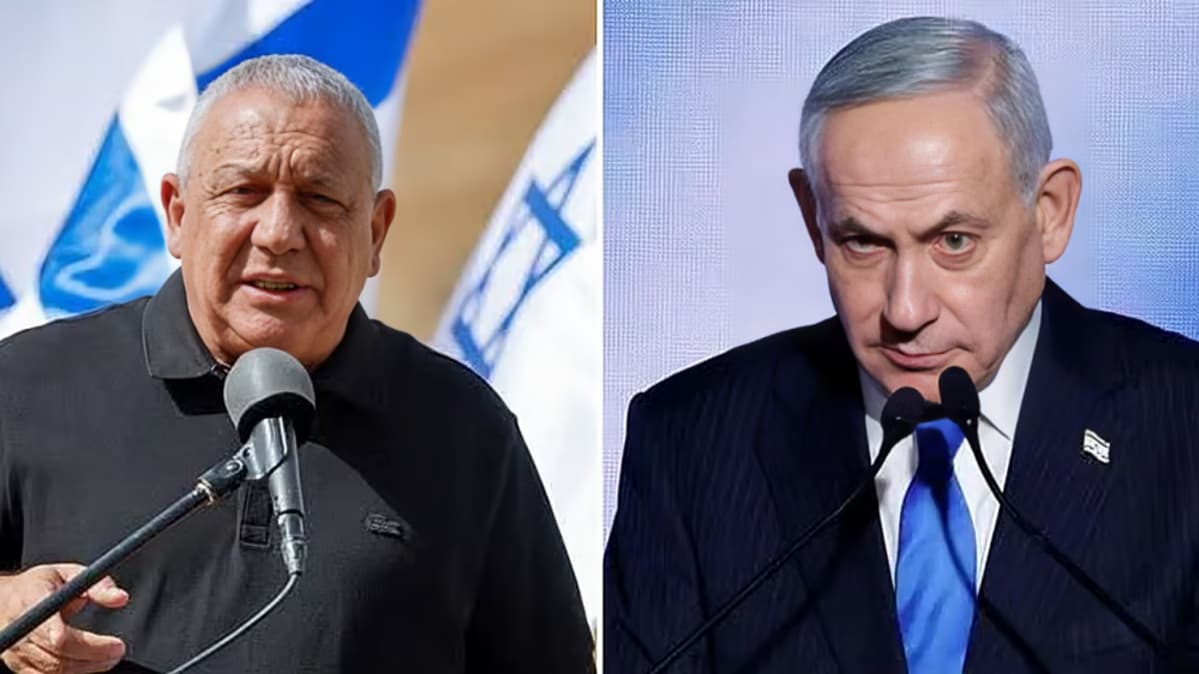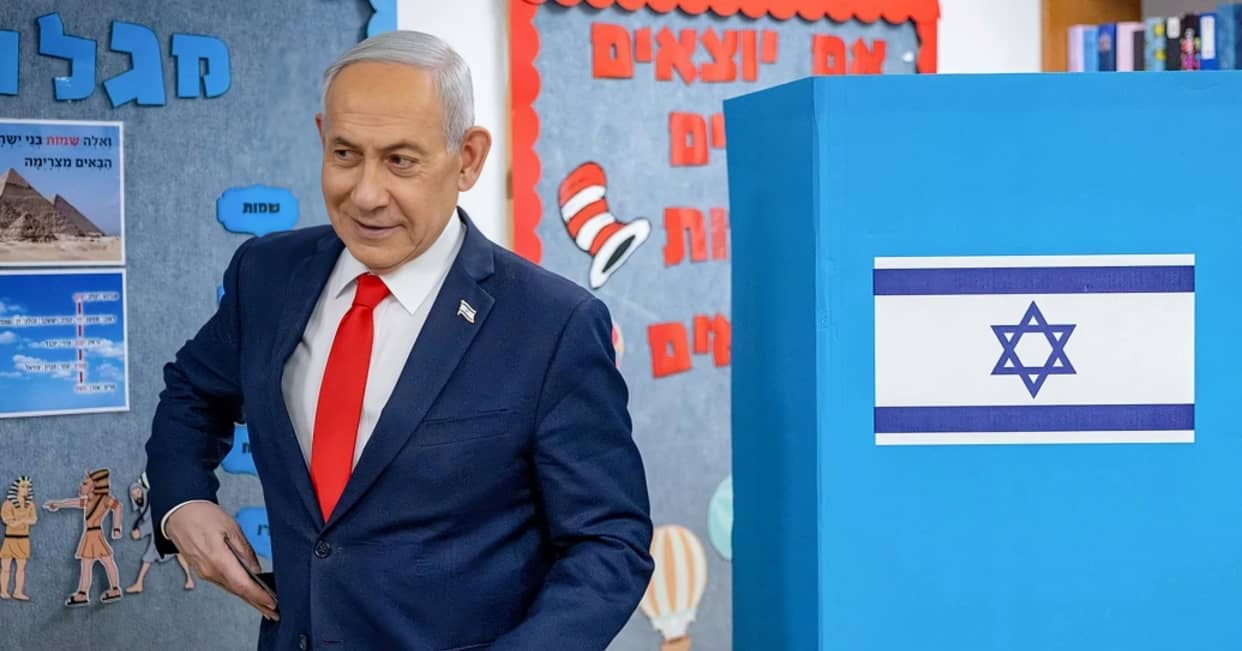
Israeli Prime Minister Benjamin Netanyahu has ruled out forming a government that depends on support from Arab parties after exit polls indicated an inconclusive result in the country's general election. The election has left Israel facing renewed political uncertainty, with neither Netanyahu's right-wing bloc nor the opposition alliance led by former military chief Gadi Eisenkot appearing to have secured enough seats to govern independently.
In his address following the release of the exit polls, Netanyahu called for a strong right-wing government and said that a government backed by Arab parties was out of the question. His statement came as Arab political parties appeared poised to increase their representation in the Knesset, potentially giving them an important role in negotiations over the formation of the next government.
Election results leave Israel without a clear winner
Israel's electoral system is based on proportional representation, meaning parliamentary seats are allocated according to the share of votes received by political parties. No single party normally wins enough seats to govern alone, making coalition agreements essential for forming a government.
The Knesset, Israel's parliament, has 120 seats. A government generally needs the support of at least 61 members to command a majority. Exit polls released after voting suggested that Netanyahu's right-wing alliance and the opposition bloc led by Eisenkot were both short of that threshold.
Early vote-counting figures also showed that Netanyahu's Likud party remained a major political force. However, being the largest individual party does not automatically guarantee the ability to form a government. The distribution of seats among smaller parties and their willingness to join a coalition can determine which leader has a realistic path to power.
The final outcome will depend on the official results and the negotiations that follow. Until the vote count is complete, estimates based on exit polls remain provisional and should not be treated as final parliamentary figures.
Netanyahu rejects a government backed by Arab parties
Netanyahu's statement established a clear political boundary for his coalition-building efforts. He argued that Israel should have a strong government led by right-wing and Zionist parties and rejected an administration that relies on Arab party support.
His position could limit the options available during coalition negotiations. If Netanyahu's bloc falls short of a majority, he will need to secure additional support from parties that share his political priorities or find another arrangement that allows him to govern.
Arab parties have historically had a complicated relationship with Israeli coalition politics. Their parliamentary representation can be significant, but cooperation with Arab political groups remains a divisive issue among several Jewish-led parties. Netanyahu's latest remarks underline how strongly the question of Arab party participation is shaping the political debate.
The issue also affects the opposition. Although Eisenkot's bloc is seeking to replace Netanyahu, it may face difficulties securing enough parliamentary support without some form of cooperation with Arab parties. Political leaders must weigh the arithmetic of forming a majority against campaign promises and disagreements over security, national identity and domestic policy.
Arab parties could influence coalition negotiations
The projected gains by Arab parties have made their role particularly important. If neither major bloc reaches the required majority, these parties could influence which leader is best placed to form a government.
Their involvement does not necessarily mean that Arab parties would join a coalition cabinet. Depending on negotiations, they could potentially provide parliamentary support from outside a government or abstain in certain votes. Such arrangements would depend on political conditions and the willingness of other parties to accept them.
For the opposition, discussions with Arab parties could create an opportunity to challenge Netanyahu's leadership. However, such a strategy could also expose disagreements within the opposition alliance, particularly among members who have publicly rejected a government dependent on Arab political support.
The final distribution of seats will therefore be important in determining whether a coalition can be formed. Even a relatively small group of parliamentary members can become influential when the larger blocs are closely matched.
Security and leadership remain central election issues
The election has taken place against the backdrop of major security challenges and public debate about Netanyahu's leadership. The Hamas-led attack on Israel on October 7, 2023, and the wars and military operations that followed have remained central issues in the country's political discussion.
Netanyahu has highlighted his government's military record and argued that strong leadership is necessary to address threats facing Israel. His opponents have questioned his leadership and criticised the government's handling of security and other national challenges.
Eisenkot, a former military chief, has presented himself as an alternative to Netanyahu while emphasising his security experience. His challenge reflects broader concerns among voters about the country's direction, political leadership and the consequences of recent conflicts.
These issues have made the election particularly significant. The next government will face decisions on national security, relations with neighbouring countries, domestic priorities and Israel's international position. The composition of the governing coalition is likely to influence how those policies are developed.
What happens next
The next stage will involve completing the official vote count and determining which political leader has the strongest chance of assembling a parliamentary majority. Coalition negotiations can take time because parties must agree on policy priorities, cabinet positions and the terms of their cooperation.
If no leader can secure sufficient support, Israel could face a prolonged period of political uncertainty. Netanyahu may remain in a caretaker role while negotiations continue, and another election could become a possibility if government formation efforts fail.
For now, Netanyahu's rejection of an Arab-backed government has narrowed the range of arrangements he is publicly willing to consider. At the same time, the projected parliamentary balance means that Arab parties could remain relevant to the wider negotiations, even if they are excluded from his preferred coalition.
The central issue is whether either major political bloc can secure the support needed to govern. The final election results and subsequent negotiations will determine whether Netanyahu remains in power or the opposition finds a route to forming a new administration.