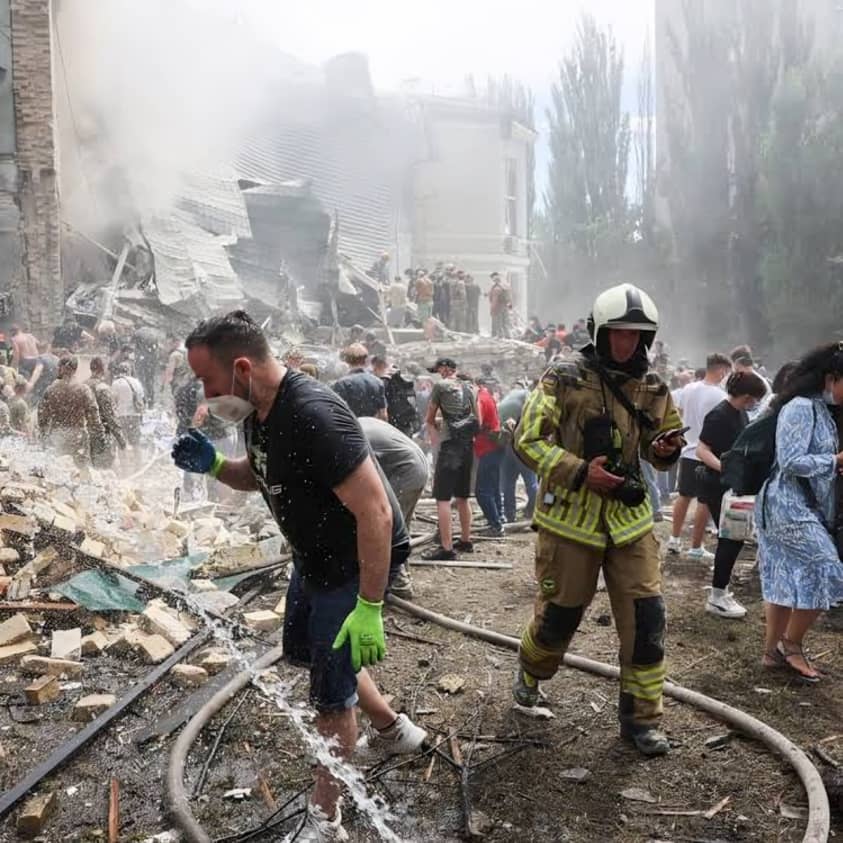
Russia launched a major overnight missile and drone assault on Kyiv on August 20, causing deaths, injuries and widespread damage across several parts of the Ukrainian capital.
Ukrainian officials said the attack involved a combination of ballistic missiles, cruise missiles and drones. Explosions were reported in multiple districts, while emergency services were deployed to damaged residential and civilian locations. The attack caused fires and damage to buildings, with rescue teams working to assist people affected by the strikes.
Kyiv Mayor Vitali Klitschko urged residents to remain in shelters as the attack was underway. Authorities reported damage to residential buildings and other civilian infrastructure, including a school, warehouses and a children's hospital.
The children's hospital was among the facilities affected during the barrage. Reports said the hospital suffered damage during the attack, adding to concerns over the impact of repeated Russian strikes on civilian infrastructure in Kyiv.
The latest assault represents another major challenge for Ukraine's air defence network. Ukrainian officials have repeatedly warned that the country is facing shortages of interceptor missiles needed to protect major cities against Russian ballistic and cruise missile attacks.
Ukraine's Air Force reported that it intercepted a substantial number of drones and cruise missiles during the latest attack. However, ballistic missiles presented a much greater challenge, with Ukrainian air defence systems having limited capability against some of the weapons used in the barrage.
The shortage of air defence ammunition has become a growing concern for Kyiv. Ukrainian President Volodymyr Zelenskyy has repeatedly appealed to Western allies for additional systems and interceptor missiles, particularly Patriot missiles capable of defending against ballistic threats.
Earlier this month, Ukraine said deliveries of air defence interceptors from its allies had fallen sharply compared with the previous year. President Zelenskyy said Ukraine had received only about one third of the air defence missiles supplied during the corresponding period in 2025.
The shortage comes as Russia has increased the scale and frequency of its missile and drone attacks. Ukrainian officials have warned that Moscow is expanding its production and deployment of ballistic missiles and drones.
The latest attack reportedly involved dozens of missiles and 168 drones. Ukraine's Air Force said it successfully neutralised many of the drones and cruise missiles, but ballistic missile interception remained a major difficulty.
The strikes also affected electricity supplies in parts of Kyiv. Ukrainian officials reported that approximately 90,000 homes temporarily lost power following the attack, although electricity restoration efforts began shortly afterward.
Russia has defended its military operations by saying that its strikes targeted military-related facilities, including sites associated with drones, ammunition and logistics. Ukrainian authorities, however, have highlighted the damage to residential and civilian locations and the risks faced by ordinary residents.
The continuing attacks have added pressure to diplomatic efforts aimed at ending the Russia Ukraine war. While international governments have continued to discuss possible peace arrangements, the fighting has remained intense.
The attack on Kyiv also has wider implications for European security. Ukraine's neighbours have been monitoring Russian missile and drone activity closely, particularly because some attacks have occurred relatively close to NATO territory.
For Ukraine, strengthening air defence remains one of the most urgent military priorities. The country's ability to protect major cities, energy infrastructure, hospitals and residential areas depends heavily on the availability of interceptor missiles and modern air defence systems.
The latest barrage therefore highlights two interconnected developments. Russia continues to rely heavily on missile and drone attacks, while Ukraine is facing increasing pressure on its air defence ammunition stocks.
The humanitarian consequences are also significant. Repeated attacks on urban areas can disrupt electricity, transportation, medical services and other essential facilities. Damage to hospitals and schools creates additional difficulties for civilians already living under prolonged wartime conditions.
The situation remains fluid as Ukrainian emergency services continue assessing the damage and casualty figures. Officials have also continued to urge residents to follow air raid warnings and use designated shelters during periods of missile activity.
The latest attack demonstrates that Kyiv remains a major target in the continuing conflict and that Ukraine's shortage of advanced interceptor missiles remains a serious security concern. Further international support for air defence could become an important factor in Ukraine's ability to protect its population and critical infrastructure from future attacks.