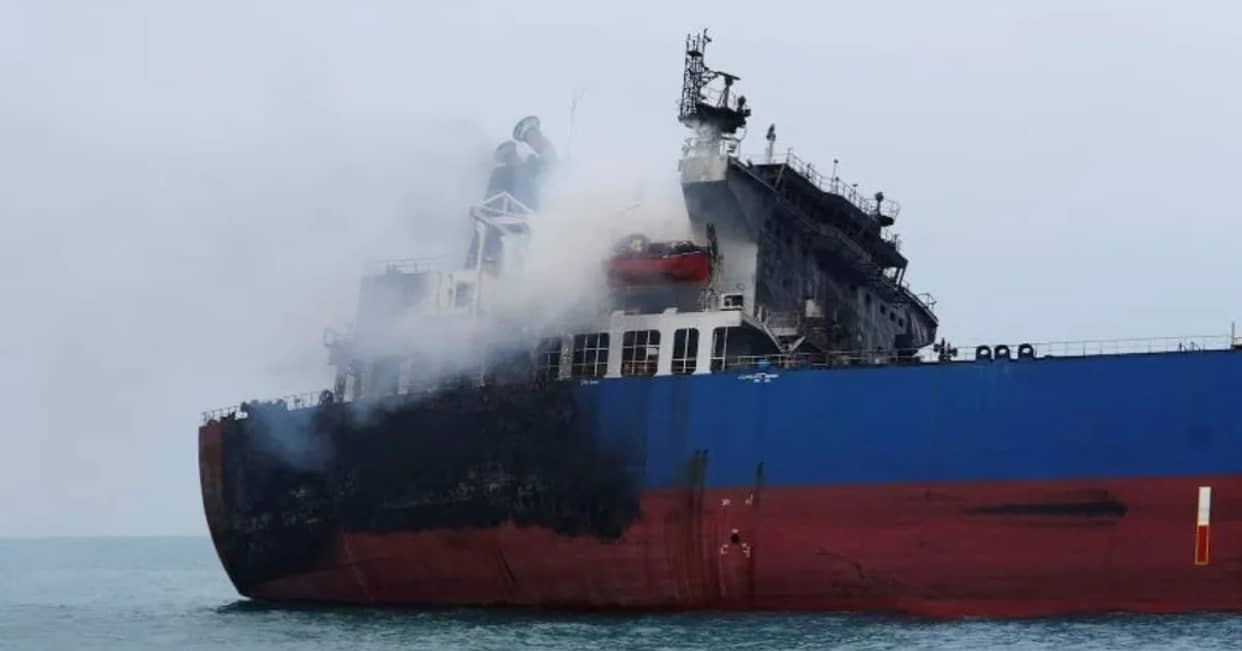
A supertanker reportedly caught fire after striking two sea mines while attempting to pass through the southern part of the Strait of Hormuz, according to a statement issued by Iran’s Islamic Revolutionary Guard Corps Navy on August 31.
The IRGC Navy said the tanker was travelling through what it described as an unauthorised route south of the Strait of Hormuz when it struck two sea mines. Following the incident, the vessel caught fire and eventually came to a complete stop. Iranian authorities did not identify the tanker or provide information about the nationality of the ship, the number of crew members or possible casualties. The extent of the damage also remained unclear.
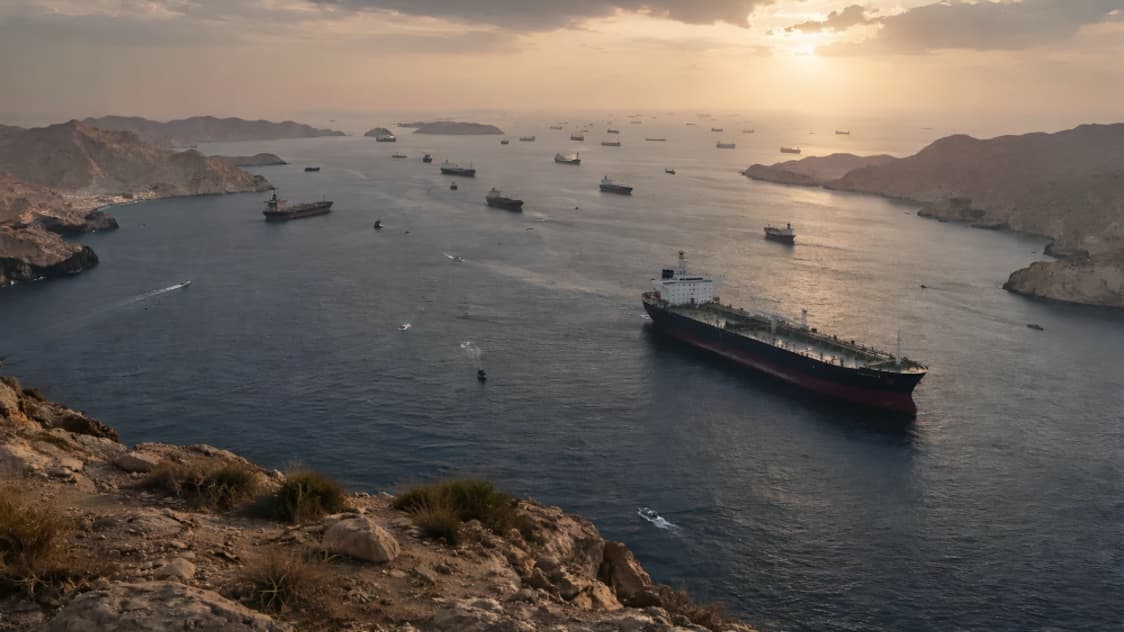
The incident comes amid a renewed escalation in tensions between Iran and the United States around the strategically important Strait of Hormuz. The waterway is one of the world's most important maritime routes for energy shipments, making any disruption to commercial traffic a major concern for oil and gas markets.
Iran's IRGC Navy said vessels travelling through the Strait of Hormuz must comply with navigation procedures issued by Iranian authorities. The statement warned that ships that violate what Tehran describes as its security regulations could face similar consequences.
The latest incident followed heightened military activity in and around the waterway. On August 30, the United States carried out strikes against Iranian rocket launchers on Larak Island, according to US officials and international news reports. Washington said the operation was linked to preparations by Iranian forces to deploy rockets and sea mines that could threaten maritime traffic.
Iran later responded with military actions and continued to reject US claims that the Strait of Hormuz had been fully reopened for commercial shipping. The IRGC has maintained that navigation through the waterway remains subject to Iranian security requirements.
The reported tanker fire has added another layer of uncertainty for shipping companies operating in the region. Although the IRGC attributed the incident to two sea mines, the details have not been independently verified. The identity of the vessel and its exact location were not immediately disclosed.
The United States had previously said that mines had been cleared from international shipping lanes in the Strait. President Donald Trump and US military officials had said efforts were under way to restore safe passage for commercial vessels. However, the conflicting claims from Washington and Tehran have added uncertainty for ship operators and insurers.
Shipping traffic through the Strait has already fallen sharply amid the ongoing tensions. Recent shipping data showed that the number of commercial vessels transiting the waterway was substantially below its normal level, reflecting concerns over security and the risks faced by crews and cargo operators.
The Strait of Hormuz is particularly important because it connects the Persian Gulf with the Gulf of Oman and the wider Arabian Sea. Large volumes of crude oil, petroleum products and liquefied natural gas normally pass through the waterway. Any prolonged disruption could therefore affect international energy supplies, freight costs and global oil prices.
The latest incident also highlights the dangers posed by sea mines in strategic waterways. Unlike conventional attacks, mines can remain hidden beneath the surface and create risks for commercial vessels even after an immediate military confrontation has ended. Identifying and clearing such devices can require specialised naval and mine disposal operations.
Iran has repeatedly warned shipping companies and vessels operating in the Strait to follow its instructions. At the same time, the United States has said that freedom of navigation through the waterway should be maintained for international shipping. The opposing positions have become a central point of the wider conflict between Washington and Tehran.
The tanker incident also comes just days after Iran's IRGC Navy claimed it had full control over the Strait of Hormuz. Iranian authorities have argued that the waterway cannot return to normal operations while military pressure against Iran continues.
For global energy markets, developments in the Strait are being monitored closely. Even temporary disruptions can raise concerns about supply routes and insurance costs, particularly when commercial operators are uncertain about safe passage.
For shipping companies, the immediate priority is crew safety and the availability of reliable information about navigational conditions. The unidentified tanker involved in the latest incident will remain a focus of international attention as authorities seek more information about the fire, the suspected mine strikes and the condition of the vessel.
At present, Iranian authorities have provided only limited details about the incident. No independent confirmation has emerged regarding the identity of the tanker, the number of casualties or the full scale of the damage.
The reported mine strike nevertheless underscores the continuing risks in the Strait of Hormuz as military tensions between Iran and the United States remain high. Any further incidents involving commercial vessels could have wider implications for maritime security and global energy markets.
The situation remains fluid, and further information from Iranian authorities, international maritime agencies or the vessel's operator may clarify the circumstances surrounding the reported fire and the condition of the tanker.