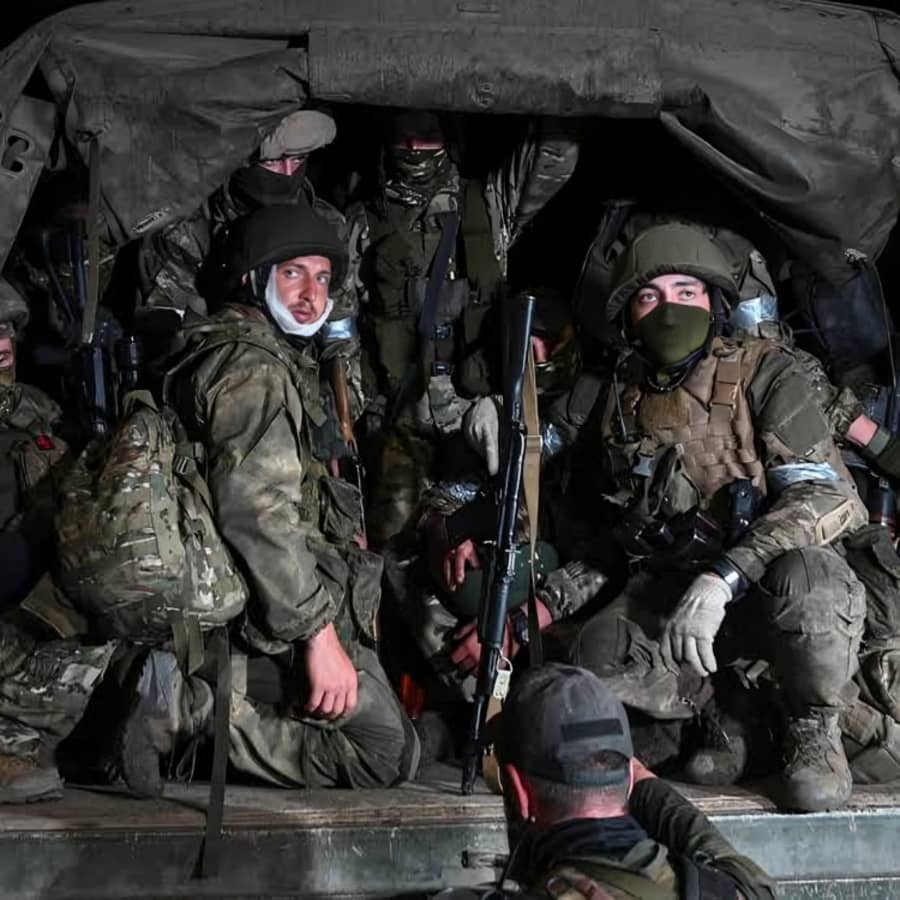
Ukraine has reported a significant increase in Russian military losses during July 2026, estimating that Russian forces suffered 42,860 personnel losses during the month.
The figure was released by Ukraine’s General Staff and represents the highest monthly Russian personnel loss reported by Ukrainian authorities so far in 2026. According to the Ukrainian estimate, the July figure was higher than the previous monthly high of 39,290 personnel losses recorded in June.
The reported figure should be treated as a Ukrainian wartime estimate rather than an independently verified casualty count. Russia does not routinely publish comparable figures, while both sides have regularly released casualty claims concerning the opposing military during the conflict.
The Ukrainian figure refers to personnel losses and can include soldiers killed, wounded, missing or captured. Therefore, the number should not be interpreted as the number of Russian soldiers killed in July.
The reported losses come amid continued heavy fighting along multiple sections of the front. Russian forces have continued offensive operations in eastern and southeastern Ukraine, while Ukrainian forces have attempted to slow Russian advances and conduct counterattacks in several areas.
The intensity of the fighting has also been accompanied by extensive use of drones, artillery, missiles and other long range weapons. The conflict has increasingly relied on unmanned systems, with both Russia and Ukraine using large numbers of drones for reconnaissance and attacks.
Ukraine's General Staff has continued to publish daily estimates of Russian personnel and equipment losses. These reports also include claimed losses of tanks, armoured vehicles, artillery systems, aircraft and drones. Ukraine reported more than 1,400 Russian personnel losses on a single day in July, illustrating the intensity of some periods of fighting.
The July personnel figure is significant because it comes at a time when Russia has continued to maintain pressure across the front despite facing substantial battlefield costs.
The Center for Strategic and International Studies has also estimated that Russian battlefield losses have reached extremely high levels during the war. Its July 2026 assessment estimated that Russia had suffered as many as 450,000 battlefield deaths and approximately 1.4 million total casualties between February 2022 and June 2026. However, such estimates vary considerably depending on the methodology used and the definition of a casualty.
The continued high casualty rate has raised questions about Russia's ability to sustain offensive operations. Moscow has relied on recruitment, mobilisation policies and financial incentives to maintain the size of its armed forces.
At the same time, the Russian military has continued to make territorial gains in some areas. Russia's Defence Ministry said in August that its forces had captured 19 settlements during its summer campaign in parts of southeastern Ukraine. Those claims have not been independently verified.
Ukraine has also claimed battlefield gains. President Volodymyr Zelenskyy said Ukrainian forces had regained approximately 745 square kilometres of territory in southeastern areas during 2026. Independent assessments have reported Ukrainian advances in parts of the southern and eastern front, although the battlefield situation remains fluid.
The contrasting claims demonstrate the difficulty of determining the exact military situation during an active war. Both sides have strong incentives to emphasise their own successes and the losses suffered by their opponent.
The human cost of the war has also extended far beyond military personnel. A United Nations assessment reported that at least 437 civilians were killed and 2,610 injured in Ukraine during July 2026. The UN described July as the deadliest month for Ukrainian civilians since May 2022.
The increase in civilian casualties was linked largely to intensified Russian missile and drone attacks. Long range weapons accounted for a significant proportion of the deaths, while aerial bombardments also caused substantial casualties.
Ukraine has responded with its own long range attacks against targets inside Russia. Ukrainian forces have increasingly used domestically produced drones and missiles to strike military and industrial infrastructure well behind Russia's front lines.
Recent Ukrainian attacks have targeted facilities linked to Russian military logistics and energy infrastructure. Russia, in turn, has continued launching missile and drone attacks against Ukrainian cities and infrastructure.
The growing use of long range weapons has expanded the geographical scope of the conflict. Although much of the fighting remains concentrated along the front line, attacks now regularly occur hundreds of kilometres from the main battlefield.
Another major development is the increasing importance of drone warfare. Both militaries are using drones for surveillance, artillery targeting and direct attacks. The rapid development of drone technology has changed battlefield tactics and increased the risks faced by troops operating near the front.
Despite the high reported Russian losses, Moscow has continued its military campaign. This suggests that casualty figures alone do not necessarily determine battlefield outcomes. Russia's larger manpower pool, industrial capacity and ability to recruit new personnel remain important factors in sustaining the war effort.
For Ukraine, the challenge is to inflict sufficient losses on Russian forces while managing its own manpower and equipment shortages. Kyiv continues to seek additional military assistance from Western countries, particularly air defence systems and ammunition.
The war has therefore developed into a prolonged contest of manpower, weapons production, technology and economic endurance.
The 42,860 figure reported for July is particularly significant because it represents the highest monthly Russian personnel loss claimed by Ukraine during 2026. It also highlights the intensity of the fighting despite the absence of a decisive breakthrough by either side.
However, it is important to distinguish between battlefield estimates and independently confirmed deaths. The Ukrainian General Staff's figure includes several categories of personnel losses and cannot be used as a precise measure of Russian fatalities.
Independent organisations have repeatedly noted the difficulty of calculating military casualties during the conflict. Russia and Ukraine both restrict access to battlefield information, while many casualties occur in areas that are difficult for outside observers to verify.
The conflict therefore continues to produce widely differing casualty estimates. Official claims from either side need to be assessed alongside independent intelligence, open source investigations and other available evidence.
As the war continues into its fifth year, the July figures underline the continuing human and military cost of the conflict. Russia has maintained offensive pressure, while Ukraine has attempted to defend its positions and regain territory where possible.
The reported 42,860 Russian personnel losses provide an indication of the scale of fighting during July, but they do not by themselves establish which side has gained a decisive advantage.
The battlefield remains highly contested, and developments in the coming months will depend on military manpower, weapons supplies, drone production, air defence capabilities and international support.
For now, Ukraine continues to describe July as one of the most costly months for Russian forces in the war. The figure has attracted international attention, but independent verification remains difficult.
Overall, Ukraine's estimate of 42,860 Russian personnel losses in July represents a major claimed monthly casualty figure. The estimate includes killed, wounded, missing and captured personnel, and it should be viewed in that context. Independent assessments confirm that the war has produced extremely high military and civilian casualties, but the precise number of losses on either side remains uncertain