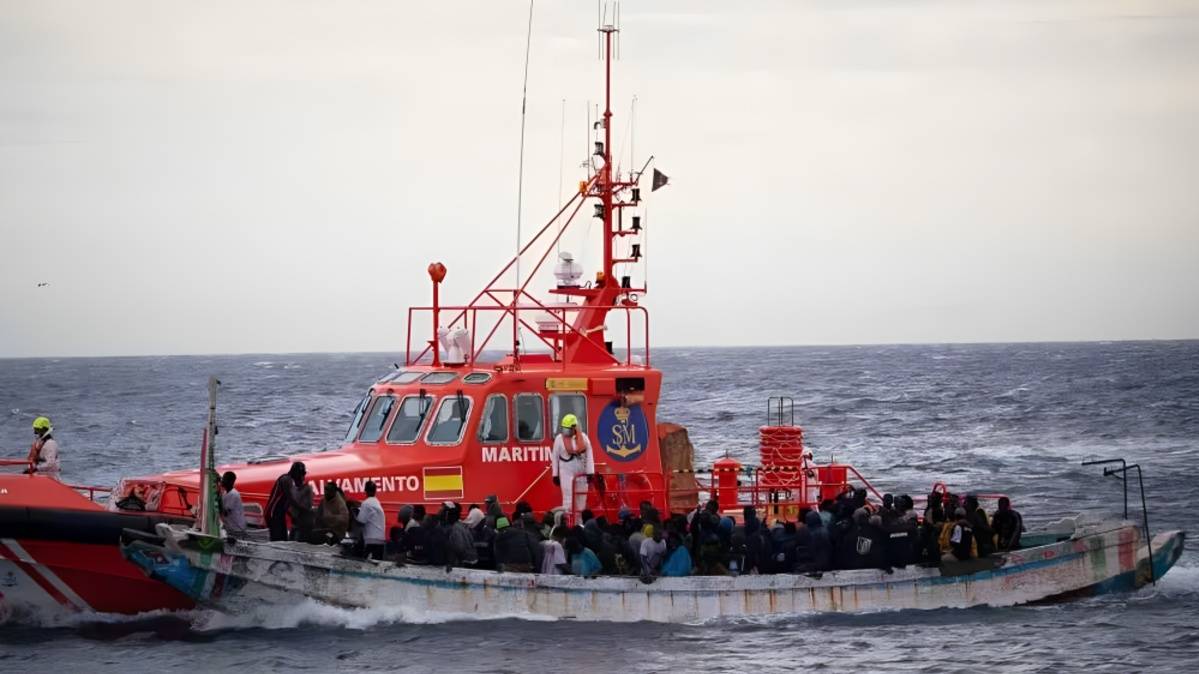
Spain’s Canary Islands reportedly recorded their highest number of migrant arrivals in a single day on Tuesday, November 24, after nearly 2,000 people reached the Atlantic archipelago aboard multiple boats.
According to Spain’s maritime rescue service, 1,990 migrants arrived aboard 15 separate vessels. Rescue teams escorted the overcrowded boats to El Hierro, a small island in the western part of the archipelago that has become an important entry point for migrants travelling from West Africa towards Europe.
Many of the boats reportedly departed from Senegal and Gambia. The development has renewed attention on maritime migration, humanitarian assistance and the challenges associated with managing arrivals along the Atlantic migration route.
Canary Islands Record Unprecedented Migrant Arrivals
The arrival of 1,990 migrants within a single day reportedly established a new record for Spain’s Canary Islands.
The large number of arrivals highlights the continuing significance of the Atlantic migration route connecting West Africa with Spanish territory.
Spain’s maritime rescue service assisted the vessels and escorted them towards El Hierro, where migrants could disembark.
The available information did not provide a detailed breakdown of the nationalities, ages or medical conditions of the people who arrived.
The increase in arrivals could place additional pressure on local reception facilities, healthcare services and humanitarian organisations responsible for assisting newly arrived migrants.
El Hierro Emerges as a Major Migration Entry Point
El Hierro is one of the smallest islands in Spain’s Canary Islands archipelago. Located in the Atlantic Ocean, the island has become an important destination for migrants attempting to reach European territory from West Africa.
Its relatively small population and limited infrastructure can present challenges when large numbers of migrants arrive within a short period.
Local authorities and humanitarian organisations generally coordinate reception arrangements, emergency assistance and temporary accommodation for newly arrived individuals.
The reported arrival of nearly 2,000 people highlights the importance of maintaining adequate resources and coordination between regional and national authorities.
However, the immediate capacity of reception facilities following the latest arrivals was not specified in the available information.
Migrants Reportedly Departed From West Africa
Many of the vessels arriving in the Canary Islands reportedly originated from Senegal and Gambia, two countries located along the western coast of Africa.
Migration from West Africa towards Europe can be influenced by several factors, including economic hardship, limited employment opportunities, political instability and personal circumstances.
Some individuals may also be seeking international protection or opportunities to reunite with family members.
However, the individual circumstances and motivations of the migrants involved in the latest arrivals have not been established.
The movement of people across international borders remains a complex issue involving humanitarian, economic, legal and security considerations.
Maritime Rescue Operations Remain Essential
Spain’s maritime rescue service played an important role in assisting the boats and escorting them to El Hierro.
Maritime journeys across the Atlantic can expose migrants to dangerous weather conditions, overcrowding, dehydration and limited access to essential supplies.
Rescue operations are therefore important in protecting lives and providing assistance to individuals travelling aboard vessels that may be unsuitable for long journeys.
Coordination between maritime rescue teams, emergency medical personnel and local authorities helps ensure that people requiring immediate assistance receive appropriate care.
The available report did not specify whether any passengers required emergency medical treatment following their arrival.
Humanitarian Assistance and Reception Challenges
Large numbers of migrant arrivals can create significant administrative and humanitarian challenges for local communities and government agencies.
Reception facilities may need to provide temporary accommodation, food, drinking water, medical assistance and other essential services.
Authorities must also undertake appropriate registration procedures and assess individual circumstances in accordance with applicable immigration and international protection laws.
Particular attention may be required for children, elderly individuals and people with medical conditions.
Humanitarian organisations can support these efforts by providing emergency assistance and helping vulnerable individuals access essential services.
Effective coordination between Spanish authorities, regional administrations and humanitarian organisations remains important in managing large arrivals.
Migration Remains an Important Political Issue in Spain
Migration management continues to be an important subject of political and public discussion in Spain.
Debates frequently focus on border management, maritime rescue operations, reception capacity, immigration policies and the protection of fundamental human rights.
Different political groups may advocate different approaches to addressing migration, including stronger border controls, expanded humanitarian assistance and increased international cooperation.
The latest reported arrivals in the Canary Islands could bring renewed attention to these discussions.
Developing effective migration policies requires consideration of national administrative capacity, international legal obligations and the humanitarian needs of individuals arriving in Spanish territory.
European Cooperation on Migration Management
Spain’s geographical position makes it an important participant in European discussions concerning migration from Africa.
Cooperation between European countries and African nations can contribute to addressing migration challenges through diplomatic engagement, economic development initiatives and measures against human trafficking.
European migration policies also involve discussions regarding asylum procedures, border management and the distribution of responsibilities among member states.
The situation in the Canary Islands demonstrates the importance of coordination between local, national and European institutions when responding to significant migrant arrivals.
Further Developments Awaited in the Canary Islands
The reported arrival of 1,990 migrants aboard 15 boats represents a significant development in migration across the Atlantic.
Spain’s maritime rescue service assisted the vessels and escorted them to El Hierro, highlighting the continuing importance of maritime safety and humanitarian response operations.
Further official information may provide greater clarity regarding the nationalities of the migrants, their medical conditions and arrangements for temporary accommodation.
The latest arrivals have renewed attention on the challenges facing Spain and the European Union in managing migration while protecting human lives and respecting international legal obligations.