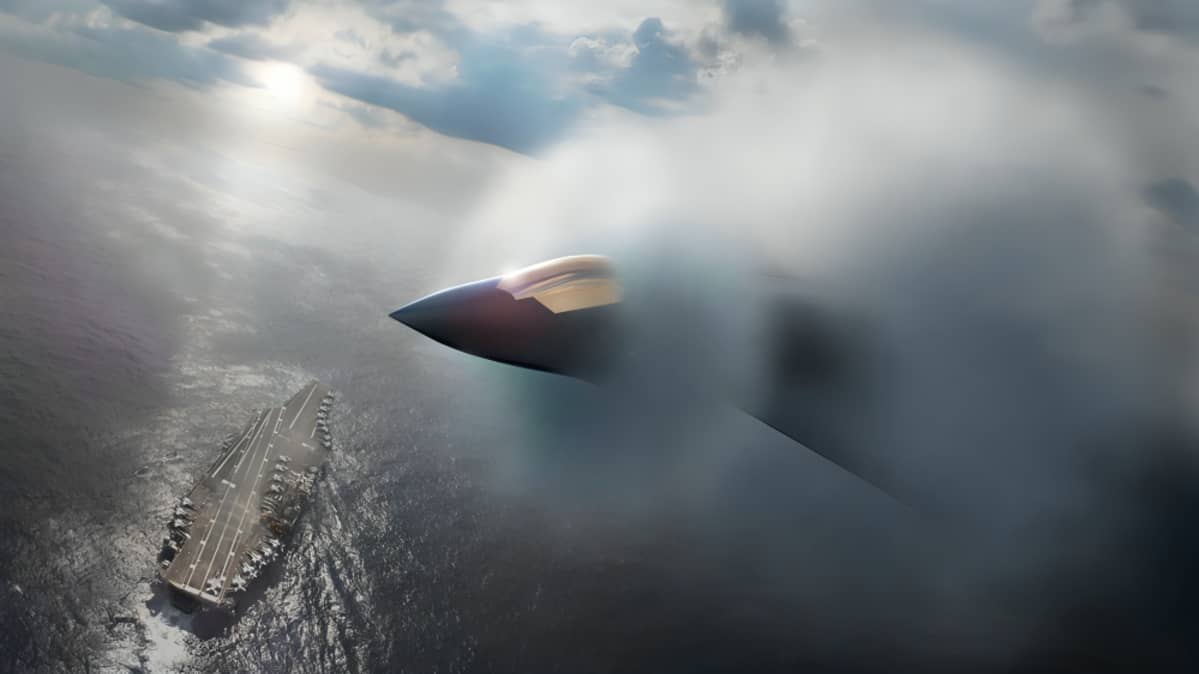
The United States Navy has selected Boeing to develop its next generation carrier based fighter aircraft under the F/A-XX programme, marking a major development in the US military aviation sector. The contract awarded to Boeing is valued at more than $20 billion for the full scale development phase of the sixth generation fighter. The announcement was made by the US Department of War and the US Navy on September 29, 2026.
The F/A-XX is being developed as a sixth generation strike fighter for the US Navy. The aircraft is part of the Navy’s Next Generation Air Dominance programme and is expected to become an important component of future carrier air wings. According to the official announcement, the contract includes the development and delivery of multiple test aircraft that will be used for ground testing, airworthiness evaluation, systems integration and weapons integration testing.
The selection represents Boeing’s second major US sixth generation fighter programme. In 2025, Boeing was selected to develop the US Air Force’s F-47 sixth generation fighter under its own Next Generation Air Dominance programme. With the latest Navy decision, Boeing is now responsible for developing the crewed sixth generation fighter programmes for both the US Air Force and US Navy.
The F/A-XX programme is expected to play a significant role in the future of the US Navy’s carrier aviation capability. The new aircraft is intended to eventually replace the Navy’s F/A-18E/F Super Hornet fleet. The Navy is also expected to operate the new fighter alongside other advanced aircraft, including the F-35, as part of a more connected and technologically advanced carrier air wing.
The technical specifications of the F/A-XX remain largely classified. Boeing has stated that the programme will involve advanced mission systems, open mission systems architecture and increased operational reach and capacity. The company has also confirmed that the detailed technical and programme information remains classified under US national security and export control requirements.
The new fighter is expected to provide the Navy with greater operational reach compared with current carrier based fighter aircraft. Defence reporting has indicated that the F/A-XX is being designed around the future requirements of carrier operations, including operations in highly contested environments. The aircraft is also expected to work alongside unmanned systems and other networked platforms as the Navy develops its future air combat structure.
The contract follows a lengthy and closely watched competition. Boeing and Northrop Grumman were the two companies involved in the final stage of the competition, according to defence industry reporting. The decision had been delayed amid discussions about funding, industrial capacity and the relationship between the Navy’s F/A-XX programme and the Air Force’s F-47 programme. The final selection now gives Boeing responsibility for both major US crewed sixth generation fighter programmes.
The Navy has said that the F/A-XX is expected to begin flying during the 2030s. The programme will therefore involve several years of engineering, development, testing and integration before the aircraft reaches operational service. The test aircraft included in the development contract are expected to support different stages of evaluation before the Navy moves toward wider deployment.
Boeing described the selection as an important milestone for its defence business. The company said it had invested in facilities, technology and personnel to support the development of advanced combat aircraft. Boeing also said that its strategy was to develop multiple advanced fighter programmes at the same time, referring to its work on both the Navy’s F/A-XX and the Air Force’s F-47.
The F/A-XX programme is also significant for the future of the US Navy’s aircraft carrier operations. The Navy is gradually moving toward an air wing that combines manned aircraft, unmanned platforms, advanced sensors and networked weapons systems. The new fighter is expected to form part of this broader structure rather than operate as an isolated platform.
The aircraft will eventually operate alongside existing and future systems, including the F-35 and planned Collaborative Combat Aircraft. The objective is to create a more integrated combat network in which crewed and unmanned aircraft can share information and coordinate missions. Specific capabilities of the F/A-XX, however, have not been publicly disclosed because of the classified nature of the programme.
The Boeing contract also comes at an important stage for the company’s military aircraft business. Boeing has traditionally produced the Navy’s F/A-18 family, and the F/A-XX programme is intended to provide the company with a future fighter aircraft programme as production of current generation aircraft eventually declines. The company is also developing the F-47 for the US Air Force, giving it a major role in the next generation of American crewed combat aircraft.
The more than $20 billion figure announced for F/A-XX refers to the full scale development phase rather than the final lifetime cost of the entire programme. The contract will support design and development work, testing and other activities required to move the aircraft toward future operational deployment. The overall cost of producing and maintaining the aircraft over its service life could therefore be different from the value of this development contract.
The US Navy’s decision marks a major step for the F/A-XX programme after years of uncertainty and delays. Boeing will now move forward with the development of the Navy’s sixth generation carrier based fighter, while detailed information about its design and capabilities remains classified. The aircraft is expected to enter flight testing in the 2030s and eventually become a central part of the Navy’s future carrier air wing.