US President Donald Trump has announced a change in the terminology used by the federal government for artificial intelligence, directing executive branch agencies to use the term Super Intelligence, or SI, instead of Artificial Intelligence, or AI, in specified official communications.
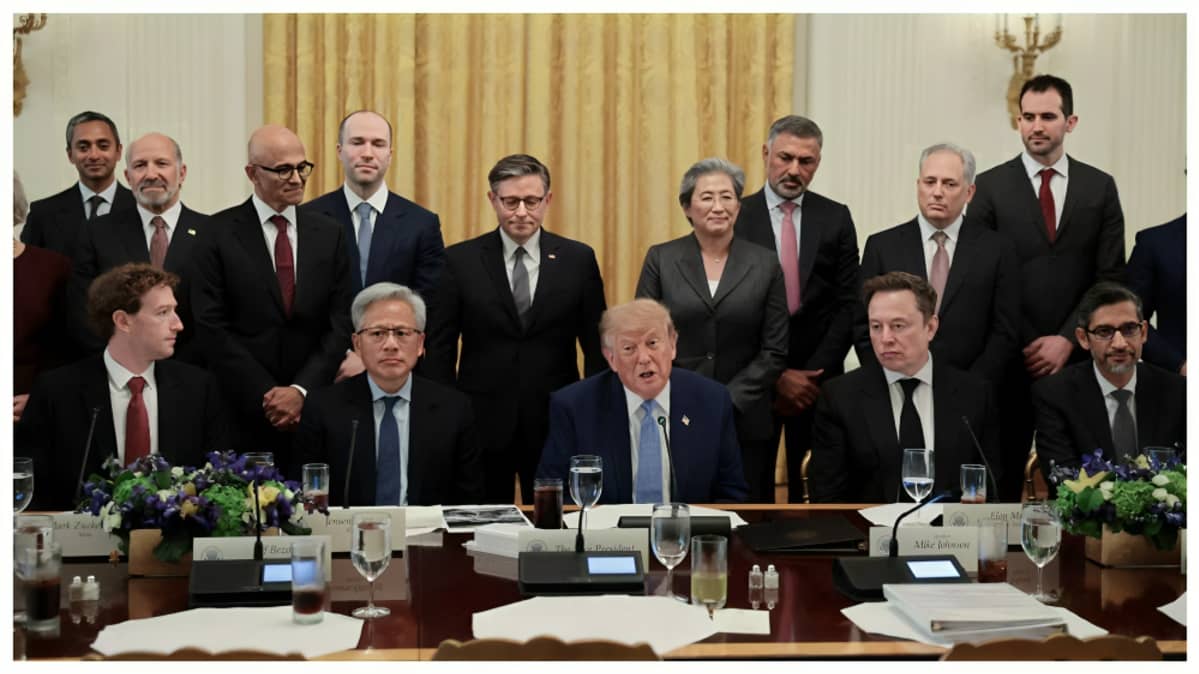
The announcement came on September 29, 2026, following a White House meeting attended by several leading technology executives. Trump also announced a voluntary agreement with major technology companies aimed at establishing additional safety controls and review mechanisms for advanced artificial intelligence systems.
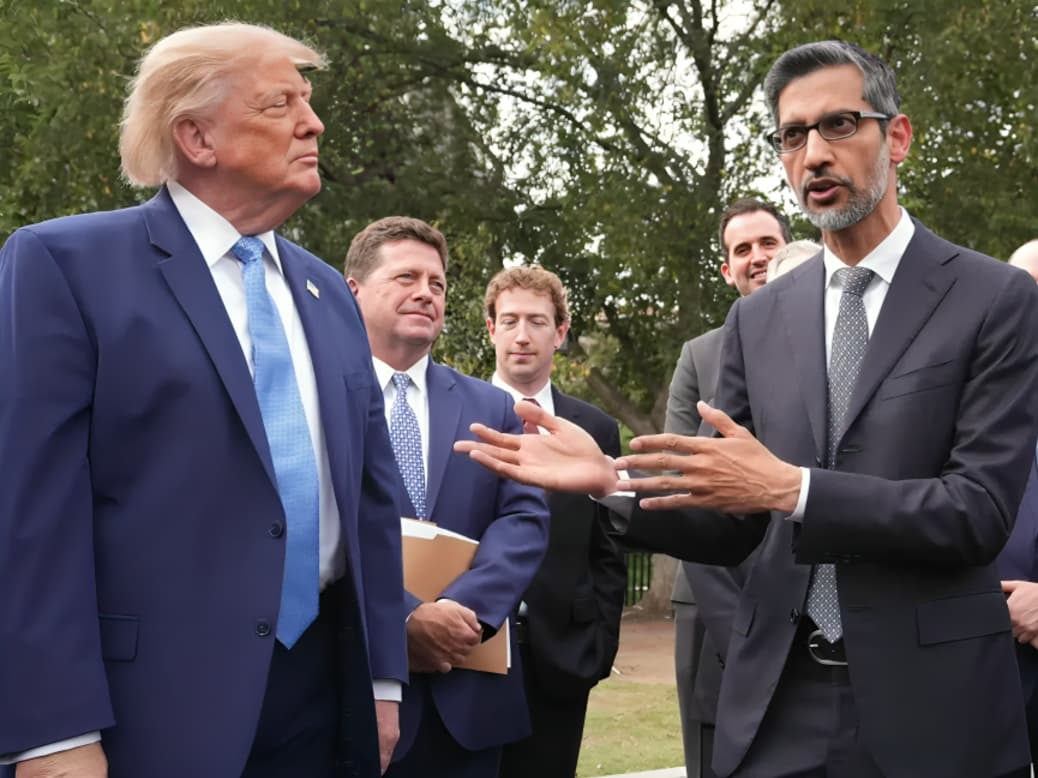
The White House meeting brought together senior figures from several major technology and artificial intelligence companies. Participants included executives associated with companies such as Google, Meta, Nvidia, Anthropic and OpenAI. Microsoft chief executive Satya Nadella and other technology leaders were also present at the event.
The agreement has been described as the White House Accord on Super Intelligence and is structured as a voluntary commitment by participating companies. Trump called the agreement morally binding and compared it to a constitution, while House Speaker Mike Johnson described it as a voluntary statement of principles and commitments. The agreement does not currently establish legally enforceable requirements for the participating companies.
The accord focuses on how companies should monitor and evaluate advanced AI systems. One of its main provisions calls for companies developing and deploying frontier AI models to establish robust internal controls to monitor their systems and identify potential problems.
The companies also committed to multiple layers of review and auditing. These measures include internal risk assessments, external independent evaluations and oversight by company boards. The purpose is to assess whether AI systems are operating as intended and whether problems can be identified and corrected.
Another area covered by the agreement concerns the potential misuse of advanced AI systems. The companies agreed to work on controls intended to prevent their AI systems from accessing technical systems or carrying out actions in unintended ways. The agreement also refers to risks involving areas such as cybersecurity, biosecurity and chemical threats.
The agreement leaves open the possibility that some of these voluntary measures could eventually become formal laws or regulations. The document states that, over time, it may make sense to codify certain measures into legislation or regulation. This means the current accord functions primarily as an industry commitment rather than a new federal regulatory framework.
Trump's decision to promote the term Super Intelligence represents a separate part of the administration's approach to advanced AI. Under the executive order, federal agencies are instructed to use the terms Super Intelligence and SI in official correspondence, public communications, websites, reports, policy documents and other specified non-statutory materials.
The order also directs agencies not to use the terms Artificial Intelligence and AI in those communications. The administration has argued that the new terminology better reflects the rapidly advancing capabilities of modern AI systems.
The terminology change does not itself create a new category of technology. AI remains the widely used technical and industry term for computer systems capable of performing tasks that traditionally require human intelligence. The administration's decision primarily changes the terminology that federal agencies are instructed to use in specified official contexts.
The White House meeting also focused on the broader question of how rapidly developing AI technology should be governed. Technology companies are facing increasing scrutiny over the potential risks associated with advanced AI systems, including cybersecurity concerns, unintended autonomous actions and the possibility of harmful misuse.
According to Reuters reporting, the companies agreed to work with independent auditors to assess whether their AI systems are functioning according to their intended design. They also agreed to develop stronger internal controls and review procedures.
The discussion comes at a time when governments and technology companies around the world are debating how to balance AI development, economic growth, innovation and safety. The United States has also been competing with China to maintain leadership in advanced computing and artificial intelligence.
Trump has repeatedly emphasized the importance of maintaining US technological competitiveness. At the White House meeting, he also discussed the expansion of data centers, which provide the computing capacity needed to develop and operate advanced AI models. The rapid construction of data centers has generated debate in some US communities because of their electricity requirements and other local impacts.
The administration is also considering the creation of an approximately 10 member committee to monitor the broader AI sector. Trump said the proposed group could oversee the development and safety of the technology, although the exact membership and structure had not been finalized at the time of the announcement.
Trump also indicated that the administration planned to appoint an official to lead White House AI policy. The proposed position would be part of the administration's broader effort to coordinate its approach to the rapidly changing technology.
The voluntary nature of the agreement is an important part of the announcement. While Trump described it as morally binding, reports from the Associated Press, Reuters and other news organizations noted that the agreement does not have the same legal force as legislation or a federal regulation. Its effectiveness will therefore depend on how participating companies implement the commitments and how future government policy develops.
The agreement also represents an effort to establish common practices among major technology companies. Internal controls, independent assessments and board oversight are intended to provide several levels of review as companies develop increasingly capable AI systems.
For users and businesses, the development could lead to greater transparency about how advanced AI systems are tested and monitored. However, the practical impact will depend on how the companies implement the commitments and whether additional legal or regulatory requirements are introduced in the future.
The White House initiative therefore combines two separate developments: a government terminology change from Artificial Intelligence to Super Intelligence in specified federal communications, and a voluntary industry agreement focused on safety controls and auditing.
The announcement is expected to remain part of the wider US debate over AI governance, technological competition and the responsibilities of companies developing advanced AI systems. The participating companies have committed to the principles outlined in the accord, while the administration has left open the possibility of further oversight measures in the future.