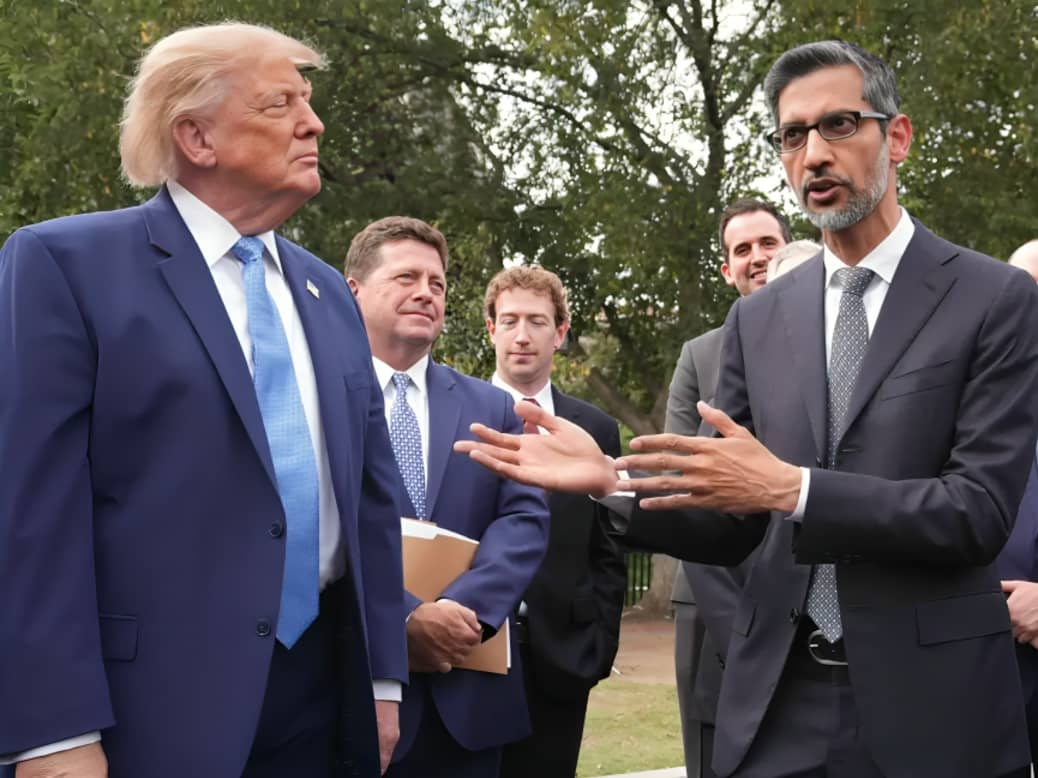
US President Donald Trump attracted attention during a White House interaction with Google CEO Sundar Pichai after describing the Indian origin technology executive as a “monster.” Trump made the remark while speaking to reporters following a meeting with leading technology executives in Washington.
The comment was made in a light hearted context as Trump praised Pichai and drew attention to his first name. During the interaction, Trump turned towards Pichai and asked him whether he wanted to say something. As Pichai began speaking, Trump interrupted and continued praising the Google chief.
Trump said Pichai was a “monster” and suggested that many people did not know him personally. He then repeatedly emphasised Pichai’s first name, saying that people only needed to remember “Sundar.” The unusual description quickly attracted attention after a video of the interaction circulated online.
Pichai appeared to take the remark in a humorous manner. Responding to Trump, he joked that he hoped the description would become a better tagline than being called a “monster.” His response prompted laughter from people around them.
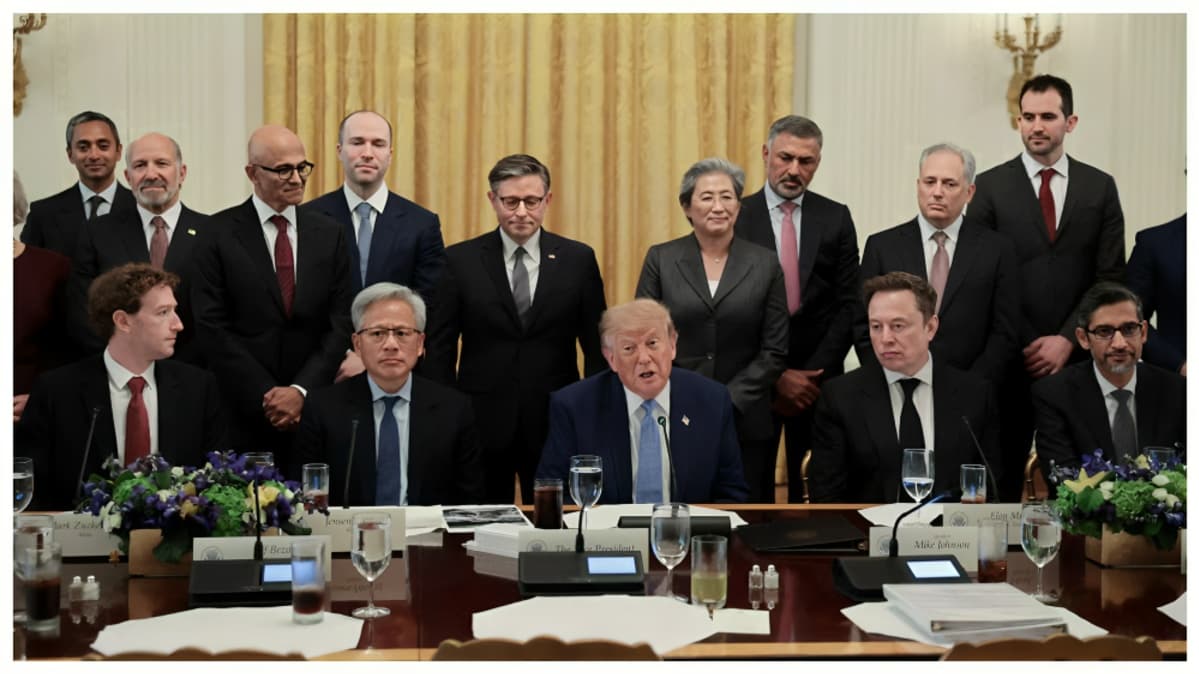
The exchange took place after a White House meeting involving senior executives from some of the world's largest technology companies. The meeting focused on artificial intelligence, the responsibilities of technology companies and safeguards for increasingly advanced AI systems.
Among the technology leaders attending the meeting were Sundar Pichai of Google, Meta CEO Mark Zuckerberg, Nvidia CEO Jensen Huang, Anthropic CEO Dario Amodei and OpenAI President Greg Brockman. Other technology industry figures were also present during the discussions.
The meeting came as the Trump administration continued discussions about the development and oversight of advanced artificial intelligence. Trump said technology companies should play a major role in establishing safeguards and monitoring the development of increasingly powerful AI systems.
According to reports, Trump and technology executives signed a voluntary agreement related to AI development and safety. The agreement was described as “morally binding,” meaning that it was intended to establish commitments and practices for the participating companies but was not presented as a legally enforceable regulatory framework.
The agreement included commitments relating to internal controls, safety processes and reviews of advanced AI systems. The discussions reflected the growing debate over how governments and technology companies should manage the risks associated with rapidly developing AI technologies.
Trump said the technology companies would take greater responsibility for monitoring their own development of AI systems. He described the approach as self policing and indicated that the administration was considering a mechanism through which representatives from the industry could participate in overseeing the development of the technology.
Pichai also spoke about the AI agreement following the meeting. Reports said he referred to the introduction of established control processes for the development of advanced AI and described the effort as part of the industry's approach to managing the technology.
The White House meeting brought together executives representing several major technology companies at a time when artificial intelligence has become a major issue in technology, business and government policy.
The discussions covered both the opportunities and potential risks associated with advanced AI. Technology executives have increasingly been involved in discussions with governments over issues such as AI safety, security, responsible development and the possible social and economic effects of increasingly capable systems.
The meeting also highlighted the close interaction between the US government and major technology companies on AI policy. While governments are considering regulatory approaches, technology companies have been developing their own safety standards and internal controls.
Against this backdrop, Trump's exchange with Pichai became one of the lighter moments of the event. Rather than being presented as a formal criticism, the “monster” remark was delivered while Trump was praising Pichai and drawing attention to his prominence in the technology industry. Pichai's humorous response further reinforced the informal nature of the exchange.
The video of the interaction subsequently attracted considerable attention online. Trump's repeated emphasis on the name “Sundar” and Pichai's response became the main focus of social media discussion surrounding the event.
Sundar Pichai, who was born in Chennai, India, is the chief executive officer of Google and its parent company Alphabet. He has been one of the most prominent Indian origin executives in the global technology industry.
Pichai's participation in the White House meeting also placed Google among the major technology companies involved in discussions over the future of advanced AI. Google has been developing and deploying AI technologies across its products and services, making the company's role significant in the broader debate over AI development and safety.
The White House meeting therefore had two distinct aspects. The main focus was the future development and safety of artificial intelligence, while the informal exchange between Trump and Pichai generated additional public attention.
The AI agreement signed during the meeting is part of a broader effort to establish voluntary standards for companies developing increasingly advanced AI systems. The exact implementation and effectiveness of such voluntary commitments will depend on how participating companies apply the agreed principles and controls.
For now, the “monster” comment remains one of the most widely discussed moments from Trump's interaction with Pichai. Pichai's light hearted response helped turn the unusual description into a brief humorous exchange during a meeting otherwise focused on the serious subject of artificial intelligence and technology safety.