California has officially moved to ban child marriage after Governor Gavin Newsom signed legislation setting 18 as the minimum age for marriage and domestic partnerships in the state. The new law, Assembly Bill 1267, was signed on September 30, 2026, and will come into effect on January 1, 2027.
Under the new law, people under the age of 18 will no longer be able to legally marry in California. The legislation removes provisions that previously allowed minors to marry with parental consent and approval from a court. California had previously been one of the US states without a statutory minimum age for marriage, although minors were subject to certain procedural requirements.
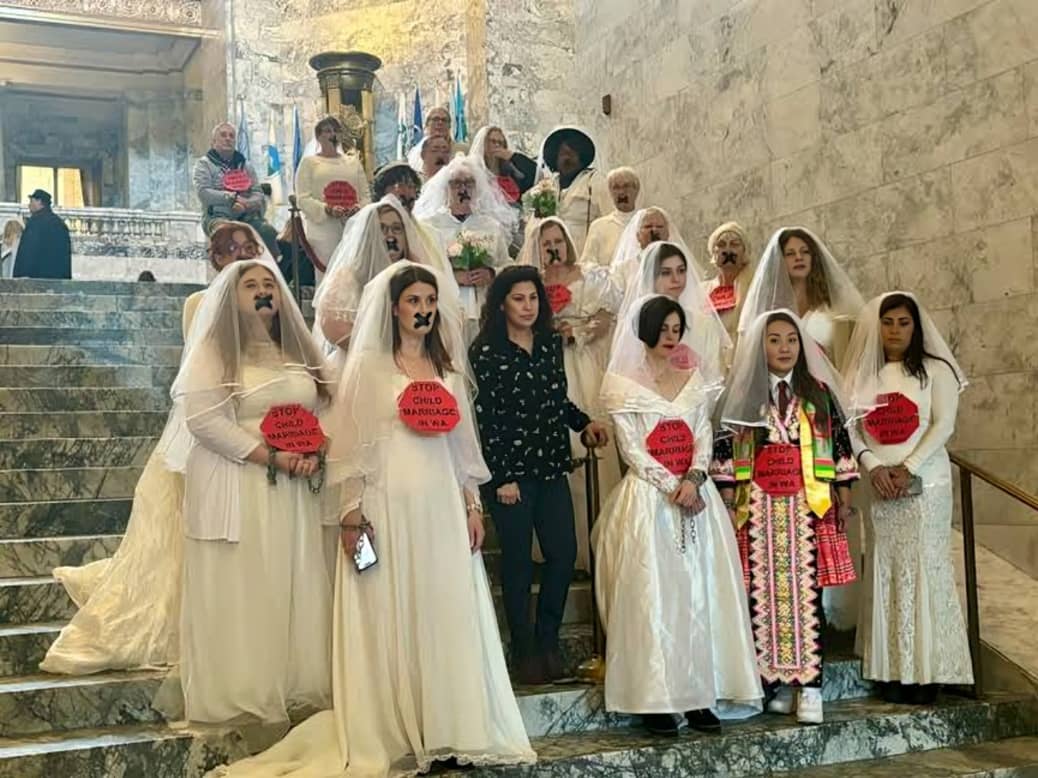
The legislation makes California the 18th US state to completely prohibit marriage for people under 18 without exceptions, according to the California governor's office. The change follows several years of legislative efforts and campaigning by organisations and people who experienced marriage as minors.
Governor Gavin Newsom said the legislation was intended to strengthen protections for minors. The bill was supported by Assemblymember Gail Pellerin and other lawmakers, as well as organisations working on child marriage and forced marriage issues.
The change also closes a legal pathway that had previously allowed minors to marry if the required parental and judicial approvals were obtained. Before the new law, California did not specify a statutory minimum marriage age, although minors seeking to marry had to meet other legal requirements.
The issue has attracted attention across the United States because laws concerning marriage involving minors differ significantly between states. While California has now adopted an absolute minimum age of 18, 32 other states continue to allow marriage involving people under 18 in certain circumstances, according to current reports.
These state laws are not uniform. In some states, minors may marry at 16 or 17 with parental permission, judicial approval or other conditions. In other states, different statutory provisions can create exceptions. The legal requirements therefore vary considerably depending on the state involved.
According to the latest state-by-state information reported after California's legislation was signed, the 32 states that continue to permit some form of marriage involving minors are Alabama, Alaska, Arizona, Arkansas, Colorado, Florida, Georgia, Hawaii, Idaho, Illinois, Indiana, Iowa, Kansas, Kentucky, Louisiana, Maryland, Mississippi, Montana, Nebraska, Nevada, New Mexico, North Carolina, North Dakota, Ohio, South Carolina, South Dakota, Tennessee, Texas, Utah, West Virginia, Wisconsin and Wyoming.
The legal situation is particularly notable in Mississippi and New Mexico. Current reports state that, after California's new law takes effect, those two states will be the only states whose statutes do not specify a minimum marriage age. However, marriage laws involve multiple legal provisions, so the absence of a statutory minimum does not necessarily mean that every minor can marry without restrictions.
California's legislation follows a wider national movement that has sought to restrict or eliminate marriage involving minors. According to reports, all US states previously permitted child marriage in some form. Delaware and New Jersey became the first states to introduce complete bans in 2018, and other states have subsequently changed their laws.
The campaign for a complete ban in California continued for several years. Earlier legislation allowed minors to marry after parental consent and judicial approval. Supporters of the new law argued that these safeguards did not completely prevent minors from being pressured or coerced into marriage.
The legislation also received support from survivors and advocacy organisations. Courtney Stodden, who was allowed to marry actor Doug Hutchison at the age of 16 under the earlier legal framework, attended the signing ceremony with Newsom and has campaigned publicly against child marriage.
At the same time, the debate over child marriage laws has included concerns about the legal rights and circumstances of minors. CalMatters reported that the American Civil Liberties Union had opposed earlier versions of the legislation, arguing that marriage can provide certain legal protections and benefits to minors.
The California legislation therefore represents a significant change in the state's marriage law. Once the law takes effect in January 2027, a person must be at least 18 to marry or enter into a domestic partnership in California. The previous exceptions involving parental consent and judicial approval will no longer apply.
The development also highlights the differences between state laws across the United States. While California has established a clear minimum age of 18, a substantial number of states continue to maintain legal exceptions allowing people under 18 to marry. The conditions attached to those exceptions vary by jurisdiction.
The debate is expected to continue in states that still permit marriage involving minors. Supporters of stricter laws are seeking uniform minimum-age standards, while opponents or critics of particular proposals have raised questions about the legal consequences for minors and their access to the rights and protections associated with marriage.
California's new law does not change marriage laws in other US states. Each state continues to regulate marriage within its own legal framework. As a result, the legal age and conditions for marriage involving minors will continue to differ across the country unless individual states change their laws.
The California law will formally take effect on January 1, 2027. Until then, the existing legal framework remains in place, subject to the transition provisions of the new legislation. The development is being viewed as another step in the broader US debate over minimum marriage ages and protections for minors.