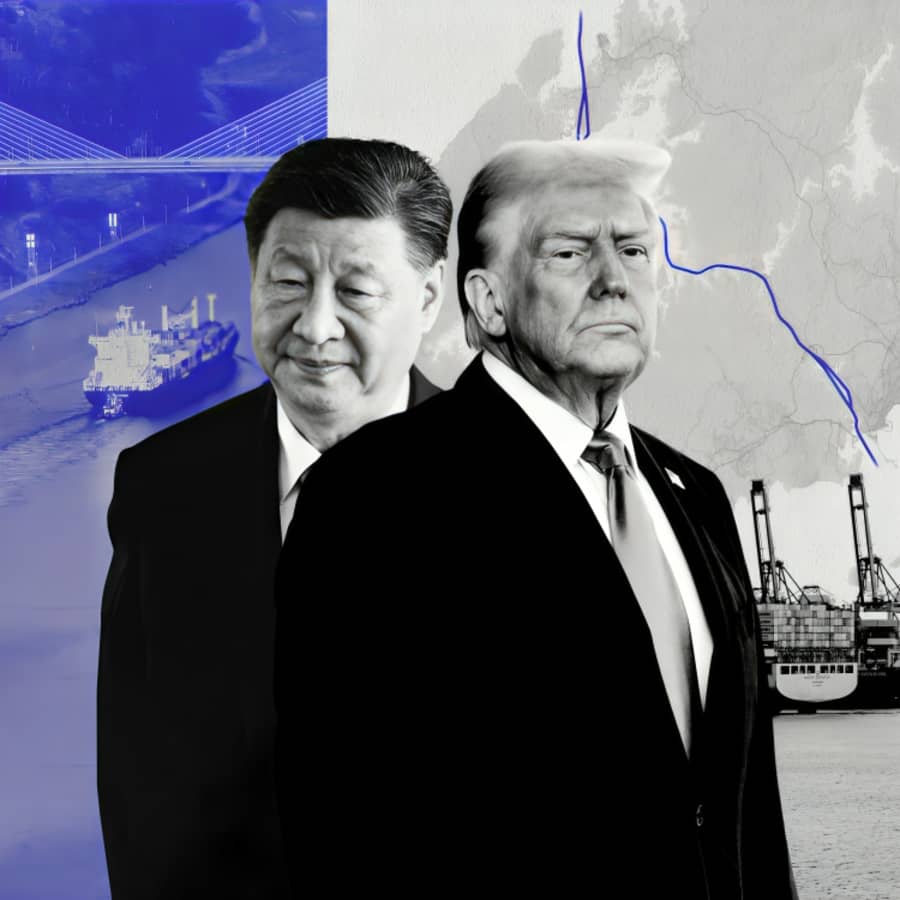

US President Donald Trump has once again commented on the strategic importance of the Panama Canal, criticizing the historic decision by the United States to transfer control of the waterway to Panama. Speaking during a public event, Trump described the handover as a mistake and raised concerns about what he believes is China's expanding influence in the region.
The Panama Canal is one of the world's most important maritime trade routes, connecting the Atlantic and Pacific Oceans. Since its transfer to Panama on December 31, 1999, under the terms of the Torrijos Carter Treaties, the canal has been administered by the Panama Canal Authority, an autonomous agency of the Government of Panama.
During his remarks, Trump argued that the United States had invested heavily in constructing and maintaining the canal and questioned the long term implications of the transfer. He also claimed that China has increased its economic presence around the canal through infrastructure investments and commercial activities, raising concerns about the strategic balance in the region.
Chinese companies have participated in several infrastructure and port related projects in Panama over the years. However, the Government of Panama has consistently maintained that the Panama Canal remains under the exclusive control and administration of the Panama Canal Authority, as provided under the country's constitution and legal framework.
The Chinese government has also rejected allegations that it controls or seeks to control the Panama Canal. Chinese officials have stated that the country's engagement in Panama is based on trade, investment, and economic cooperation conducted in accordance with international laws and bilateral agreements.
The Panama Canal remains a vital route for global commerce, handling thousands of vessels each year and facilitating international trade between Asia, Europe, and the Americas. Any discussion regarding its administration or security often attracts global attention because of its economic and geopolitical significance.
Analysts note that concerns regarding strategic infrastructure have become an important aspect of international relations. Investments by major global powers in ports, shipping facilities, and transportation networks are frequently examined through both economic and national security perspectives.
Trump's latest comments are expected to contribute to ongoing discussions about the role of foreign investment in critical infrastructure and the broader strategic competition between the United States and China. However, no official evidence has been presented indicating that China exercises operational control over the Panama Canal.
Officials in Panama have repeatedly affirmed that the canal is operated independently by Panamanian authorities and that its neutrality is protected under international agreements. The waterway continues to function as one of the world's most significant trade corridors, serving shipping companies from countries around the globe.
The debate reflects broader geopolitical discussions about global trade routes, infrastructure investment, and international influence. Any changes relating to the administration or governance of the Panama Canal would require action under Panama's legal framework and applicable international agreements.