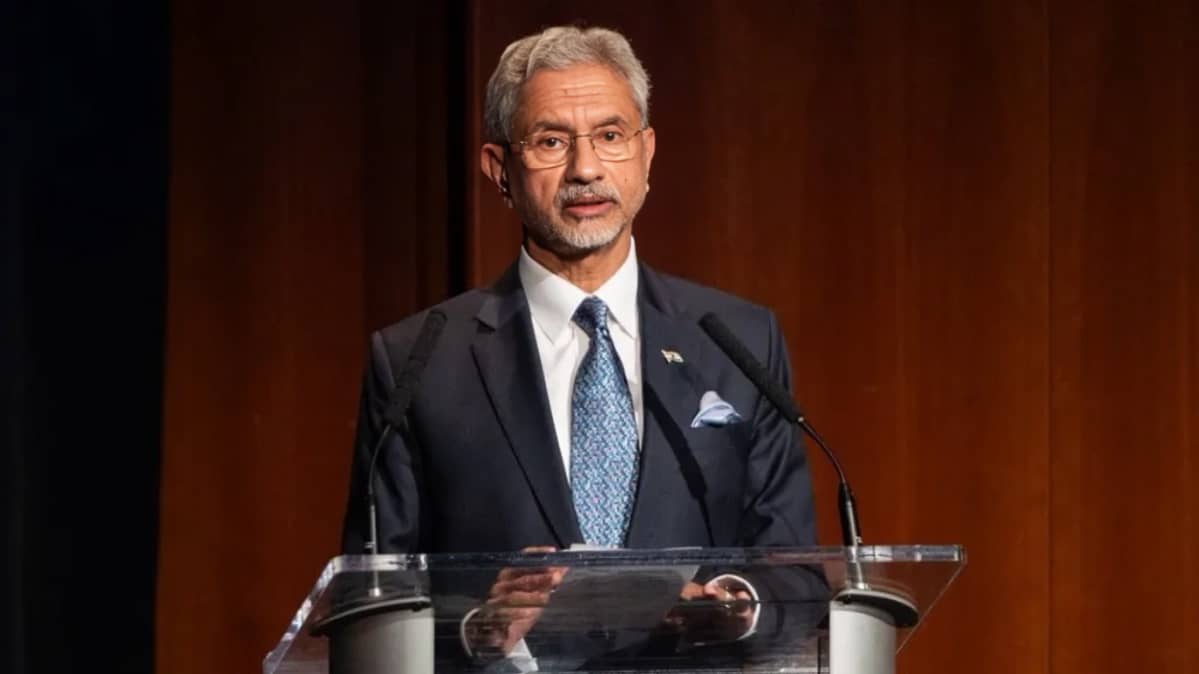
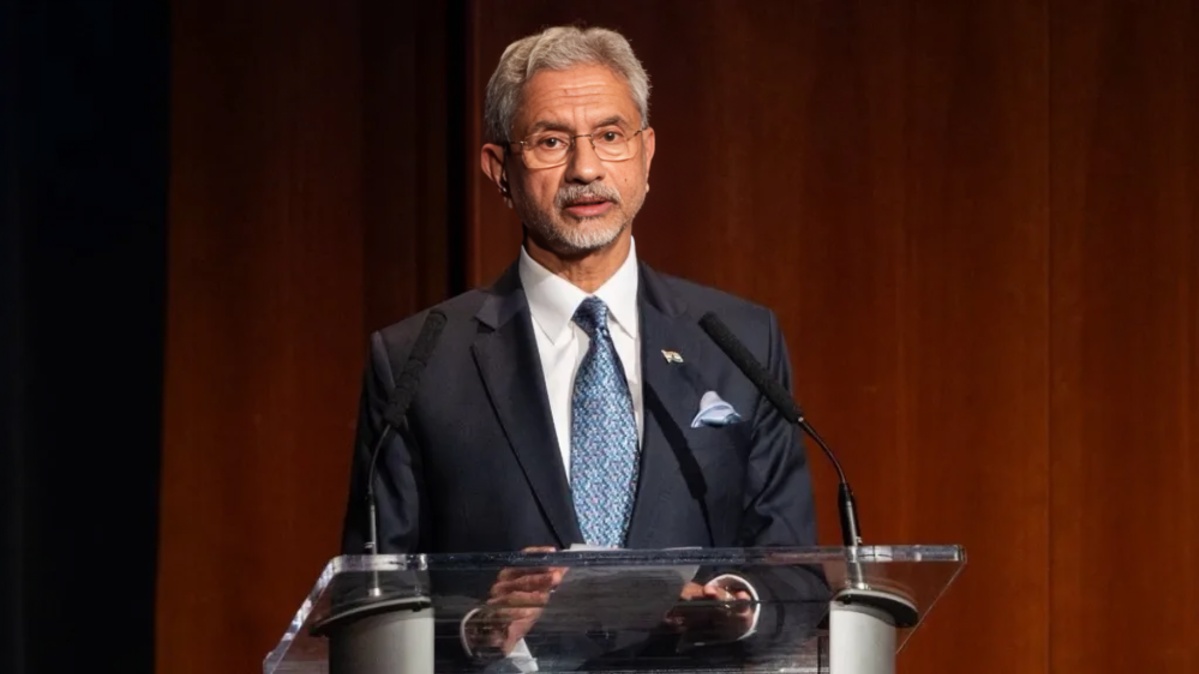
External Affairs Minister S Jaishankar has said that a lack of sufficient understanding in the United States regarding India’s security concerns over terrorism could have an impact on bilateral relations. He made the remarks while speaking at an Asia Society event in New York during his ongoing engagements in the United States.
Jaishankar placed terrorism among the issues that require greater understanding between India and the United States. According to his remarks, India considers security a particularly important aspect of its foreign policy because of the terrorism threat it has faced from a neighbouring country over several decades.
During the discussion, Jaishankar said that India has experienced terrorism from a neighbouring country as part of what he described as a deliberate policy over many years. He said that when an issue is deeply important to one country, insufficient understanding or appreciation of that concern by its partner can create problems in the bilateral relationship.
The minister did not present terrorism as the only issue affecting India US relations. He also referred to trade differences and other areas where the two countries need to manage their respective national interests. At the same time, he said India would like the relationship with the United States to continue on an upward trajectory.
Jaishankar's remarks come at a time when India and the United States continue to cooperate in several areas while also dealing with differences on trade, energy and foreign policy. The two countries have maintained cooperation in areas including defence, technology, counterterrorism, critical minerals and supply chains.
The External Affairs Minister's comments specifically focused on India's security priorities. He said that the perception of terrorism and the response to it are particularly important for New Delhi. From India's perspective, cross border terrorism has remained a major foreign policy and national security concern for decades.
India has repeatedly raised concerns over terrorism originating from across its borders. New Delhi has also called for international cooperation against terrorist organisations and their financing. The Indian government has consistently maintained that terrorism should not be treated differently depending on where it originates or who carries it out.
Jaishankar's latest comments also need to be viewed in the context of recent diplomatic developments between India, the United States and Pakistan. The United States has continued to engage with Pakistan on a range of regional and security issues. New Delhi has closely monitored these developments because of its longstanding security concerns involving Pakistan based terrorist groups and cross border terrorism.
The minister's remarks indicate that India expects its major security concerns to receive adequate consideration from its strategic partners. He said that if a primary concern of one partner is not fully appreciated by the other, there would naturally be an impact on the broader relationship.
At the same time, Jaishankar emphasised that India wants to maintain and develop its relationship with Washington. He acknowledged that the two countries have differences but said that both sides need to work through those issues.
The India US relationship has expanded significantly over the past several years. Cooperation has grown in defence and security, technology, space, semiconductors, critical minerals and other strategic areas. Counterterrorism has also been identified by both countries as an important area of cooperation.
During a joint press conference in May 2026, Jaishankar and US Secretary of State Marco Rubio highlighted counterterrorism as an area where India and the United States have shared interests. Jaishankar described terrorism as one of the common challenges faced by the two countries and said cooperation would continue bilaterally and through international forums.
The United States has also previously cooperated with India on investigations and counterterrorism matters. In the May 2026 discussions, Jaishankar referred to the extradition of a key planner of the 26/11 Mumbai attacks from the United States to India as an example of counterterrorism cooperation between the two countries.
Jaishankar's comments in New York therefore come against a broader background of cooperation as well as differences between the two countries. While both governments continue to describe their relationship as strategically important, they have also been negotiating issues where their national interests do not completely align.
Trade has emerged as another important issue in the relationship. Jaishankar said that differences over trade also need to be addressed as India and the United States seek to strengthen their partnership. He noted that both countries have their own national interests and that areas of disagreement have to be managed through dialogue.
Energy policy is another area where India has emphasised its national interests. New Delhi has sought to maintain access to affordable energy while diversifying its sources of supply. India's position has been that its energy requirements are closely connected with the needs of its large population and growing economy.
The broader diplomatic relationship also includes cooperation on emerging technologies and supply chains. During the May 2026 India US discussions, both sides highlighted areas such as artificial intelligence, semiconductors and critical minerals as important components of future cooperation.
Jaishankar's latest comments therefore do not indicate that India is seeking to end cooperation with Washington. Instead, his remarks focused on the importance of ensuring that India's security priorities are adequately understood while the two countries manage differences in other areas.
The External Affairs Minister also said that India wants the bilateral relationship to move forward. His comments reflected the position that strategic partnerships involve both areas of convergence and areas where national interests may differ.
For India, terrorism remains a core security concern. The government has repeatedly maintained that the country has the right to defend itself against terrorism and protect its citizens. Jaishankar reiterated this broader position during his recent international engagements.
For the United States, counterterrorism cooperation with India remains one part of a wider strategic relationship that includes the Indo Pacific, defence cooperation, technology, trade and economic engagement. The two countries have continued high level diplomatic consultations despite differences over several policy issues.
The latest remarks from Jaishankar are therefore significant because they underline the importance India places on how its security concerns are viewed by its strategic partners. His comments also show that New Delhi intends to raise these concerns directly while continuing engagement with Washington.
As India and the United States work through their differences, terrorism, trade, energy and broader strategic interests are expected to remain important subjects in bilateral discussions. The two countries continue to cooperate in several areas, while each government seeks to protect its respective national interests.