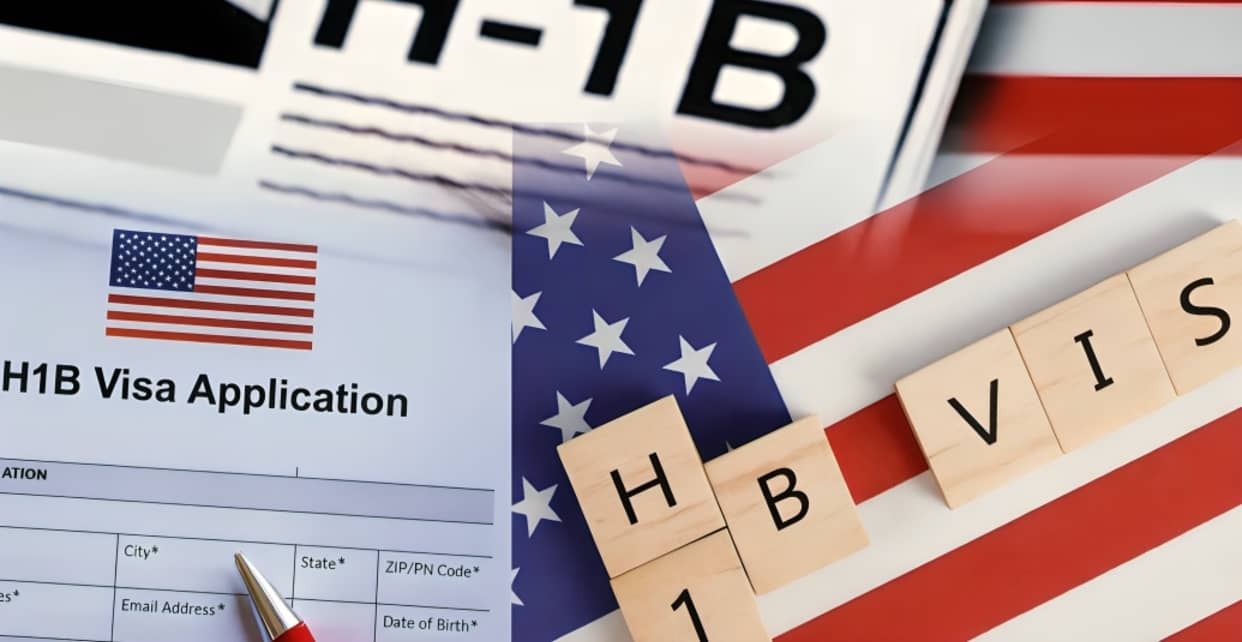

A United States federal appeals court has declined to suspend a lower court order that blocked the implementation of a proposed $100,000 fee on certain new H 1B visa applications introduced by the Trump administration. The decision means the earlier court ruling will remain in effect while the legal challenge continues through the judicial process.
The appeals court concluded that the administration had not demonstrated a sufficient likelihood of success on appeal to justify lifting the injunction. As a result, the proposed fee increase cannot be enforced unless a future court ruling permits its implementation.
The H 1B visa program allows US employers to hire qualified foreign professionals in specialized occupations that typically require advanced education or technical expertise. The program is widely used in industries such as information technology, engineering, healthcare, finance, research, and higher education.
The proposed $100,000 fee was introduced as part of broader immigration policy measures intended to discourage misuse of the H 1B visa system and encourage employers to prioritize hiring domestic workers. Supporters of the proposal argued that higher costs could reduce dependence on foreign labor and strengthen opportunities for the American workforce.
However, the proposal faced legal challenges from business organizations and affected stakeholders. Opponents argued that the fee was significantly higher than existing visa charges and could create substantial financial burdens for employers that rely on highly skilled international professionals. They also questioned whether the executive branch had the legal authority to impose such a fee without explicit congressional approval.
During the appeal, the administration sought to overturn the lower court's injunction and allow the fee to take effect while the case proceeded. The federal appeals court, however, determined that the legal requirements for granting such relief had not been met.
The ruling does not represent a final decision on the overall legality of the proposed fee. Instead, it addresses whether the administration could enforce the policy before the courts complete their review of the case. The underlying legal challenge is expected to continue through the federal court system.
The H 1B visa program remains an important component of the US labor market, particularly for technology companies, research institutions, universities, and multinational businesses that recruit specialized talent from around the world. Each year, thousands of skilled professionals apply for H 1B visas to work in the United States.
Immigration policy has long been a subject of legal and political debate in the United States. Changes affecting employment based visas often receive close attention from employers, foreign workers, educational institutions, and industry groups because they can influence workforce planning, business operations, and international recruitment.
Legal experts note that federal courts frequently review executive actions related to immigration to determine whether they comply with existing laws and constitutional requirements. Such cases often involve questions regarding statutory authority, administrative procedures, and the scope of executive power.
The latest appeals court decision means that the proposed $100,000 H 1B visa fee will remain blocked while the legal proceedings continue. Employers and prospective applicants will continue to follow the existing fee structure until a final judicial decision or any future legislative action changes the policy.
The case is expected to remain closely watched by businesses, immigration attorneys, technology companies, and foreign professionals, as its outcome could influence future immigration policy and the administration of employment based visa programs in the United States.