Halloween is celebrated every year on October 31 and is known for its distinctive traditions, including wearing costumes, decorating homes, carving pumpkins and going door to door to collect sweets. Although it is now widely recognised as a fun-filled celebration, its history is connected to ancient seasonal festivals, religious observances and traditional beliefs about the dead.
Halloween 2026 will be observed on Saturday, October 31. The festival has its historical roots in the ancient Celtic celebration of Samhain and later became associated with Christian observances such as All Saints' Day and All Souls' Day. Over several centuries, these traditions gradually developed into the modern celebration known across many parts of the world.
One of the most popular Halloween customs is trick-or-treating. Children dress up in different costumes, visit neighbouring houses and ask for sweets by saying trick or treat. However, the tradition has a longer history than its modern form suggests.
Why Is Halloween Celebrated on October 31?
Halloween is observed on October 31 because it falls on the evening before All Saints' Day, which is celebrated on November 1 in the Christian calendar. The word Halloween is derived from All Hallows' Eve, meaning the evening before All Hallows' Day.
All Saints' Day is dedicated to remembering and honouring saints in Christian tradition. November 2 is observed as All Souls' Day in many Christian communities, with prayers and remembrance for the departed.
The timing of Halloween is also connected to the ancient Celtic festival of Samhain. This festival marked the end of the harvest season and the beginning of the darker winter period. It was traditionally observed around October 31 and November 1.
The combination of seasonal customs and Christian observances helped shape the history of Halloween. Although the festival has religious and cultural connections, modern celebrations in many countries focus mainly on entertainment, costumes and community activities.
Ancient Celtic Festival of Samhain
The history of Halloween is commonly traced to Samhain, an ancient Celtic festival celebrated in parts of present-day Ireland, Scotland and other regions of Europe.
For Celtic communities, Samhain marked an important seasonal transition. It signalled the end of the harvest and the beginning of winter, a period traditionally associated with cold weather, darkness and uncertainty.
According to ancient beliefs, the boundary between the world of the living and the spirit world became less distinct during Samhain. Some people believed that spirits of the dead could return to the earthly world during this period.
Bonfires were an important part of the celebrations. Communities gathered around large fires, which were associated with protection and seasonal rituals. People also wore disguises and costumes, sometimes made from animal skins, as part of traditional practices connected with spirits and supernatural beliefs.
These customs were influenced by the religious and cultural beliefs of the communities that celebrated Samhain. They were not identical to today's Halloween activities, but they contributed to the development of some familiar traditions.
Over time, the festival's customs blended with other cultural and religious practices, helping shape the celebration that is now known as Halloween.
How Christianity Influenced Halloween
As Christianity spread across Celtic regions, older seasonal customs gradually came into contact with Christian religious observances.
All Saints' Day became an important Christian occasion dedicated to honouring saints and martyrs. During the eighth century, Pope Gregory III moved the observance to November 1 in Rome. The celebration was later extended more widely within the Church.
The evening before All Saints' Day became known as All Hallows' Eve. Over time, this name developed into Halloween.
All Souls' Day, observed on November 2, also became associated with remembering the dead. These Christian observances contributed to the religious background of Halloween and helped shape the calendar of celebrations around October 31 and the first two days of November.
The development of Halloween was therefore not the result of a single event. It emerged through the gradual blending of ancient Celtic traditions, Christian observances and regional customs that changed over many centuries.
What Does Trick or Treat Really Mean?
Trick-or-treating is one of the most recognisable Halloween traditions, particularly in countries such as the United States, Canada, Ireland and the United Kingdom.
During this activity, children wear costumes and visit houses in their neighbourhoods. When residents open their doors, the children ask for treats by saying trick or treat. The treats usually include chocolates, sweets, candies and other small gifts.
The phrase presents a playful choice. A treat means that the children receive something enjoyable, while a trick refers to a harmless prank if they do not receive a treat. In modern celebrations, the activity is generally organised around collecting sweets rather than carrying out pranks.
The tradition has connections to older European customs. One of them was known as souling, in which poor people visited homes and received small cakes called soul cakes in exchange for prayers for the dead members of the household.
Another related custom was guising, particularly in Scotland and Ireland. People dressed in costumes and visited homes, where they performed songs, poems, jokes or other activities in exchange for food and gifts.
These practices are considered important influences on modern trick-or-treating. However, the exact origin of the phrase trick or treat is not clearly established. The modern activity became particularly popular in the United States during the twentieth century.
Why Do People Wear Costumes on Halloween?
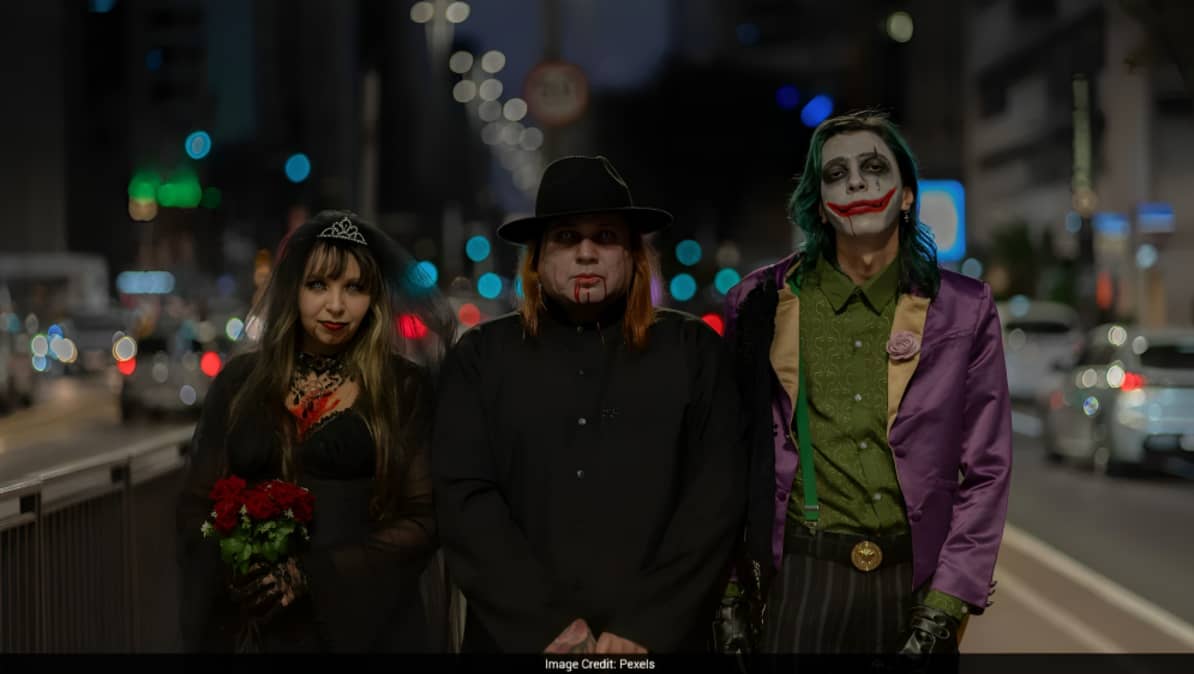
Wearing costumes is another major part of Halloween celebrations. Traditional choices include ghosts, witches, skeletons, vampires and other supernatural characters. In recent years, people have also started dressing as superheroes, film characters, cartoon figures and other popular personalities.
The practice has historical connections to Samhain and medieval European customs. In some traditional celebrations, people wore disguises because of beliefs about spirits and supernatural beings.
Over time, the meaning of costumes changed. Instead of being connected mainly to traditional beliefs, costumes became a form of entertainment and creative expression.
Today, Halloween costume parties are organised in schools, offices, residential communities and entertainment venues. Children and adults participate in costume competitions, themed events and other activities.
Why Are Pumpkins Associated With Halloween?
Carved pumpkins, commonly known as jack-o'-lanterns, are among the most familiar symbols of Halloween.
The tradition has Irish roots and is associated with an old folk story about a character called Stingy Jack. In traditional versions of the story, Jack tricks the devil and is eventually left wandering with a burning coal inside a carved vegetable.
In Ireland and Scotland, people originally carved turnips and other root vegetables to create lanterns. When Irish immigrants arrived in the United States during the nineteenth century, they found pumpkins more readily available and easier to carve.
As a result, pumpkins gradually became the preferred material for Halloween lanterns. Today, people carve different faces and designs into pumpkins and place lights inside them as decorations.
How Halloween Became Popular Around the World
Halloween became particularly popular in the United States during the nineteenth and twentieth centuries. Irish and other immigrants brought their traditional customs to the country, helping spread celebrations involving costumes, neighbourhood visits and seasonal gatherings.
By the early twentieth century, Halloween parties and community events had become increasingly common. Trick-or-treating developed into an organised activity, especially for children, and became a central part of the celebration.
Today, Halloween is celebrated in several countries through costume events, themed parties, horror films, pumpkin decorations and special entertainment programmes. Its popularity has also grown in India, particularly in urban areas, where schools, restaurants, shopping centres and social groups organise themed events.
Although the way people celebrate differs from country to country, the festival continues to combine traditional symbols with modern entertainment.
Halloween 2026: Date and Significance
Halloween 2026 falls on Saturday, October 31. The celebration offers an opportunity to understand the history behind traditions that are now widely recognised around the world.
From the ancient Celtic festival of Samhain to Christian observances and modern trick-or-treating, Halloween has developed through centuries of cultural change.
While many people today celebrate it by wearing costumes, collecting sweets and attending parties, its historical background remains connected to seasonal changes, remembrance of the dead and traditional beliefs about the spirit world.
Understanding the origins of Halloween helps explain why October 31 is celebrated and how the phrase trick or treat became an important part of the festival.