
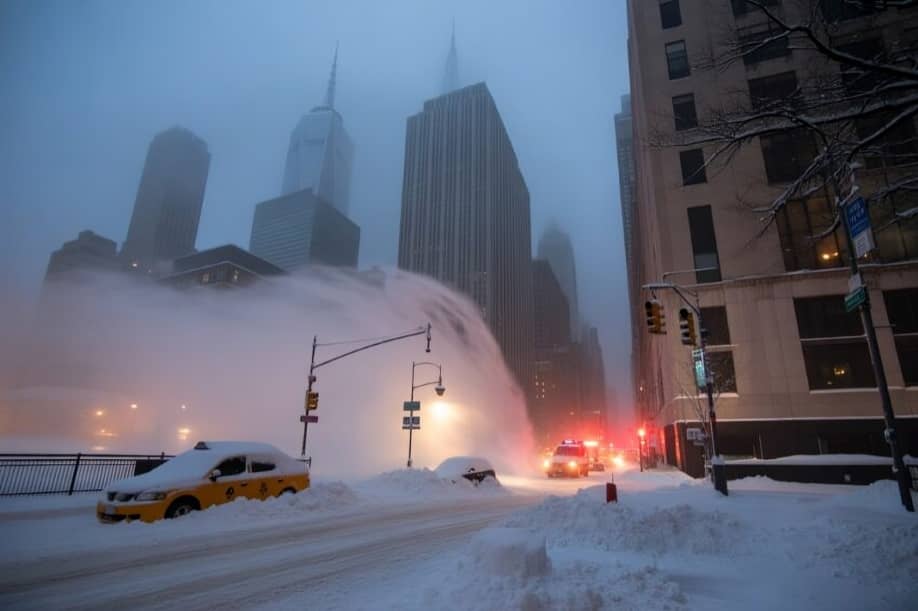
Historic Winter Storm Hernando has swept across the northeastern United States, bringing heavy snowfall, powerful winds and widespread disruption to major cities and towns. Millions of residents across the region are under travel advisories as authorities warn of hazardous conditions and limited visibility.
In New York City, officials have strongly advised residents to remain indoors unless travel is absolutely necessary. By morning, approximately 30 centimeters of snow had already fallen, and meteorologists forecast that an additional 30 centimeters could accumulate before the storm moves out of the region. The combination of steady snowfall and gusting winds has created near whiteout conditions in some areas, making both pedestrian and vehicle movement difficult.
City authorities have closed public schools and restricted road access to essential workers only. Those permitted on the roads include emergency responders, hospital personnel and other critical service providers. Public transportation services have experienced delays and partial suspensions as crews attempt to manage snow buildup on tracks and roadways.
Snowplow teams have been deployed across the city and surrounding areas to clear streets and highways. However, the intensity of the storm has made it challenging to maintain clear routes. Fresh snowfall quickly covers previously plowed roads, leading to slushy and slippery conditions. Officials have cautioned drivers about the risk of accidents and urged residents to avoid unnecessary travel.
The impact of Storm Hernando extends beyond New York. States along the East Coast, including Connecticut, Massachusetts and Maine, are experiencing similar weather conditions. Heavy snow and strong winds have led to school closures, flight cancellations and power disruptions in several communities. Coastal regions are also monitoring the risk of minor flooding due to strong winds and shifting tides.
Meteorologists describe the storm as one of the most significant winter systems of the season. The rapid accumulation of snow combined with sustained wind speeds has intensified the storm’s effects. Emergency management agencies across affected states have activated response plans to ensure that critical infrastructure remains operational and that vulnerable populations receive assistance.
Residents who must travel, including healthcare and emergency workers, are navigating difficult conditions. Reduced visibility and icy surfaces have slowed traffic considerably. Authorities continue to provide regular updates through official communication channels, advising people to prepare for possible power outages and extended disruptions.
As the storm moves northward, forecasters are closely tracking its progress and potential impact on additional regions. While snowfall is expected to ease once the system passes, cleanup efforts may take several days. Officials emphasize the importance of following safety advisories and allowing emergency crews to perform their duties effectively.
Winter Storm Hernando highlights the challenges posed by extreme weather events in densely populated regions. With transportation systems affected and daily life disrupted, recovery efforts will focus on restoring normal operations once conditions improve.


