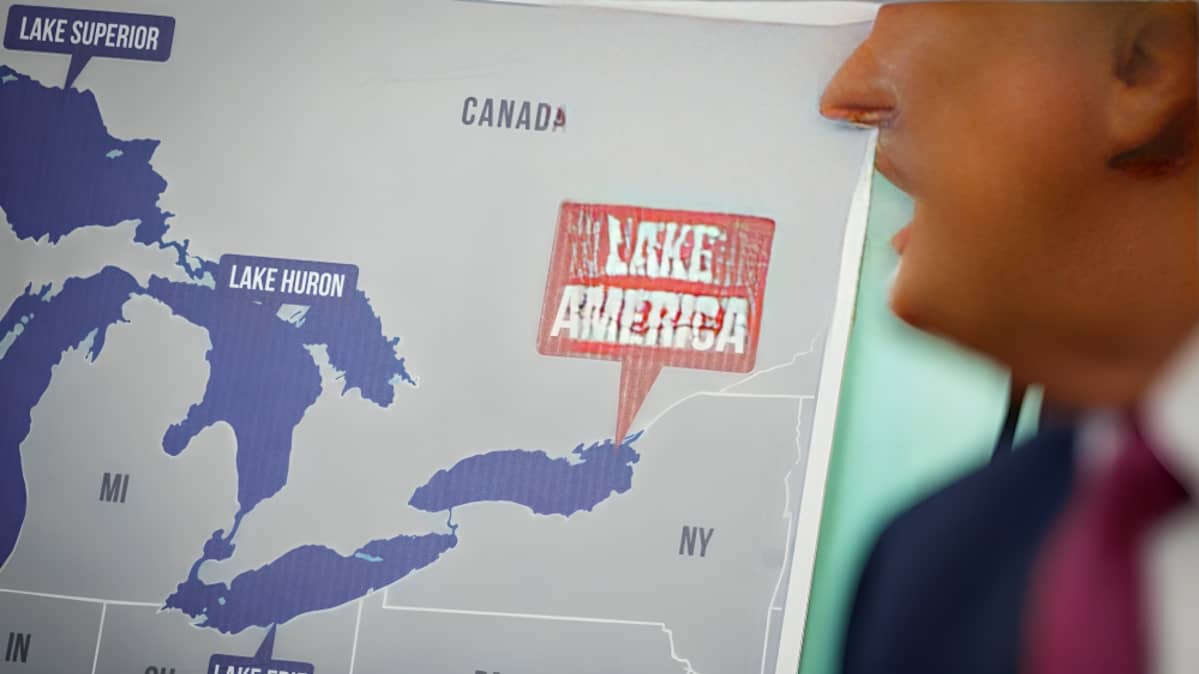
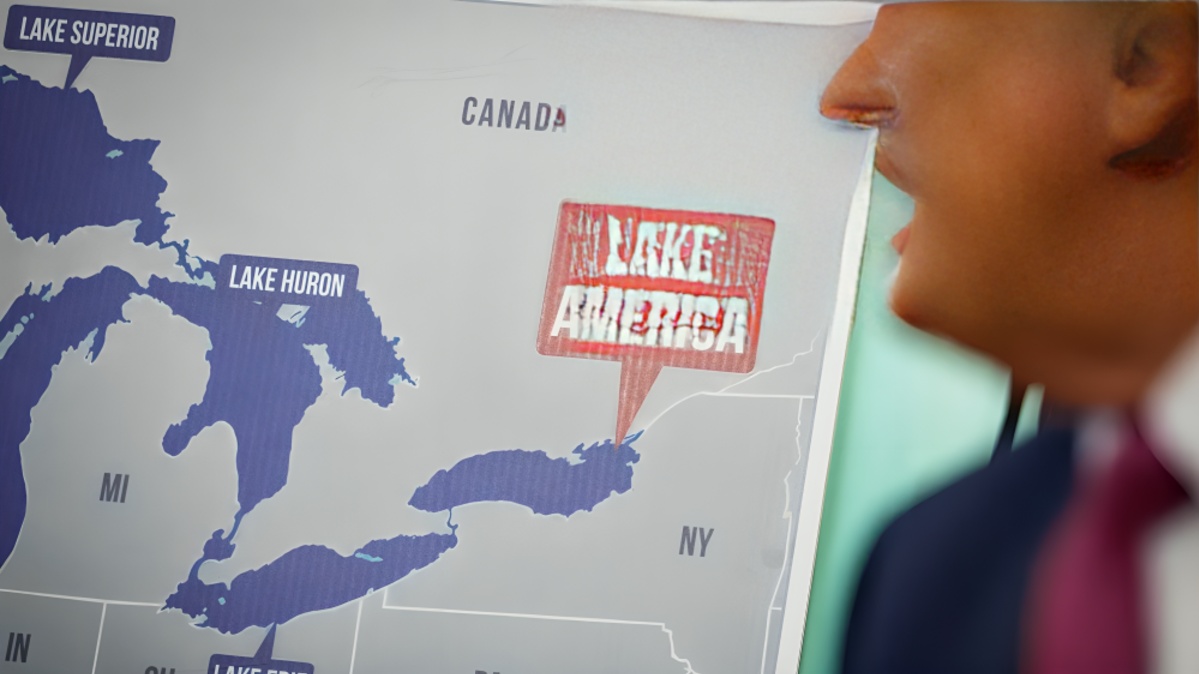
US President Donald Trump has asked Apple to rename Lake Ontario as Lake America on its Maps application, according to US Interior Secretary Doug Burgum.
Burgum said Trump had contacted Apple directly and expressed confidence that the company could introduce the new name on its mapping service. However, Apple had not publicly confirmed that it would make the change at the time of reporting. Apple Maps continued to display Lake Ontario, according to reports.
The request comes shortly after Trump signed an executive order directing the US government to rename the body of water as Lake America in federal geographic records. The order was signed on August 27, 2026, and instructs the US Interior Department and the US Board on Geographic Names to update the Geographic Names Information System.
The executive order applies to the portion of the lake covered by the United States. Lake Ontario is shared by the United States and Canada, with the US states of New York and the Canadian province of Ontario bordering the lake.
The US government can change the name used in its own federal records, maps and official documents. However, the order does not have authority over Canada's geographic naming systems or international naming conventions. As a result, the lake continues to be known as Lake Ontario in Canada and in many international contexts.
Google has already responded to the US government's change. Google Maps now displays Lake America for users in the United States. Canadian users continue to see Lake Ontario, while users in other parts of the world may see both names depending on the service and location.
The situation with Apple Maps is different. The company had not yet implemented the requested change when Burgum discussed Trump's request. The Interior secretary suggested that an update could be coming, but Apple had not issued an official statement confirming when or whether the name would change.
The dispute has attracted attention because Lake Ontario is one of North America's five Great Lakes and is an important geographic feature shared by the United States and Canada. The lake plays a major role in transportation, tourism, fishing, industry and the economies of communities on both sides of the border.
The proposed name change also comes amid heightened tensions between Washington and Ottawa. The United States and Canada have been involved in a broader trade dispute involving tariffs and negotiations over economic and commercial issues.
Trump's decision to change the US government's official designation of Lake Ontario has been criticised by Canadian politicians and other observers. Canadian officials have continued to use the traditional name Lake Ontario.
The controversy is similar to Trump's earlier effort to change the US government's name for the Gulf of Mexico to the Gulf of America. US mapping services subsequently adopted different approaches depending on the user's location and the geographic naming information used by the platforms.
The latest Lake Ontario dispute has also highlighted the role of technology companies in implementing government geographic naming decisions. Mapping platforms such as Google Maps and Apple Maps are widely used by millions of people for navigation, travel and location searches.
Government agencies may update official geographic databases, but private companies determine how they incorporate that information into their products. Their policies can therefore affect how users in different countries see the same geographic feature.
Google has said its mapping service follows the US Geographic Names Information System for US users. That approach enabled it to introduce Lake America for people accessing Google Maps from the United States after the federal government made the change.
MapQuest, another mapping platform, has taken a different position. The company has said it will continue using the name Lake Ontario rather than adopting Lake America. Its decision has attracted considerable attention online and has contributed to increased interest in the service.
The different responses demonstrate that a change in US federal geographic records does not automatically require every mapping service worldwide to adopt the same terminology.
For Apple, the issue is particularly significant because Apple Maps is widely used across the United States, Canada and other countries. A decision to adopt the new name could raise questions about how the service displays the lake to users in different regions.
Google's approach provides one possible model. US users see Lake America, Canadian users continue to see Lake Ontario and users elsewhere may see both names. Apple's eventual decision could follow a similar location-based approach, although the company has not announced its plans.
The lake itself remains geographically unchanged. The name change concerns terminology used in US government records and does not alter the lake's physical location, borders or relationship between the United States and Canada.
Lake Ontario is the easternmost and smallest by surface area of the five Great Lakes. It forms part of the international boundary between the United States and Canada and connects to the Atlantic Ocean through the Saint Lawrence River.
The lake has long been associated with the history and development of both countries. Its waters support commercial shipping, recreational activities and communities on both sides of the border.
Because the lake is shared by two countries, a unilateral change by one government does not automatically result in international adoption of the new name. Canada has not accepted the US government's terminology change.
The controversy has therefore become another point of disagreement between the neighbouring countries at a time when economic and diplomatic relations are already under pressure.
For now, the immediate development is Trump's request to Apple. The US president has asked the company to update its Maps application, while the company had not yet confirmed that it would do so.
The White House and US Interior Department are proceeding with the federal naming change through the country's geographic naming system. Google Maps has already reflected the change for US users, while other mapping services have chosen different approaches.
The situation could evolve as Apple decides how to respond to the request. Any update to Apple Maps could also depend on the user's location, as mapping companies often display geographic names differently based on regional conventions.
Until Apple makes an official announcement, reports that Lake Ontario has already been renamed on Apple Maps should therefore be treated cautiously.
The broader issue also highlights the difference between a government changing the name it uses in official records and an internationally recognised geographic name changing globally.
Trump's executive order establishes the new terminology for US federal purposes, but it does not compel Canada or international organisations to adopt the name.
As the US and Canada continue to navigate their trade dispute, the Lake America controversy is likely to remain a symbolic issue in bilateral relations.
For American users, the change is already visible on Google Maps. For Canadian users, the traditional name Lake Ontario remains in use. For Apple users, the situation remains dependent on whether Apple decides to implement Trump's request.
The key development is therefore that Trump has asked Apple to make the change, but Apple had not confirmed the renaming at the time of reporting.
The proposed change represents another example of the Trump administration's effort to alter geographic names in US government records. It also illustrates how such decisions can create different naming conventions across countries and digital mapping platforms.
The final outcome on Apple Maps will depend on Apple's own mapping policies and its response to the US government's geographic naming decision.