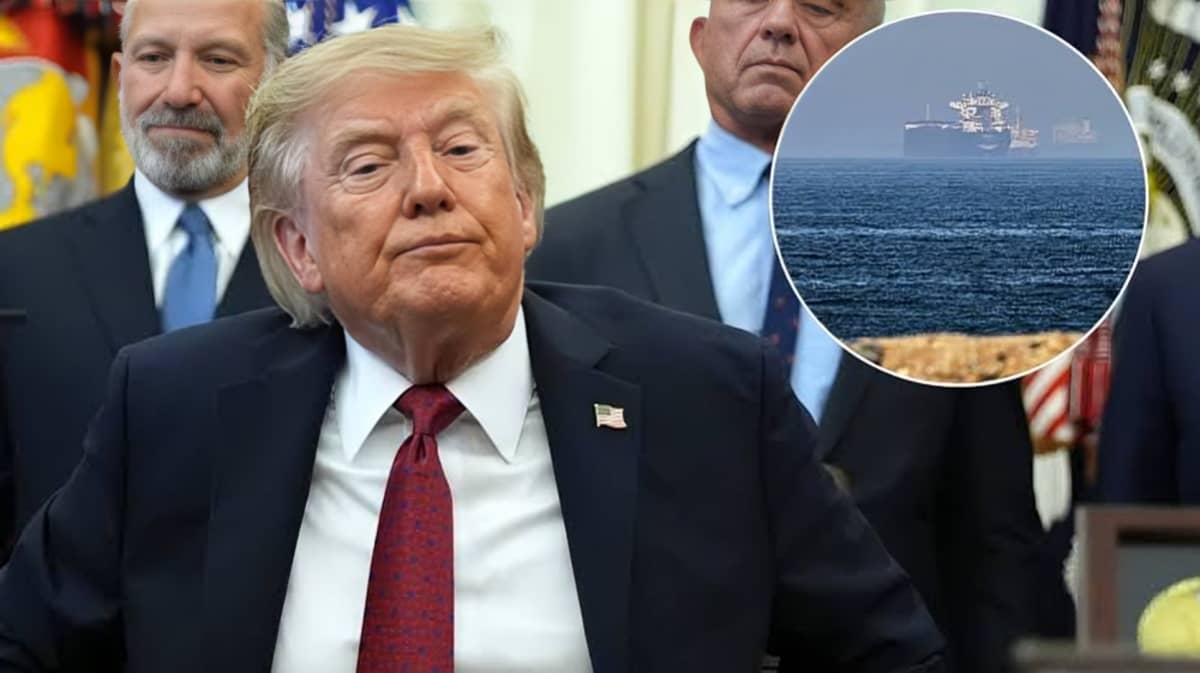
US President Donald Trump has backed away from his earlier suggestion that the Strait of Hormuz could be renamed Trump Strait, saying the idea was just thrown out there. His comments came shortly after he publicly raised the possibility of changing the name of the strategically important waterway amid continuing tensions between the United States and Iran.
Trump first raised the proposal in a post on his social media platform. He questioned whether the Strait of Hormuz should be renamed Trump Strait, linking the suggestion to his claim that the United States had gained control over the waterway. The statement quickly attracted international attention because the Strait of Hormuz is one of the world's most important maritime routes.
The Strait of Hormuz connects the Persian Gulf with the Gulf of Oman and lies between Iran and Oman, with the wider region also involving the United Arab Emirates. The waterway is particularly important for international energy transportation, as large volumes of oil and other energy products pass through the region.
Trump's proposal came against the backdrop of continuing military tensions between Washington and Tehran. The Strait has become a major focus of the wider confrontation because of its strategic location and importance to commercial shipping and global energy markets.
After raising the renaming idea, Trump was asked whether he genuinely intended to change the name of the Strait of Hormuz. He responded that it was just thrown out there, appearing to indicate that the proposal was not being presented as an immediate formal policy decision.
The latest comments have therefore shifted attention away from the possibility of an immediate geographical name change and towards the political significance of Trump's statement. The proposal was made during a period of heightened tensions in the region, making the comments particularly notable.
A geographical name change of an internationally recognised waterway is also different from changing the terminology used by an individual government or political leader. The Strait of Hormuz is an internationally recognised geographic name, and Trump's comments do not by themselves establish a change to the internationally used name.
The proposal also follows Trump's earlier interest in changing the names of geographical locations. His administration has promoted changes involving other geographic names, including the use of alternative terminology for locations in North America. However, the Strait of Hormuz presents a different situation because it is an international maritime passage rather than a geographic feature located solely within US territory.
Trump's comments about control of the waterway have also been disputed in the context of the continuing confrontation with Iran. Reports have noted that Iran does not accept the US claim of control over the Strait. The strategic waterway remains closely connected to regional security and international shipping.
The Strait of Hormuz has historically been one of the most important routes for global energy supplies. Any prolonged disruption to shipping through the waterway can have consequences for oil prices, transportation costs and energy security in countries around the world.
The latest episode therefore has significance beyond the proposed name itself. Trump's statement reflects the broader geopolitical confrontation surrounding the Strait and the competing claims of influence over one of the world's most important maritime routes.
The proposal also generated discussion because of its timing. The United States and Iran remain involved in a serious confrontation, with military activity and threats affecting shipping and regional security. In that environment, a proposal to rename the waterway after the US president was viewed as a political statement connected to Washington's claims of influence.
However, Trump's subsequent clarification that the idea was merely thrown out there suggests that no immediate formal renaming process should be inferred from his comments. There has been no indication that the internationally recognised name Strait of Hormuz has officially been replaced.
For international shipping companies and energy markets, the more important issue remains the security and accessibility of the waterway. The Strait serves as a critical connection between the Persian Gulf and the Gulf of Oman, making its stability important for global commerce.
The ongoing tensions have already increased attention on maritime traffic through the region. Any further escalation could affect commercial vessels, insurance costs and energy markets, depending on developments on the ground and at sea.
Trump's statement about the proposed name also reflects his broader political communication style, in which major policy and geopolitical issues are sometimes discussed through direct statements on social media. His later response has made clear that the Trump Strait suggestion should not currently be interpreted as a completed or formally implemented geographical change.
The development is being closely followed internationally because the Strait of Hormuz is not simply a regional waterway. It is a major international shipping route with implications for oil and gas supplies, trade and global economic stability.
Iran continues to regard the area as strategically important, while the United States has increased its military focus on the region amid the ongoing confrontation. The competing positions have made the Strait a central element of the broader US Iran dispute.
For now, the official and internationally recognised name remains the Strait of Hormuz. Trump's proposed alternative name has not replaced the established geographic designation.
The episode highlights how geopolitical statements can quickly attract international attention when they concern strategically important locations. It also demonstrates the difference between a political suggestion and an officially recognised geographical name change.
Trump's decision to describe the idea as something that was simply thrown out there has reduced the immediate significance of the proposed renaming. Nevertheless, the comments have drawn renewed attention to the strategic importance of the Strait and the continuing tensions between the United States and Iran.
The focus for governments, shipping companies and energy markets is likely to remain on the security of the waterway rather than its proposed name. Any future developments concerning access, shipping or military activity in the Strait could have broader international consequences.
As the situation develops, the Strait of Hormuz is expected to remain a major point of attention in the wider Middle East crisis. For now, Trump's remarks should be understood as a political proposal that he subsequently played down, rather than as an official change to the name of the internationally recognised waterway.