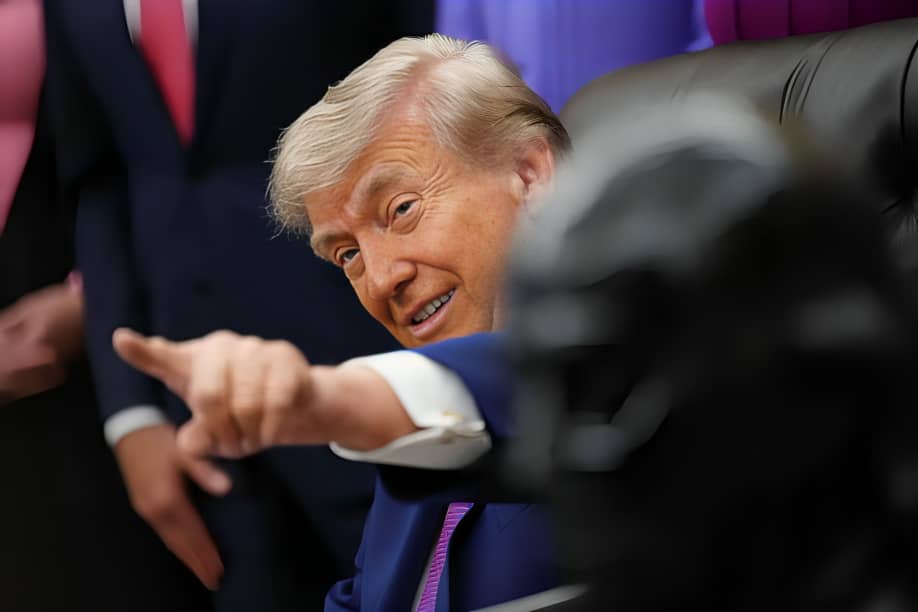

Donald Trump has once again attracted global attention after publicly reviving the idea of Venezuela becoming the “51st state” of the United States. The discussion intensified after Trump shared an image on social media showing Venezuela covered with the American flag alongside the phrase “51st State.” The development has triggered political reactions, diplomatic responses, and renewed international debate regarding sovereignty and international relations.
According to recent reports, Trump stated during a media interaction that he was “seriously considering” the idea of Venezuela joining the United States as a state. The remarks quickly drew reactions from political leaders in Venezuela and other countries across Latin America.
Venezuelan acting President Delcy Rodríguez strongly rejected the suggestion and stated that Venezuela would continue to defend its sovereignty and independence. Venezuelan officials described the proposal as unrealistic and reaffirmed that the country remains an independent nation.
Political analysts say the idea of one sovereign country becoming part of another nation would face major constitutional, diplomatic, and international legal challenges. In the United States, the admission of a new state would require approval from Congress and would involve a lengthy constitutional and political process. In addition, any such move would also require the agreement of the government and people of the concerned country. Experts note that no serious legal framework currently exists for a proposal of this nature involving Venezuela.
The discussion has also gained attention because of Venezuela’s significant oil reserves and strategic importance in South America. Trump reportedly referenced Venezuela’s large energy resources while discussing the proposal. Analysts believe the remarks are linked to broader geopolitical and economic considerations involving energy security and regional influence.
Relations between the United States and Venezuela have remained politically sensitive for many years due to sanctions, diplomatic disputes, and political instability in the South American nation. Recent political changes and discussions regarding economic cooperation have added new dimensions to the relationship between the two countries.
International relations experts note that statements involving annexation or territorial expansion often generate strong reactions because they touch on issues of national sovereignty and international law. Several Latin American political commentators reportedly expressed concern regarding the symbolism and diplomatic implications of the remarks.
Observers also point out that Trump has previously made controversial comments regarding territorial expansion and international relations. His latest remarks regarding Venezuela have therefore attracted widespread media coverage and online discussion globally.
While the proposal has generated public debate and political commentary, experts believe the possibility of Venezuela becoming a United States state remains extremely unlikely under existing constitutional and international systems. Analysts say the discussion is more likely to remain part of political rhetoric and diplomatic debate rather than evolve into a formal policy initiative.
The issue has nevertheless highlighted ongoing geopolitical tensions and changing diplomatic dynamics in the Americas. International observers continue to monitor developments involving United States relations with Latin American countries, particularly in areas related to trade, energy, migration, and regional security.
Overall, Trump’s renewed “51st state” comments regarding Venezuela have sparked significant global attention and diplomatic discussion. Although experts view the proposal as legally and politically impractical, the remarks have once again drawn focus to international relations, sovereignty, and geopolitical strategy in the Western Hemisphere.