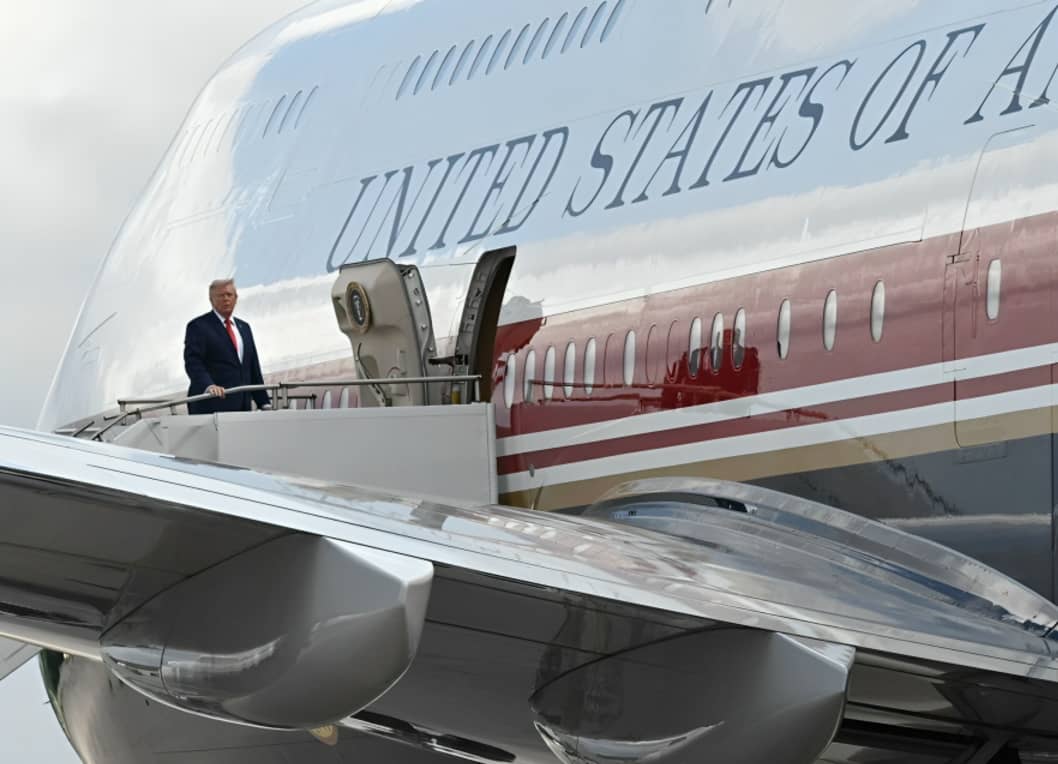

US President Donald Trump was secretly moved from Air Force One to a smaller US military aircraft during his departure from Ankara following a NATO summit, according to reports about an unusual security operation.
The aircraft switch reportedly took place after US intelligence agencies identified a potential threat to the president. Reports said US officials were concerned that Iranian operatives may have known Trump's precise location in Ankara, raising fears about a possible attack.
According to The Washington Post, the operation involved using Air Force One as a decoy while Trump was secretly transferred to another military aircraft. The unusual arrangement was reportedly designed to make it more difficult for anyone monitoring the president's movements to determine which aircraft was actually carrying him.
The reported security concern involved a possible surface to air missile threat. According to reports, US intelligence detected a person near the NATO summit area who was allegedly associated with a potential missile capability. The intelligence reportedly increased concerns that the president's location may have been compromised.
The reports have not publicly established that Iran itself ordered or attempted a missile attack against Trump. Instead, they describe intelligence assessments involving a possible Iranian threat and concerns about Iranian knowledge of the president's whereabouts. The distinction is important because the reported intelligence has not been fully disclosed publicly.
Trump later confirmed that he had switched aircraft during his return journey from Turkey. He said he followed instructions from the Secret Service and military officials after they determined that there was a greater security risk associated with his original travel arrangements.
The president said he did not seek extensive details about the threat before following the recommendation. His comments indicated that he relied on the security agencies responsible for protecting him to determine the safest method of transportation.
The operation was reportedly carried out with a high level of secrecy. Trump was initially believed to have departed Ankara aboard Air Force One, while the actual presidential movement involved another US military aircraft.
Reports said Trump was transferred discreetly between aircraft on the airport tarmac. Air Force One then continued its planned movement with other officials and members of the media aboard, helping maintain the impression that Trump was travelling on the presidential aircraft.
The incident has attracted significant attention because presidential travel arrangements are normally subject to strict security procedures. However, the decision to use a decoy aircraft demonstrated the level of concern among US security officials over the reported threat.
The alleged Iranian connection has also added significance to the incident. Relations between Washington and Tehran have remained highly tense, and US officials have previously raised concerns about threats against senior American officials.
The reported intelligence suggested that individuals linked to Iran may have had access to information about Trump's location during the NATO summit. Security officials therefore faced the challenge of preventing the president's exact movements from being identified.
The NATO summit in Ankara brought together senior leaders from member countries and required extensive security arrangements. The presence of a US president created additional security requirements, including monitoring of surrounding areas and potential threats from land, air and other forms of attack.
A surface to air missile threat is particularly serious because such weapons can potentially target aircraft operating at relatively low or medium altitudes. However, publicly available reports have not provided complete details about the specific weapon, its location or whether an actual missile launch occurred.
The reports instead indicate that US intelligence identified a credible enough threat to prompt changes to the president's travel arrangements. The decision appears to have been precautionary rather than a response to an actual attack on the aircraft.
The use of a smaller military aircraft also raised questions about the relative security of the alternative aircraft. Reuters reported that Trump himself acknowledged that the replacement aircraft could potentially have faced a significant risk. Nevertheless, security officials determined that changing the president's travel pattern was preferable under the circumstances.
The incident also raised questions about communication and transparency. Journalists travelling with the president were reportedly unaware of the change, and the public was initially given information suggesting that Trump had departed aboard Air Force One.
The secrecy was reportedly intended to protect the president rather than to conceal political information. Security officials frequently keep details of presidential movements confidential when there is a credible threat.
At the same time, the incident has prompted discussion about the balance between presidential security and transparency. Members of Congress and journalists have questioned how the unusual operation was organised and why information about the aircraft switch remained undisclosed for a period of time.
The episode also demonstrates the importance of intelligence gathering in protecting senior political leaders. Information about a president's exact location can become a major security risk if obtained by a hostile organisation.
The reported Iranian threat comes against a broader backdrop of tensions between Iran and the United States. Those tensions have included disputes over military activity, regional security and threats involving senior officials.
However, it remains important to distinguish between reported intelligence assessments and confirmed attacks. There is no public evidence that a missile was fired at Trump's aircraft during the Ankara departure. The reported threat appears to have resulted in precautionary security measures.
Trump's decision to follow the advice of the Secret Service and military officials allowed the security operation to proceed without publicly revealing his actual travel arrangements.
The reported use of Air Force One as a decoy also meant that the aircraft continued to attract attention while Trump was transported separately. This strategy potentially reduced the ability of anyone monitoring the airport to determine the president's actual location.
The incident is now drawing international attention because of its connection to Iran and the unusual measures taken to protect the US president. Further details may emerge as US officials and lawmakers review the circumstances surrounding the operation.
For now, the available reports indicate that the aircraft switch was prompted by a reported security threat and concerns that Trump's location in Ankara may have been known to individuals linked to Iran.
Trump has confirmed that the aircraft change took place and said he followed the instructions of his security and military teams. The precise nature of the intelligence that led to the decision, however, remains classified or undisclosed.
The episode highlights the continuing security challenges faced by the US president during overseas travel and the importance of protecting presidential movements from potential threats. It also shows how quickly travel plans can be changed when intelligence agencies identify a possible danger.
As questions continue over the reported threat, the focus remains on what US intelligence detected, how Iranian-linked actors allegedly obtained information about Trump's location and why officials considered an aircraft switch necessary.