
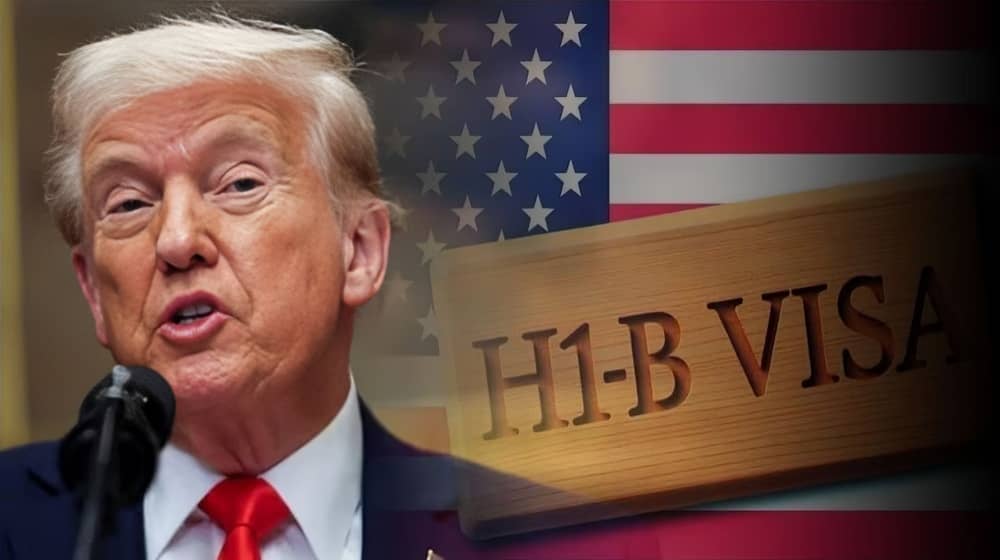
A coalition of 20 US states has moved to legally challenge the Donald Trump administration’s proposal to impose a USD 100,000 annual fee on new H-1B visa applications. The lawsuit seeks to block the policy, arguing that it is unlawful and could significantly disrupt essential public services that depend on skilled foreign professionals.
The contested policy was announced in September and proposed a steep increase in the cost of obtaining an H-1B visa, which is widely used by US employers to hire skilled workers in sectors such as technology, healthcare, engineering, and education. The proposed fee sparked widespread concern among employers and visa holders, particularly Indian professionals who form a substantial portion of the H-1B workforce.
In their legal filing, the states argued that the fee would place an unreasonable financial burden on public institutions, including hospitals, universities, and research centers. Many of these institutions rely on H-1B professionals to fill critical roles that cannot be easily staffed through the domestic workforce. The states warned that the increased cost could lead to staff shortages, reduced services, and higher operational expenses.
The lawsuit also claims that the administration lacks the legal authority to impose such a high fee without congressional approval. According to the states, visa fees are meant to cover administrative costs, not act as a deterrent or revenue-generating mechanism. They contend that the proposed charge exceeds what is permissible under existing immigration laws.
State officials further noted that the policy could undermine the competitiveness of US institutions by making it more difficult to attract global talent. They argued that skilled professionals contribute significantly to innovation, economic growth, and public welfare, and that discouraging their entry could have long-term negative consequences.
The announcement of the proposed fee triggered anxiety among H-1B visa holders and applicants, many of whom feared that the cost would make it impossible to continue working in the United States. Indian professionals, who represent a large share of H-1B recipients, expressed concerns about job security and future opportunities amid the uncertainty created by the policy.
The Trump administration has defended its broader immigration approach as a measure to protect domestic workers and reduce reliance on foreign labor. However, critics argue that the proposed H-1B fee goes beyond policy reform and risks harming industries and services that depend on specialized skills.
Legal experts say the case could set an important precedent regarding the limits of executive authority in immigration policy. If the court sides with the states, it may restrict the administration’s ability to impose similar measures without legislative approval.
As the legal challenge proceeds, the implementation of the USD 100,000 H-1B visa fee remains uncertain. Employers, visa holders, and prospective applicants are closely monitoring developments, as the outcome could have significant implications for skilled migration to the United States and for thousands of professionals currently working under the H-1B programme.


