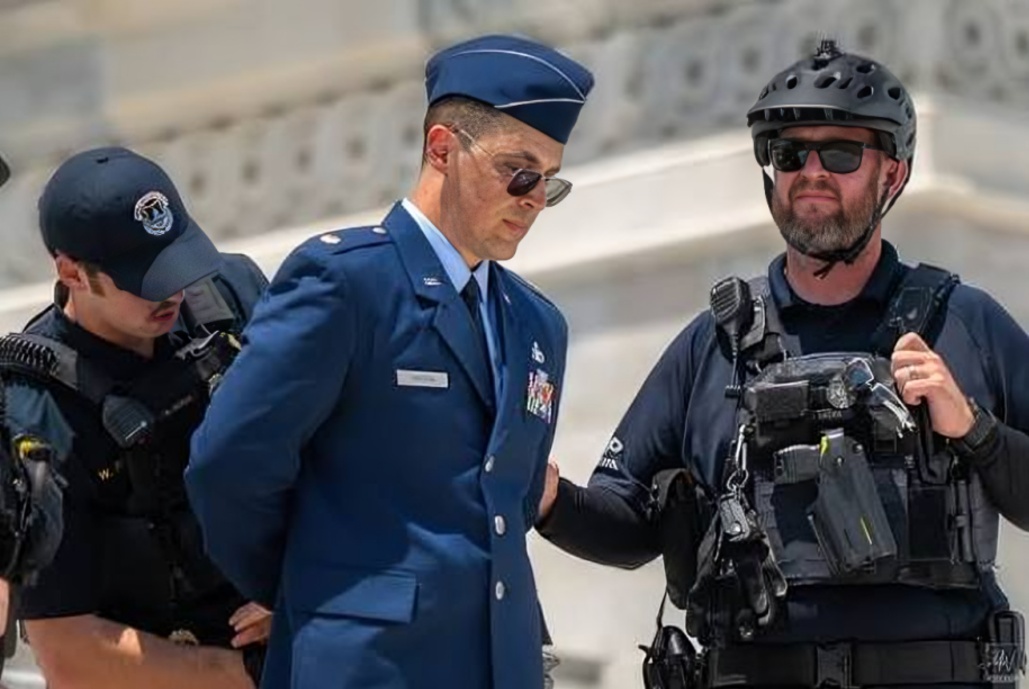
US Air Force Major Jason Watson has been placed in pretrial confinement after publicly renewing his call for the impeachment and removal of President Donald Trump.
The latest development has drawn attention because Watson is an active duty military officer and because his public criticism of the president has now been followed by a second detention.
According to the US Air Force, Watson was ordered into pretrial confinement on August 18, 2026. The service said the decision was based on probable cause supporting allegations of continued misconduct. However, the Air Force has not publicly disclosed the specific allegations that led to the confinement.
Watson's detention came shortly after he appeared in a CNN interview in which he again criticised President Trump and called for his impeachment and removal from office. His attorney, Christopher Mutimer, suggested that the timing of the detention could be connected to the television interview, although the specific basis for the military action has not been publicly established.
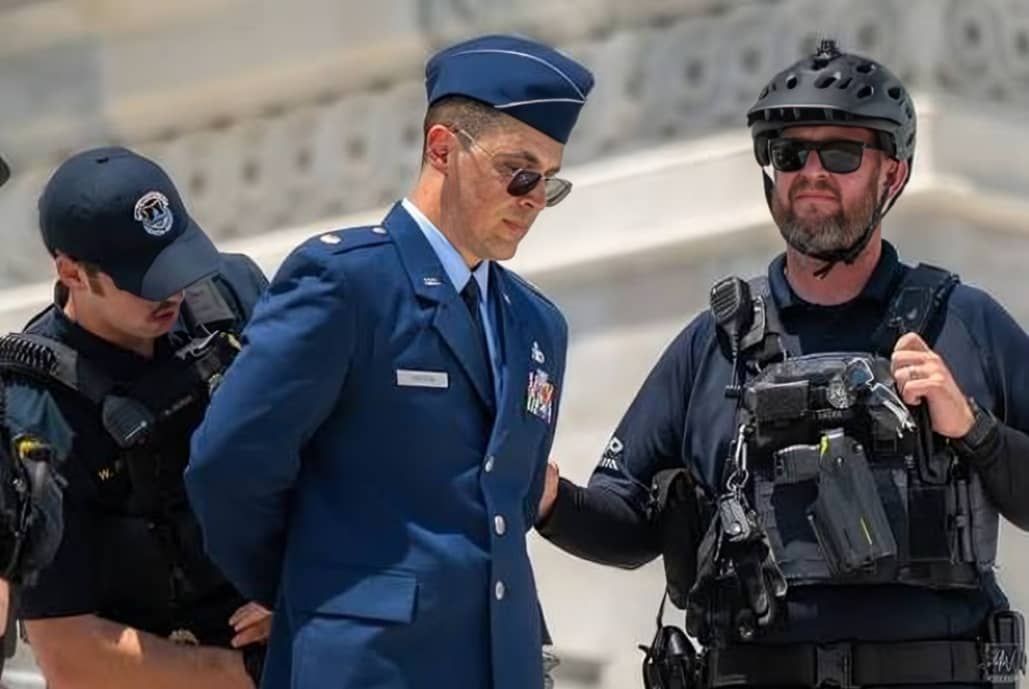
The case began attracting national attention in July when Watson was detained at the US Capitol. On July 1, he participated in a political event organised by a group advocating the removal of Trump from office.
Watson was reportedly on leave from his military assignment when he attended the event. During the demonstration, he wore his Air Force uniform and publicly called for the impeachment of President Trump.
The incident raised questions about the restrictions placed on active duty military personnel who participate in political activities. Military members are subject to rules governing political participation, conduct and public statements.
Watson's first detention was connected to his presence at the Capitol demonstration. Capitol Police said members of the public were not permitted to demonstrate on the steps of the House of Representatives without being accompanied by a member of Congress. Watson had been accompanied to the location by a member of Congress, but that member subsequently left the area.
The wearing of a military uniform during a political activity also became an issue. Military regulations generally restrict service members from using their uniforms in ways that could suggest official military endorsement of political activity.
The case has also raised discussion about Article 88 of the Uniform Code of Military Justice. The provision applies to commissioned officers and addresses the use of contemptuous words against certain senior government officials, including the president.
Active duty military personnel have additional obligations that distinguish their political expression from that of private citizens. The military maintains rules intended to preserve discipline, order and the perception of political neutrality within the armed forces.
The Air Force has stressed that Watson's personal views do not represent the position of the Department of the Air Force.
In a statement following the latest detention, the service said military personnel must comply with the Uniform Code of Military Justice and applicable regulations. The Air Force also said Watson is presumed innocent and will receive the rights provided under military justice procedures.
The second detention marks a significant development in the case.
After his initial detention, Watson was released and remained under military supervision. He was reportedly restricted to Joint Base Anacostia-Bolling while the military investigation continued.
The new pretrial confinement means that the military has taken a more serious procedural step while the allegations against Watson are being examined.
Pretrial confinement is not the same as a conviction. It is a temporary measure used while military authorities investigate allegations and determine how the case should proceed.
The Air Force has not publicly announced the final charges against Watson. As a result, it remains unclear what specific conduct the military will ultimately pursue against him.
The timing of the detention has nevertheless attracted considerable attention.
Watson appeared on CNN shortly before his confinement and repeated his criticism of Trump. During the interview, he argued that the president had violated constitutional principles and again called for his removal.
His attorney has indicated that the television appearance may have played a role in the military's decision, but that connection has not been officially confirmed by the Air Force.
The case highlights the difficult balance between individual expression and military discipline.
Members of the US military retain constitutional rights, but active duty personnel are also subject to specific regulations that do not apply to civilians in the same way. These rules are intended to maintain military discipline and prevent the armed forces from becoming directly involved in partisan political activity.
For commissioned officers in particular, the UCMJ contains provisions concerning public statements about senior government officials.
Watson's case has therefore attracted interest from legal observers and civil liberties advocates who are examining the boundaries between political speech and military regulations.
The situation also raises questions about how the military handles officers who publicly criticise the sitting president.
The Air Force has emphasised that its action against Watson is based on alleged misconduct and not simply on his political opinions. The service has not publicly provided enough information to determine the precise allegations involved in the latest confinement.
That distinction is important because the military's official position is that Watson must comply with applicable rules regardless of his personal political views.
Watson, meanwhile, has continued to publicly defend his position.
His decision to repeat his impeachment call despite the consequences has made him a prominent figure in the debate over political expression within the US military.
The first incident occurred during a politically charged period in Washington. Watson's appearance at the Capitol was part of a broader campaign calling for Trump's removal from office.
The subsequent military investigation has now developed into a more serious proceeding.
The latest confinement is being handled under military justice procedures. The Air Force has stated that Watson is entitled to the protections available under those procedures, including review of the legality of his pretrial confinement.
At this stage, it would be premature to conclude what punishment Watson could ultimately face.
The outcome will depend on the allegations, evidence and decisions made through the military justice process.
The case could potentially involve questions surrounding political activity while in uniform, public conduct and statements made by an active duty commissioned officer. However, the precise charges have not been publicly confirmed.
The case also illustrates the distinction between political criticism by civilians and political expression by serving military officers.
Civilians generally have broad constitutional protections for political speech, while members of the armed forces operate within an additional system of military law and regulations.
The military argues that these restrictions are necessary to maintain discipline and preserve confidence that the armed forces remain institutionally separate from partisan politics.
Critics of the action may argue that service members should retain significant rights to express political views as private citizens. Supporters of the military's position may emphasise the unique responsibilities and obligations of commissioned officers.
Watson's case is therefore likely to remain a subject of discussion as military authorities determine the next steps.
The immediate issue is his pretrial confinement and the allegations supporting it. The Air Force has said that probable cause exists to support allegations of continued misconduct, but has not released the specific details publicly.
Watson's attorney has also raised questions about whether the timing of the detention is connected to his CNN appearance. Until military authorities disclose more information, that remains an allegation rather than an established fact.
The case is also being closely followed because it involves a serving officer publicly calling for the removal of a sitting US president.
As the military justice process continues, the focus is expected to shift toward the specific allegations, evidence and legal arguments surrounding Watson's conduct.
For now, Major Jason Watson remains in pretrial confinement while the military case proceeds.
The Air Force has reiterated that his statements represent his personal views and do not reflect the policies or position of the Department of the Air Force.
The case ultimately raises a broader question about the limits of political expression by active duty military personnel and how those limits should be balanced against individual rights.
Any final decision will depend on the military justice process and the evidence presented in the case.