The ongoing confrontation between the United States and Iran has remained centred on the Strait of Hormuz, one of the world’s most important maritime routes for energy shipments. The latest developments have intensified concerns over international shipping, oil supplies and the possibility of a prolonged regional crisis.
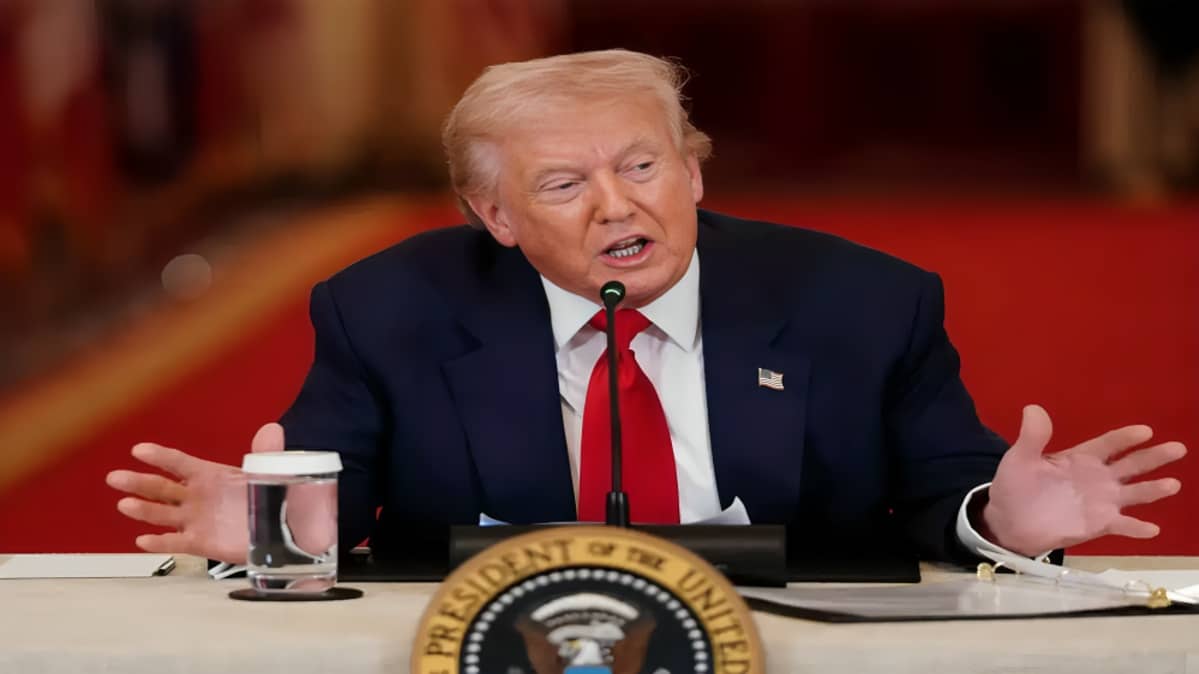
US President Donald Trump has claimed that the United States has total control over the Strait of Hormuz and indicated that Washington intends to maintain its position there. The statement comes as US forces continue efforts to enforce a naval blockade around Iranian ports.
Iran has rejected Washington’s claim. Iranian authorities have maintained that the Strait of Hormuz remains restricted and will not be fully reopened until Tehran’s conditions are addressed. The competing claims have further complicated efforts to reach an agreement over the future of maritime traffic through the strategic waterway.
Iranian officials have linked the reopening of the waterway to several demands. Mohsen Rezaei, the newly appointed secretary of Iran’s Supreme National Security Council, said Tehran wants the United States to end the ongoing military campaign and naval blockade. Iran has also demanded the release of frozen Iranian assets and a broader ceasefire arrangement involving other areas of the region, including Lebanon and Gaza.
The dispute has already had a major effect on commercial shipping. Vessel traffic through the Strait of Hormuz has fallen sharply, with recent data showing activity at significantly reduced levels compared with normal conditions. The reduction in shipping has raised concerns among energy markets because the waterway is a critical route for global oil and gas transportation.
The United States has continued military operations aimed at enforcing its blockade. US Central Command has reported actions involving commercial vessels in the region. A recent incident involved a Panama flagged cargo ship that was targeted after US forces said it had attempted to violate the blockade. The incident added to concerns about the safety of commercial shipping in the Gulf of Oman and surrounding waters.
The maritime crisis has also extended beyond the Persian Gulf. The Red Sea remains affected by attacks involving the Houthi movement in Yemen. A recent attack on a commercial vessel resulted in deaths, adding further pressure to an already disrupted regional shipping network.
The situation has created a complicated security environment for international shipping companies. Operators must consider the risks associated with the Strait of Hormuz, the Gulf of Oman, the Red Sea and other important maritime corridors. Any prolonged disruption could increase transportation costs and contribute to higher energy prices.
Diplomatic efforts have continued despite the military confrontation. Pakistan has been involved in efforts to encourage dialogue between Washington and Tehran. Pakistani officials have indicated that the two sides remain engaged through diplomatic channels and that there is potential for a negotiated arrangement. However, major differences remain over the conditions for ending the conflict and reopening the waterway.
Iran has also been discussing arrangements with Oman regarding possible future shipping routes through the Strait of Hormuz. Iranian officials have indicated that any temporary transit arrangement would depend on broader negotiations and security conditions. The discussions demonstrate that diplomatic efforts are continuing even as military pressure remains high.
The conflict has also raised concerns about civilian casualties. A Pentagon review reportedly found that US strikes against Houthi targets in Yemen in April 2025 resulted in significant civilian casualties. The findings have renewed questions about the protection of civilians during military operations and the need for greater scrutiny of targeting decisions.
At the same time, Israel has continued military operations in Gaza and Lebanon amid the wider regional tensions. Developments in these areas remain closely connected to the broader US Iran confrontation because Tehran has repeatedly linked regional ceasefire arrangements to discussions concerning the Strait of Hormuz.
The economic consequences of the crisis could be significant if the maritime disruption continues. The Strait of Hormuz is strategically important because of the volume of energy shipments that normally pass through it. A prolonged reduction in traffic could affect oil markets, shipping insurance costs and transportation expenses.
For countries that depend heavily on imported energy, disruptions could create additional economic pressure. Higher crude oil prices can increase transportation and production costs and may contribute to inflation. Asian economies are particularly sensitive to developments in the Gulf because of their dependence on Middle Eastern energy supplies.
The competing claims by Washington and Tehran also demonstrate that the dispute is not limited to military control. The Strait of Hormuz has become a central bargaining point in the wider diplomatic confrontation. Iran wants sanctions relief, the release of frozen assets and an end to the blockade, while the United States continues to press Tehran through military and economic measures.
The immediate question is whether diplomatic efforts can produce an arrangement that allows commercial shipping to resume safely. Any agreement would likely require both sides to compromise on several contentious issues.
For now, the Strait of Hormuz remains at the centre of the US Iran confrontation. Washington continues to claim control over the strategic waterway, while Tehran rejects that assertion and insists that reopening depends on its conditions being met.
The continuing uncertainty is being closely monitored by governments, shipping companies and energy markets around the world. Further military incidents or a prolonged blockade could increase pressure on global trade and energy supplies, while successful diplomatic negotiations could help restore maritime traffic and reduce the risk of a wider regional escalation.
The situation remains fluid, and claims made by either side should be assessed against independently verified information as developments continue.