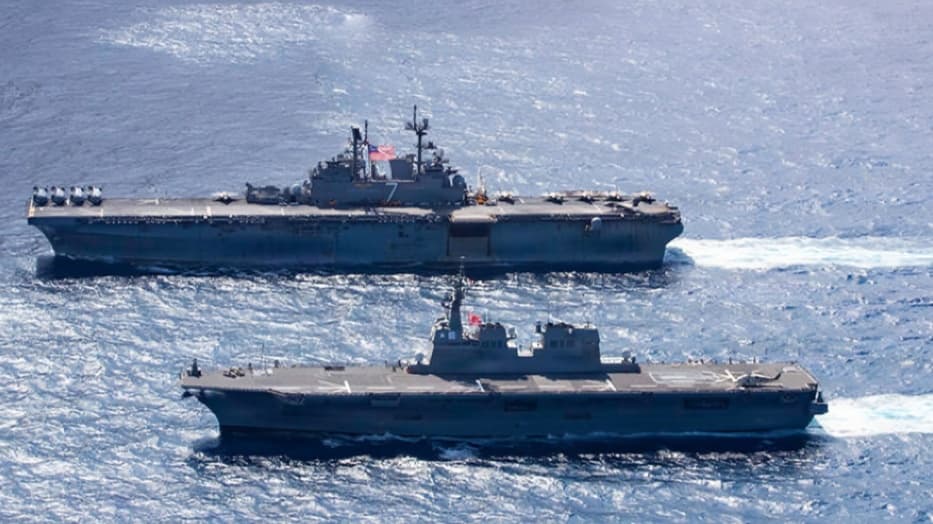
The deployment of the United States Navy amphibious assault ship USS Tripoli toward the region surrounding the Strait of Hormuz marks a significant development in the ongoing geopolitical tensions linked to Iran. The vessel, which carries elements of the 31st Marine Expeditionary Unit, is considered a critical component of the United States naval capabilities and is being positioned in a strategically sensitive area.
The Strait of Hormuz is one of the most important maritime routes in the world, serving as a key passage for global oil shipments. A substantial portion of the world energy supply passes through this narrow waterway, making its security a matter of international concern. Any disruption in this region can have far reaching consequences for global trade and energy markets.
The movement of USS Tripoli into the broader conflict zone reflects the United States efforts to maintain a strong military presence in the region. Amphibious assault ships like Tripoli are designed to support a range of operations, including troop deployment, air support, and humanitarian missions. The inclusion of the 31st Marine Expeditionary Unit enhances the ship operational flexibility and readiness.
The current tensions involving Iran have raised concerns about the stability of the region. Military deployments, combined with ongoing political and diplomatic developments, have created an environment of uncertainty. The presence of advanced naval assets is often intended to act as a deterrent and to ensure that strategic interests are protected.
Analysts note that such deployments are part of broader efforts to manage potential risks in the region. By maintaining a visible and capable military presence, countries aim to prevent escalation while also preparing for various scenarios. The situation remains dynamic, with multiple stakeholders closely monitoring developments.
The potential impact of heightened tensions in the Strait of Hormuz extends beyond military considerations. Global oil prices are particularly sensitive to developments in this area, as any threat to supply routes can lead to market volatility. Countries that rely heavily on energy imports are especially affected by such fluctuations.
The deployment also highlights the interconnected nature of global security and economic systems. Actions taken in one region can influence markets and policies worldwide. As a result, international cooperation and communication are often emphasized to manage crises effectively.
Observers have pointed out that while military readiness is important, diplomatic efforts remain essential in reducing tensions. Dialogue and negotiation are considered key tools in addressing conflicts and ensuring long term stability.
In conclusion, the movement of USS Tripoli toward the Strait of Hormuz underscores the seriousness of the current geopolitical situation. The deployment reflects efforts to maintain security in a critical region while also signaling preparedness for potential challenges. As the situation continues to evolve, global attention will remain focused on developments in the area and their broader implications.