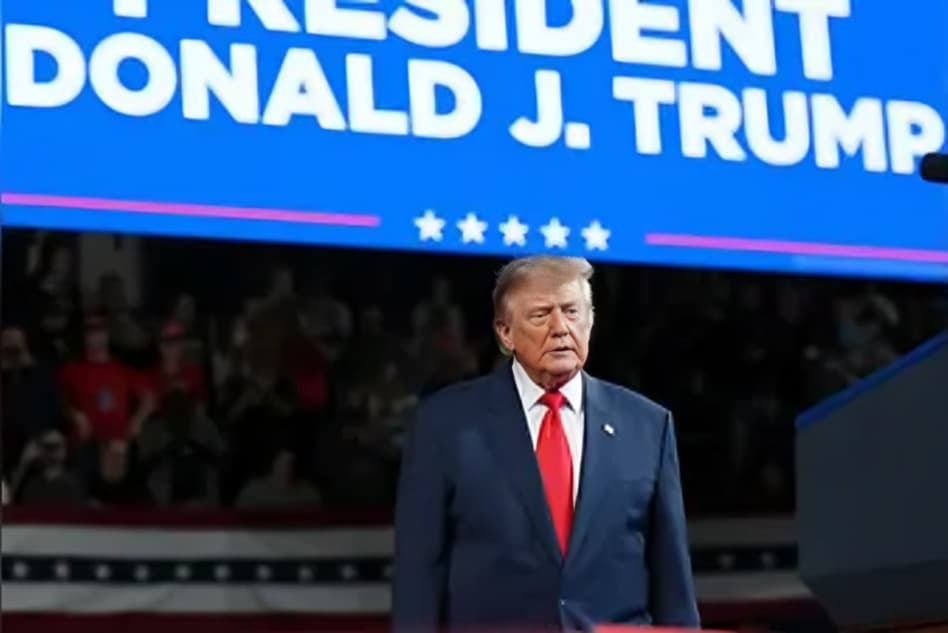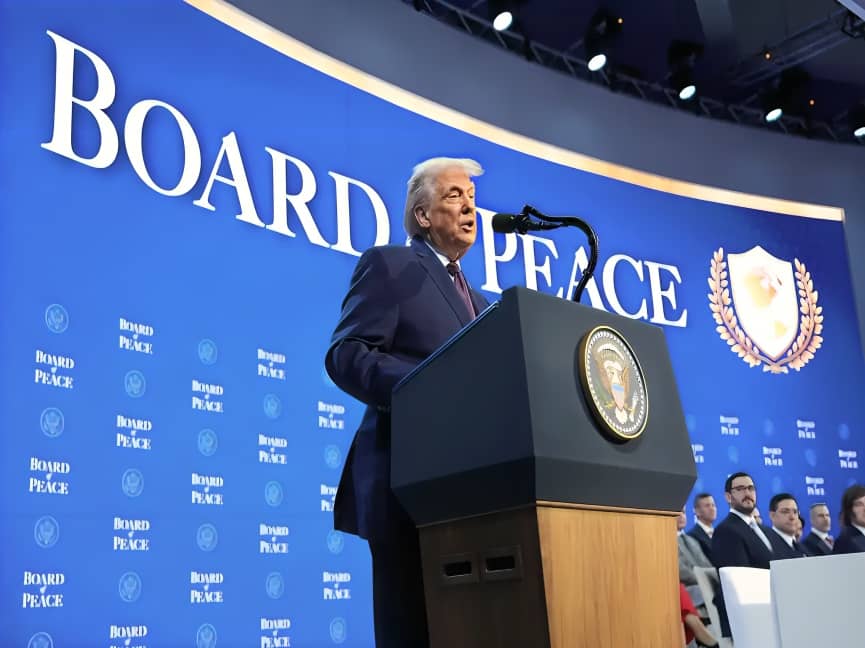
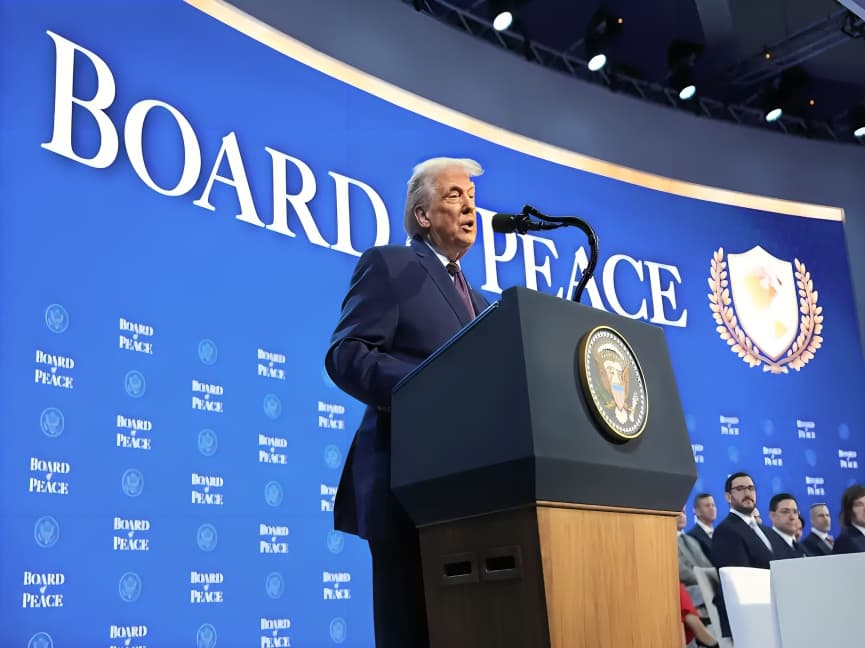
US President Donald Trump has formally withdrawn the invitation for Canadian Prime Minister Mark Carney to join his privately established “Board of Peace” after Canada declined to pay the proposed $1 billion fee for a permanent seat. The announcement was made via Truth Social late Thursday, where Trump stated that the decision reflects Canada’s refusal to meet the financial requirement for participation.
“Please let this Letter serve to represent that the Board of Peace is withdrawing its invitation to you regarding Canada’s joining, what will be, the most prestigious Board of Leaders ever assembled, at any time,” Trump wrote. The post emphasized that membership remains entirely at Trump’s discretion and that the board’s leadership is guided solely by its lifetime chairman.
The Board of Peace was first proposed by Trump in September 2025 and formally launched on January 15, 2026. According to official statements, its primary goal is to promote stability, governance, and reconstruction in conflict zones, starting with the Gaza Strip following the October 7 attacks and the ensuing war. Trump positioned the board as an alternative to the United Nations, citing perceived failures in UN peacekeeping and post-conflict reconstruction.
The initiative grants Trump unilateral authority over membership, decisions, and funding. Critics have raised concerns over its private, pay-to-play nature, arguing that the organisation could serve as a platform for autocratic influence rather than impartial conflict resolution. While initially endorsed under UN Security Council Resolution 2803, analysts note that the board’s structure diverges significantly from multilateral governance standards, given that lifetime chairmanship and fee-based entry create a heavily centralised decision-making model.
Canada’s refusal to pay the $1 billion fee appears to be the primary reason for the withdrawal, highlighting the controversial financial model underlying Trump’s initiative. Observers note that while the board presents itself as a mechanism for global stability, its operational transparency and accountability remain unclear. The decision also raises questions about engagement with other potential member states, as the fee structure and unilateral authority could limit participation by governments unwilling to comply with the financial or operational terms.
The withdrawal has drawn mixed reactions from international policy circles. Supporters argue that private initiatives can complement official humanitarian efforts in conflict zones, while critics warn that such projects risk undermining established multilateral institutions and diplomatic norms. Trump has maintained that the Board of Peace will pursue reconstruction, peace promotion, and governance improvement, but without cooperation from key global partners, its practical impact remains uncertain.
The incident underscores ongoing debates about the role of private actors in international diplomacy and conflict management, particularly when financial contributions determine membership and influence. Canada’s non-participation may serve as a precedent for other nations evaluating engagement with the board in the coming months.