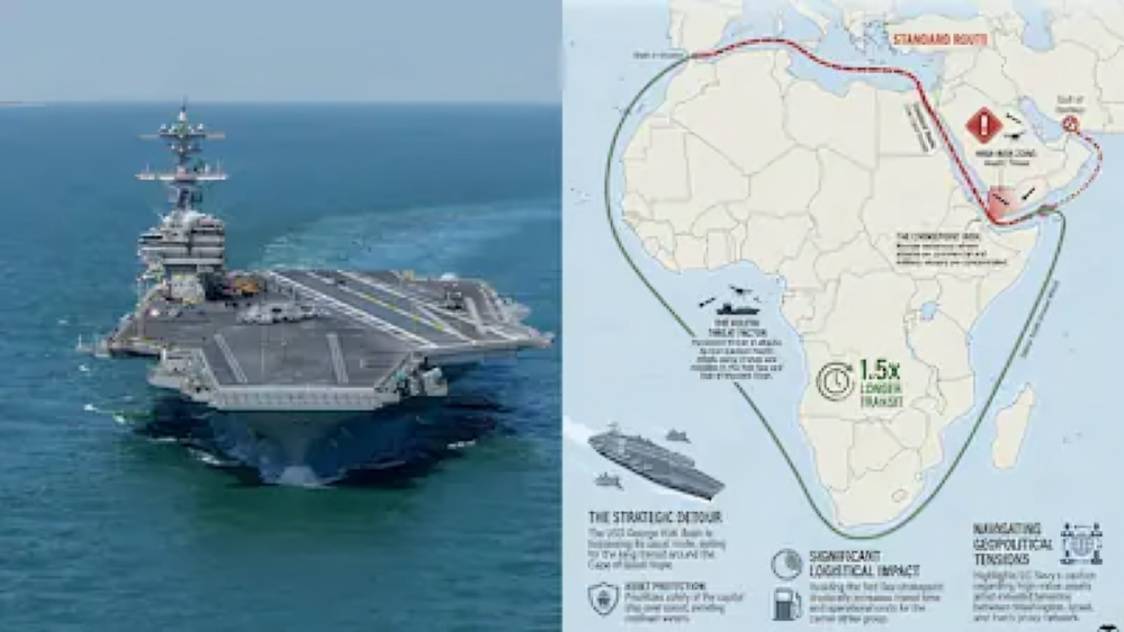
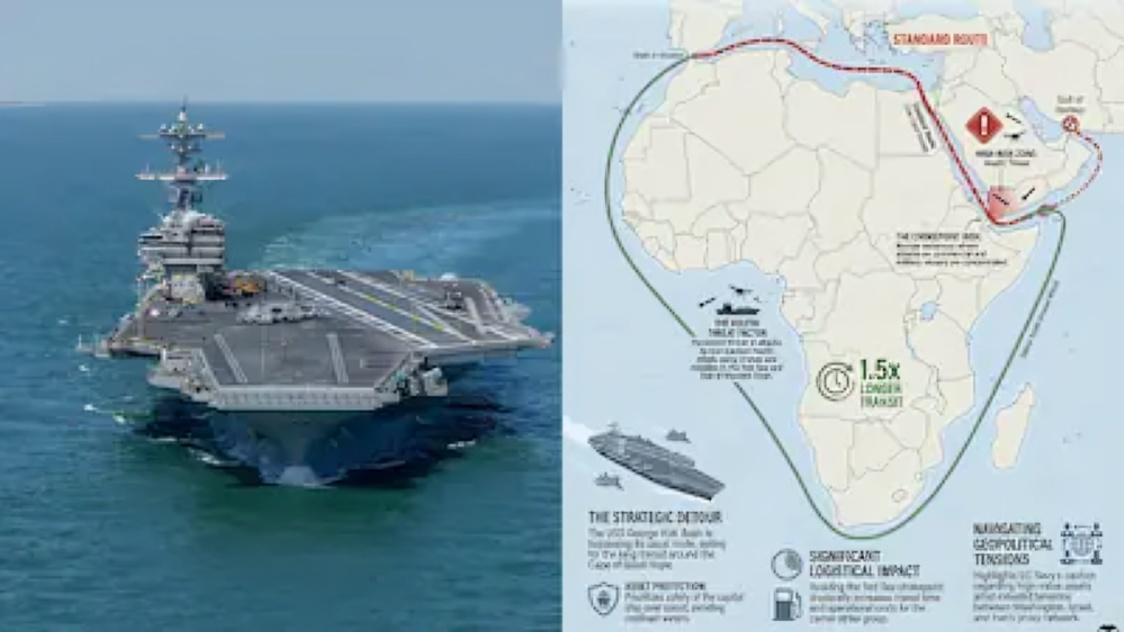
The United States Navy has warned families of sailors serving aboard the USS George H.W. Bush Carrier Strike Group to prepare for the possibility of a deployment lasting as long as 12 months. The warning comes as American naval forces continue to face extended operational commitments linked to the ongoing conflict involving Iran.
The development has raised concerns among families waiting for the return of their loved ones. The aircraft carrier departed from Norfolk, Virginia, on March 31, 2026, for what was initially expected to be a standard six-to-seven-month deployment. However, the mission has reportedly been extended twice, leaving sailors and their families without a firm date for the carrier's return.
Navy Briefs Families on Possible Year-Long Deployment
According to reports based on audio from a meeting reviewed by MS NOW, Navy officials briefed around 500 family members at Naval Station Norfolk on November 9. During the meeting, families were told that the carrier would not return home for the holiday period and that they should prepare for a worst-case deployment lasting up to 12 months.
The warning was intended to help families prepare for the possibility of a longer separation. The carrier's commanding officer, Captain Justin Issler, reportedly informed sailors about the extension and advised them to plan for the possibility of remaining deployed for a full year.
However, the warning should not be interpreted as confirmation that the USS George H.W. Bush will definitely remain at sea for 12 months. It reflects a possible worst-case timeline, while the final return schedule remains dependent on operational requirements and decisions by senior military leadership.
Why Has the Deployment Been Extended?
The USS George H.W. Bush Carrier Strike Group is part of the US Navy's wider military presence in the Middle East. Its deployment comes amid continuing tensions and military operations involving Iran. American naval forces have been assigned responsibilities connected to regional security, protection of US vessels and operations around Iranian ports and important shipping routes.
The carrier strike group includes the aircraft carrier, accompanying warships and its embarked air wing. Together, these units provide a range of capabilities, including air operations, surveillance, defence and support for wider military missions.
The prolonged conflict has placed additional pressure on the Navy to maintain a continuous presence in the region. When one carrier's deployment is extended, the service may have to adjust the schedules of other ships and crews to maintain operational coverage.
The USS George H.W. Bush was deployed to relieve another carrier operating in the region. However, the continuing demand for naval forces has made it difficult to follow the original deployment timetable. USNI News has previously reported that extended carrier deployments have become a growing challenge for the Navy as the Iran conflict continues.
USS Dwight D. Eisenhower Could Take Over the Mission
The US Navy is preparing the USS Dwight D. Eisenhower Carrier Strike Group as a possible replacement for the USS George H.W. Bush. A changeover would allow the Navy to rotate forces and provide relief to sailors who have been deployed for an extended period.
However, the timing of such a replacement remains uncertain. Operational requirements, the availability of ships and aircraft, and the wider security situation will influence when the handover can take place.
Rear Admiral Todd Cimicata, commander of the USS George H.W. Bush Carrier Strike Group, has reportedly indicated that there is no definite answer about when the carrier will return. The uncertainty reflects the difficulty of planning deployments during an active military conflict.
Extended Deployment Raises Concerns Among Families
A deployment lasting close to a year can create significant difficulties for service members and their families. Sailors may miss important family occasions, holidays and everyday responsibilities at home. Spouses and children also have to manage daily life without knowing exactly when their family members will return.
During the November 9 meeting, families reportedly raised concerns about the prolonged separation and conditions aboard the carrier. Reports also described complaints involving equipment, food supplies and access to mental health support.
In a letter to families, Captain Justin Issler reportedly acknowledged the frustration and exhaustion caused by the extended deployment. He outlined areas of focus that included improving communication, addressing quality-of-life concerns, listening to sailors and families, and prioritising the crew's welfare.
The Navy has also indicated that support services are available to deployed personnel. These include chaplains, medical professionals, resilience counsellors and other support resources intended to help sailors manage the pressures associated with extended service at sea.
Wider Pressure on the US Navy
The situation involving the USS George H.W. Bush reflects a broader challenge facing the US Navy. Maintaining a sustained military presence in the Middle East requires ships, aircraft, personnel and logistical support over long periods.
In August 2026, USNI News reported that Navy leaders were planning for extended carrier deployments as the conflict with Iran continued. Chief of Naval Operations Admiral Daryl Caudle discussed the importance of providing more predictable deployment timelines so that sailors and their families could plan their lives.
The Navy has also faced challenges involving the movement of supplies, maintenance requirements and the availability of ships for other regions. Senior military leaders have warned that prolonged operations could place pressure on the service's ability to meet commitments in different parts of the world.
When Will the USS George H.W. Bush Return?
As of November 12, 2026, the US Navy has not announced a confirmed return date for the USS George H.W. Bush Carrier Strike Group. The possible 12-month deployment is a warning for families to prepare for an extended absence, rather than a final announcement that the carrier will remain deployed for exactly one year.
The ship's eventual return will depend on the operational situation, the availability of a replacement carrier and decisions made by military commanders. Until a formal schedule is confirmed, sailors and their families may continue to face uncertainty.
The latest warning highlights the human impact of prolonged military operations. While the Navy continues to meet its commitments in the Middle East, the possibility of a year-long deployment has placed additional emotional and practical pressure on thousands of service members and their families.