US Official Says Trump Did Not Order Ukraine Starshield Restrictions, Disputing Musk’s Claim
A senior US official has said President Donald Trump did not order restrictions on Ukraine’s use of Starshield, a satellite communications service developed by SpaceX for government and national-security customers. The statement has added to questions about who authorised the limits after Ukrainian forces reported disruptions affecting military communications and drone operations.
The comments followed public remarks by SpaceX chief executive Elon Musk, who said that Starshield systems were controlled by the US government and that decisions on usage limits rested with the US military and ultimately the president. However, a senior US official told Reuters that Trump had not made such a request.
A separate Reuters report, citing two US officials and a Western official briefed on the matter, said the instruction to slow Starshield originated within the White House. The sources did not identify the official who made the decision or explain who was responsible for implementing it.
The differing accounts have left the precise chain of responsibility unclear.
Restrictions reportedly affected Ukrainian military operations
Ukrainian officials reported that some satellite terminals used by the military stopped working properly when mounted on fast-moving objects. The problem affected systems that rely on stable, high-speed connections for drone guidance, battlefield communications and other military tasks.
Drones have become an important part of Ukraine’s defence against Russian forces. They are used for surveillance, intelligence gathering, attacks on military targets and intercepting incoming unmanned aerial vehicles. Reliable communications are essential for operators to receive information and maintain control of their equipment.
Ukrainian military personnel said the restrictions disrupted some missions and affected drone performance. The reported limitations raised concerns about the country’s dependence on satellite communications systems supplied by companies operating under arrangements involving the United States.
According to Reuters, a Ukrainian defence official said the terminals were working again while in motion, subject to a speed limit of approximately 100 miles per hour, or 160 kilometres per hour, by Thursday. The extent of the continuing restrictions and their operational impact remained unclear.
The episode prompted Ukrainian officials to seek clarification from senior representatives of the White House, the State Department and the Pentagon.
Musk’s statement raises questions about responsibility
Musk addressed the issue in a post on social media platform X on October 14. He distinguished between Starshield, which serves government and national-security customers, and Starlink, SpaceX’s commercial satellite internet service.
Musk said Starshield systems were owned and controlled by the US government and that restrictions on speed or usage were determined by the US military and ultimately the president. His statement suggested that decisions about the affected military service were not solely within SpaceX’s control.
However, the senior US official’s denial that Trump requested the restrictions complicated that explanation. The Reuters report did not establish that Trump personally authorised the measure, and the White House did not clarify whether another administration official had initiated it.
SpaceX did not respond to Reuters’ request for comment, while the Pentagon and the Ukrainian embassy in Washington also did not provide immediate responses to the news agency’s inquiries.
The available information therefore does not establish exactly who ordered the restrictions or how the decision was implemented.
What is Starshield?
Starshield is SpaceX’s satellite programme designed for government and national-security applications. It builds on technology associated with Starlink but is tailored to the requirements of government agencies and military users.
The system can support secure communications, Earth observation and other specialised missions. It may use dedicated equipment and additional security features for sensitive operations. Starlink, by comparison, is a commercial broadband service that provides internet connectivity through a network of satellites in low Earth orbit.
Although the services have different purposes and customers, they share aspects of SpaceX’s satellite technology and infrastructure. This relationship makes reliable satellite connectivity particularly important for military users operating in areas where conventional communications networks are damaged, unavailable or vulnerable to attack.
Since Russia launched its full-scale invasion of Ukraine in February 2022, satellite connectivity has played a significant role in keeping Ukrainian military units and other organisations connected. Any disruption to specialised military communications can therefore create operational challenges.
The reported Starshield restrictions also highlighted the difference between a service being technically operated by a private company and being subject to government control under particular arrangements. The exact authority over individual restrictions depends on the relevant service and agreements, details of which have not been fully disclosed in this case.
US-Ukraine relations face further strain
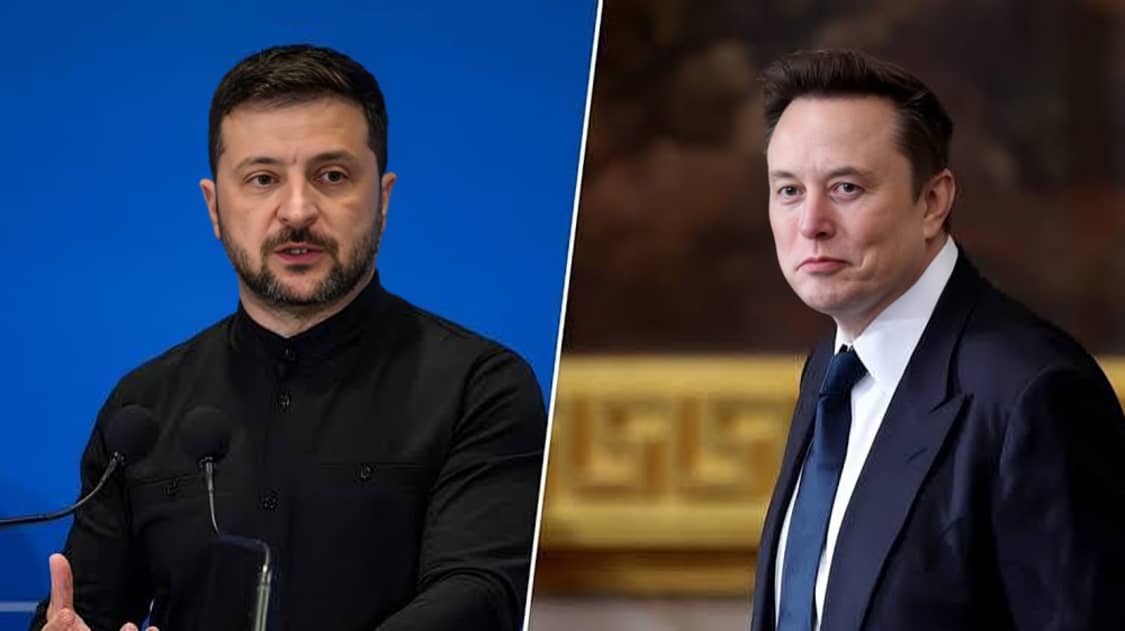
The dispute emerged during a period of heightened tension between Washington and Kyiv. Relations between Trump and Ukrainian President Volodymyr Zelenskyy have faced renewed pressure over disagreements about military support, diplomatic strategy and attacks on Russian energy infrastructure.
Reuters reported that US officials had expressed frustration with Ukraine’s continued strikes on Russian refineries despite requests from Washington to stop. The reported satellite restrictions came amid those disagreements, leading to questions about whether the developments were connected. However, the public information available does not establish a definitive motive for the restrictions.
Ukraine’s reliance on US-linked technology has also raised concerns about the risks of depending on a limited number of communications providers during wartime. Military planners may need alternative systems and backup arrangements to maintain operations if access is interrupted.
Developing alternatives can be expensive and technically challenging, particularly when armed forces need secure, high-speed connections across a large battlefield. Even temporary disruptions can affect operations that depend on continuous data transmission.
Questions remain unanswered
The latest statements have not resolved who was responsible for the Starshield restrictions. A senior US official denied that Trump had requested them, while other officials cited by Reuters said the instruction came from within the White House. Musk’s remarks placed responsibility for usage limits with the US government, military leadership and ultimately the president.
These accounts leave a distinction between the reported origin of the order and the identity of the person who authorised it. No publicly confirmed explanation has established the complete sequence of events.
The incident has renewed attention on Ukraine’s dependence on satellite communications and on the influence that governments and technology providers can have over critical military infrastructure. Further clarification from the US administration, the Pentagon or SpaceX would be needed to establish who made the decision and the reasons behind it.
For now, the restrictions and the conflicting statements remain a developing international news story, with potential implications for Ukraine’s battlefield communications and its relationship with Washington.