
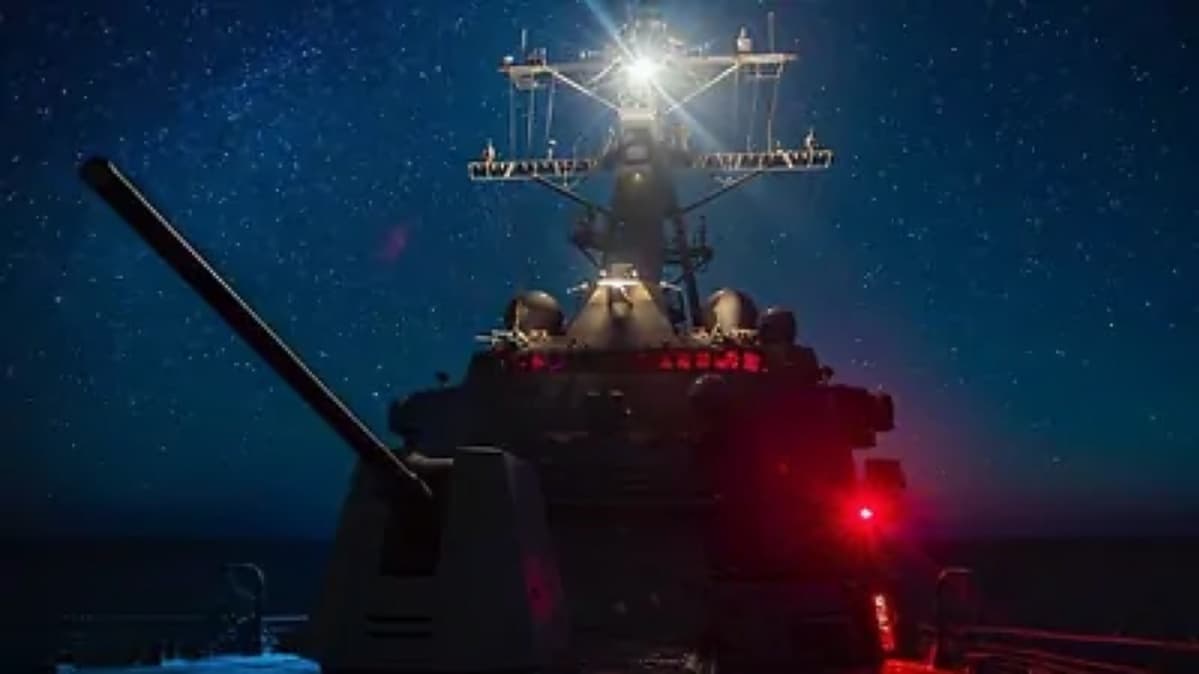
The United States Navy’s Arleigh Burke-class guided-missile destroyer USS Spruance has reportedly set a post-World War II deployment record for an American destroyer after spending 342 days at sea as of October 29, 2026. The extended deployment has attracted attention because it is significantly longer than the usual deployment period for US Navy ships based in the country. It has also raised questions about the pressure on naval personnel, the maintenance requirements of warships and the operational demands facing the US Navy.
USS Spruance departed Naval Base San Diego in California on November 21, 2025. The destroyer initially sailed as part of the USS Abraham Lincoln Carrier Strike Group. Such carrier strike groups operate as coordinated naval formations, with aircraft carriers supported by destroyers and other vessels. These ships perform different duties, including protecting the carrier, monitoring surrounding waters and supporting wider naval operations.
However, USS Spruance did not return to its home port when the carrier group’s deployment changed. The USS Abraham Lincoln eventually returned to San Diego, while Spruance remained at sea. Its deployment continued for several additional months, taking the ship beyond the Navy’s commonly cited seven-month deployment benchmark for US-based vessels.
According to reports published on October 29, the destroyer had completed 342 days at sea. Other reports have described the deployment as reaching 343 days, reflecting differences in the reporting date and calculation. The final duration will be clear once the vessel completes its mission and returns to port. The US Navy has not announced a confirmed return date in the reports available at the time of publication.
Extended deployment places pressure on sailors and families
A prolonged deployment affects not only the ship and its operational schedule but also the sailors serving onboard. Crew members spend extended periods away from their families, with limited opportunities to return home during an ongoing mission. The uncertainty surrounding the return date can make the situation more difficult for relatives waiting for their loved ones.
Family members of USS Spruance sailors have reportedly faced repeated changes to expected return dates. Marie Bailey, whose husband serves aboard the destroyer, told Military Times that families had been hearing that the ship would return the following month for several months. The repeated postponements have made it difficult for families to know when they can expect the sailors to come home.
Sailors serving on destroyers also face the challenges of working and living in confined spaces for long periods. Although aircraft carriers often receive greater public attention, destroyer crews also play an important role in naval operations. Reports have highlighted concerns among USS Spruance personnel that the experiences of destroyer sailors and their families should receive attention as well.
The ship’s extended deployment has therefore become a matter of concern beyond the record itself. It has brought renewed focus to the personal impact of prolonged naval assignments and the importance of providing sailors and their families with reliable information about deployment schedules.
Navy Times+1
Maintenance concerns after the record deployment
The length of the deployment has also raised questions about the maintenance work that USS Spruance may require after returning to port. Warships need regular inspections, repairs and technical servicing to remain operational. When a vessel stays at sea longer than originally planned, its maintenance schedule can be delayed or changed.
The US Navy has been dealing with maintenance backlogs and delays at shipyards. These challenges can affect how quickly vessels return to operational service after completing deployments. A ship that has spent an extended period at sea may need additional assessment to determine which systems and equipment require attention.
Navy budget documents reportedly show that the planned maintenance period for USS Spruance has changed. The Navy’s fiscal year 2025 operations and maintenance budget listed a restricted availability period from July 3, 2026, to February 21, 2027. In the fiscal year 2027 budget, the planned period was shifted to January 19 through April 28, 2027.
A restricted availability is a period during which a ship is taken out of normal operations for maintenance and repairs. The change in the planned dates indicates that the vessel’s maintenance schedule has been adjusted. However, the actual work required and the time needed to complete it will depend on the ship’s condition after its deployment.
The Government Accountability Office has also highlighted difficulties faced by Navy crews in carrying out maintenance while ships are underway. In a September 2024 report, the agency examined responses from personnel serving aboard 232 Navy ships. Many respondents reported that completing repairs while meeting operational and training requirements was difficult. These findings underline the challenges of maintaining ships during extended periods at sea.
Other US Navy destroyers also face longer deployments
USS Spruance is not the only American destroyer reported to be facing an extended deployment. Reports have also identified USS John Finn, USS Mustin and USS Rafael Peralta as vessels whose expected return schedules have been pushed from 2026 into 2027. Some of these deployments could extend beyond 14 months, according to reporting cited by Navy Times.
Another Arleigh Burke-class destroyer, USS McFaul, returned to Naval Station Norfolk on October 23, 2026, after spending 333 days deployed. Its return brought attention to the growing number of unusually long naval deployments. The experiences of these vessels show how operational requirements can lead to changes in schedules for ships and their crews.
Longer deployments can also affect the time available for training, maintenance and preparation for future missions. The Navy must balance its operational commitments with the need to keep ships and personnel ready for service. When vessels remain deployed beyond their planned schedules, arranging maintenance and crew rest periods can become more complicated.
The final deployment duration remains to be confirmed
Although USS Spruance has been described in media reports as setting a post-World War II deployment record for a US destroyer, the exact historical comparison requires caution. The US Navy’s Naval History and Heritage Command has reportedly said that it does not officially maintain or verify a list of the longest destroyer deployments. Therefore, the record claim is based on media reporting rather than an officially certified Navy ranking.
The destroyer’s final deployment duration will be known after it returns to its home port. Its post-deployment inspection will also help establish the maintenance work required before it can resume normal operations. Until then, the 342-day milestone remains a significant example of the extended operational demands placed on the US Navy’s surface fleet.
The USS Spruance deployment has drawn attention to three connected issues: the growing length of naval missions, the challenges faced by sailors and their families, and the maintenance requirements of warships after prolonged operations. Its eventual return and maintenance schedule will provide a clearer picture of the impact of this record-setting deployment.