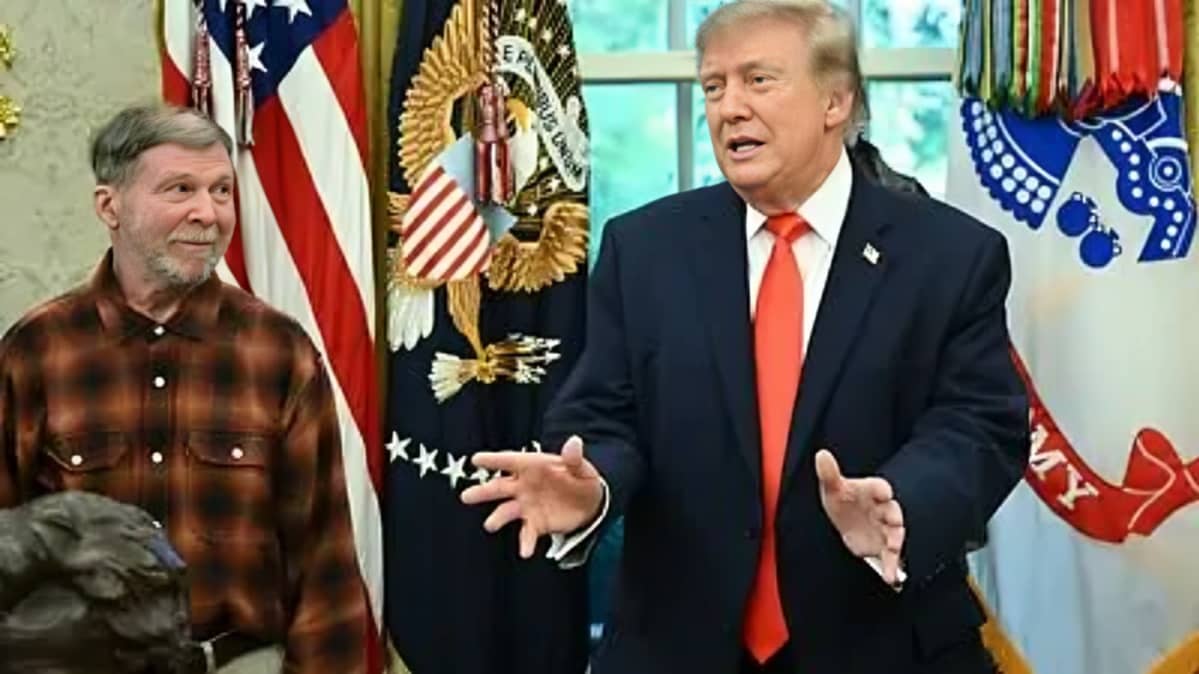
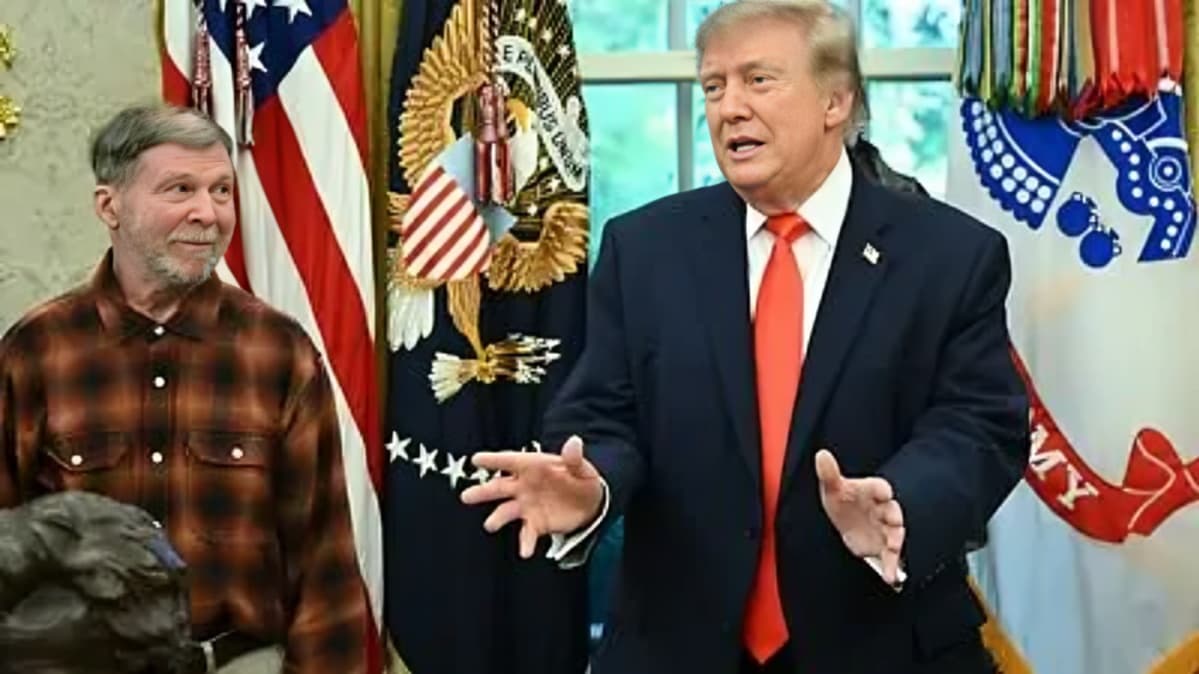
American veteran Stephen Hubbard, who was recently released from Russian custody after spending more than four years in prison, met US President Donald Trump at the White House on Friday. During the meeting, Hubbard spoke about his experience in detention and said he believed he would not have survived another year if he had remained in the Russian prison.
The meeting took place in the Oval Office on October 30, following Hubbard's release on October 21. His return to the United States brought an end to more than four years of detention in Russia. The case had attracted international attention because of the allegations against him, the circumstances of his arrest and efforts by American officials to secure his freedom.
During his conversation with Trump, Hubbard described how difficult it had become for him to believe that he would ever be released. He said that he had heard assurances about his possible release several times but had gradually lost hope. According to reports, he began believing that he was actually going home only when prison officials gave him new clothes and escorted him out of the facility.
Hubbard's statement that he would not have lasted another year highlighted the seriousness of the conditions he said he experienced during detention. His release was particularly significant for his family, who had feared that he might not return home alive.
Trump welcomed Hubbard to the White House and praised the efforts that led to his release. The US President said he had raised Hubbard's case directly with Russian President Vladimir Putin. Trump has credited his communication with Putin for helping secure the American's freedom.
Hubbard was released by Russia on October 21, 2026, during a visit to St Petersburg by US special envoy Steve Witkoff. Witkoff was in Russia for discussions with Putin on the war in Ukraine and other issues involving relations between Washington and Moscow. Following the announcement of Hubbard's release, he was taken to the airport and returned to the United States.
Hubbard, a retired schoolteacher and former US Air Force veteran from Michigan, had been living in Ukraine before his arrest. He moved to the country after spending time abroad and remained there when Russia launched its full-scale invasion in February 2022.
Russian authorities arrested him in April 2022 in the eastern Ukrainian city of Izyum, which had come under Russian control. Prosecutors accused him of joining a Ukrainian military unit and participating in activities against Russian forces. They alleged that he had received military training and equipment and had served alongside Ukrainian forces.
In 2024, a Russian court sentenced Hubbard to six years and ten months in prison following closed proceedings. However, Hubbard's legal representatives disputed the accusations and maintained that he had not participated in military activities. His family also rejected the allegations. The US government under former President Joe Biden had designated him as wrongfully detained.
The circumstances surrounding his arrest and conviction became a matter of concern for his relatives and legal representatives. His family reportedly feared that his health and safety could deteriorate if he remained in detention. His lawyers also worked with legal representatives in Russia to pursue his release.
The October 21 release came after Trump said he had discussed Hubbard's case with Putin. The Kremlin stated that Putin had decided to pardon Hubbard on humanitarian grounds. US officials and Hubbard's legal team welcomed the development, although the circumstances and diplomatic details surrounding the decision received different explanations from the two governments.
Trump said that no prisoner exchange was required for Hubbard's release. The White House also highlighted the importance of bringing the American citizen back to his family. The release was seen as a significant development in US-Russia relations, particularly because the two countries continue to face serious disagreements over the war in Ukraine.
Hubbard's return also renewed attention on other Americans who remain detained in Russia. Although his release brought relief to his family, advocacy organisations have continued to call for efforts to secure the freedom of other American citizens held in Russian prisons.
The White House meeting on October 30 provided Hubbard with an opportunity to speak publicly about his experience after returning home. His remarks about losing hope and fearing that he would not survive another year reflected the emotional and physical difficulties associated with prolonged detention.
The case also highlights the challenges faced by citizens detained abroad, particularly when their cases involve political tensions and allegations connected to an international conflict. Diplomatic negotiations, legal representation and communication between governments can all play important roles in securing the release of detained individuals.
For Hubbard and his family, the White House meeting marked another important moment after his return from Russia. His release ended a long period of uncertainty, while his account of detention brought renewed attention to the experiences of Americans held overseas.