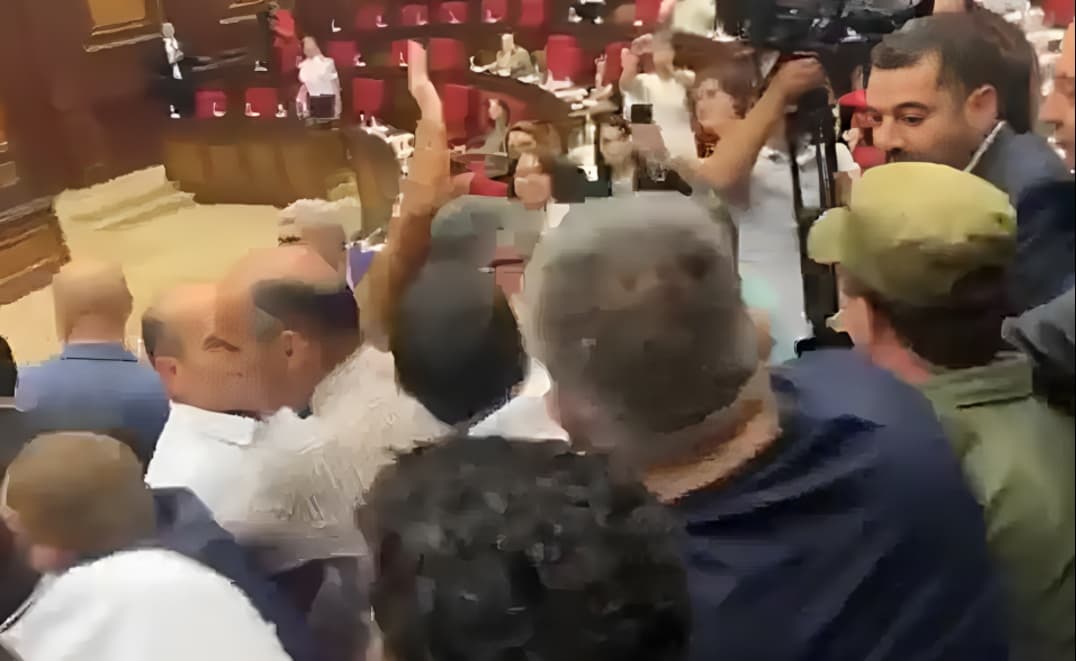
Physical Confrontation Erupts in Armenia’s National Assembly
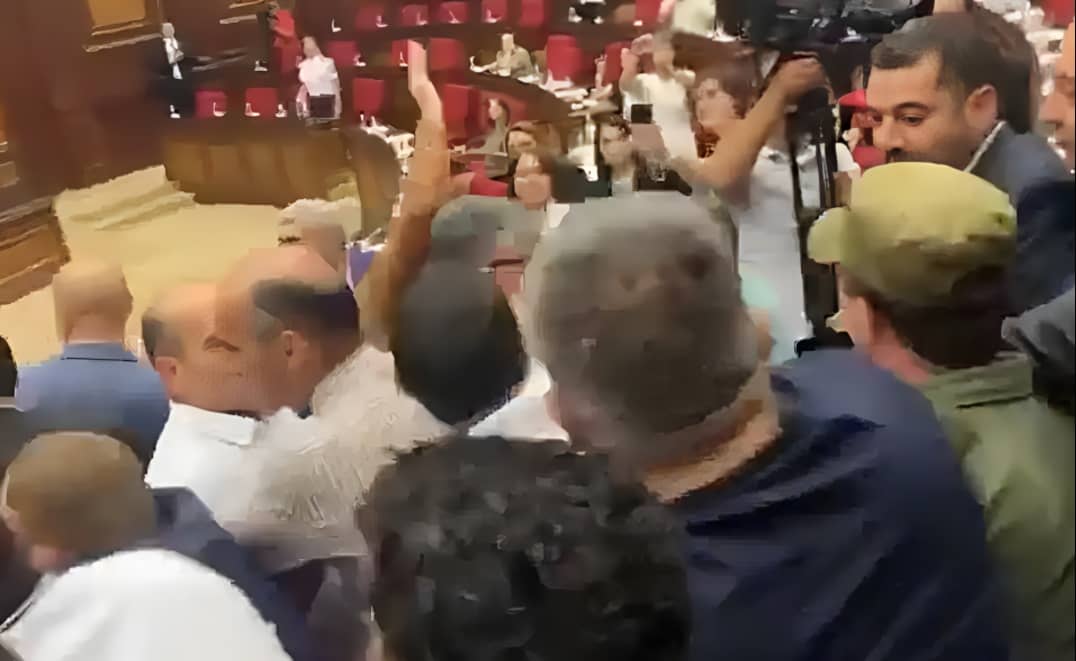
Armenia’s National Assembly witnessed a major physical confrontation on October 29, 2026, after a heated exchange between lawmakers from the ruling Civil Contract party and opposition factions escalated into a fight inside the parliamentary chamber. The incident disrupted the session and required the intervention of parliamentary security personnel.
According to reports from Armenian media, the dispute began during remarks by Taron Chakhoyan, a lawmaker from the ruling Civil Contract party. His comments targeted opposition figures and referred to members of the family of Narek Karapetyan, the leader of the opposition Strong Armenia faction.
The remarks prompted an angry response from Karapetyan and other opposition lawmakers. The verbal exchange quickly became more intense, with members from both sides leaving their seats and confronting one another.
The situation escalated into pushing and punching, with reports describing a wider fight involving several legislators. Other lawmakers attempted to separate those involved, but the confrontation continued before the parliamentary leadership called a recess and summoned security officers.
The incident was captured in footage broadcast from the parliamentary session, bringing renewed attention to political tensions within Armenia’s legislature.
How the Dispute Escalated
Reports indicate that the confrontation developed during a debate that included the proposed appointment of a member to Armenia’s Chamber of Accounts, the institution responsible for auditing public spending. The proceedings were interrupted during the discussion.
During his speech, Chakhoyan made personal remarks about opposition politicians and their relatives. His comments referred to a proposal associated with a relative of Karapetyan concerning the establishment of a government ministry focused on women.
Karapetyan responded from his seat, and the exchange between the lawmakers became increasingly confrontational. Other opposition members then became involved, and the argument moved from verbal disagreement to physical contact.
As the situation worsened, lawmakers from the ruling and opposition sides were seen pushing and striking one another. Some legislators tried to intervene to prevent the confrontation from spreading, while others joined the dispute.
The incident demonstrated how quickly parliamentary disagreements can escalate when political arguments become personal. However, the full responsibility for the confrontation remains a matter of competing accounts from political representatives and should be assessed using verified evidence.
Injuries Reported Among Lawmakers
Armenian media reported that several lawmakers sustained injuries during the incident. Opposition Strong Armenia faction member Andranik Gevorgyan was reported to have suffered a bleeding nose, while another opposition lawmaker, Ruben Mkhitaryan, was reported to have had torn clothing.
An ambulance was also reported to have arrived at the parliamentary building following the confrontation. The reports highlighted the seriousness of the incident and the difficulty of restoring order once the fighting spread through the chamber.
The exact number and severity of injuries were not consistently detailed in the initial reports. Further official information would be required to establish the complete extent of the injuries and whether additional medical treatment was necessary.
The confrontation reportedly continued in areas outside the main chamber, including the parliamentary corridor. Security personnel were eventually called into the chamber to help restore order and separate those involved.
The incident interrupted normal legislative proceedings and raised questions about the measures used to maintain discipline during parliamentary debates.
Speaker Calls Recess as Tensions Rise
National Assembly Speaker Ruben Rubinyan initially allowed the session to continue despite the heated exchanges. He reportedly urged lawmakers to stop the confrontation and return to their seats.
As the situation escalated, the Speaker eventually announced a recess and summoned parliamentary security officers. The intervention was intended to restore order and prevent further clashes.
Following the incident, Rubinyan publicly blamed opposition Strong Armenia faction leader Narek Karapetyan and opposition lawmaker Garnik Davtyan for their roles in the confrontation. He defended the response of ruling party lawmakers and rejected allegations that security personnel had been called too late.
The Speaker also said that claims concerning the possible involvement of lawmakers’ aides were being examined. He indicated that action could be taken against individuals who failed to follow parliamentary rules.
These statements reflect the Speaker’s account of the incident. Opposition representatives may offer a different interpretation of the events, and a complete assessment requires consideration of the available footage, statements and any subsequent official findings.
Political Tensions Inside the Legislature
The confrontation occurred amid wider political tensions between Armenia’s governing party and opposition groups. Disagreements over public policy, political accountability and the conduct of officials have contributed to sharp exchanges during parliamentary proceedings.
The ruling Civil Contract party is associated with Prime Minister Nikol Pashinyan, while Strong Armenia is among the opposition factions represented in the National Assembly. The political divide between government supporters and opposition lawmakers has frequently shaped parliamentary debates.
The latest incident has renewed attention to the standards of conduct expected from elected representatives. Parliamentary chambers are intended to provide a formal setting where politicians can challenge proposals, question government decisions and debate legislation. Physical confrontations can undermine these functions and interrupt the work of elected institutions.
Armenia’s parliament had also faced another confrontation earlier in October, according to local media reports. The recurrence of such incidents has raised questions about whether existing disciplinary procedures are sufficient to prevent lawmakers from becoming involved in physical disputes.
Parliamentary rules and ethics standards are designed to ensure that disagreements are handled through debate and established procedures rather than violence. The effectiveness of these measures may come under further scrutiny following the latest incident.
What Happens Next
The immediate priority following the confrontation is to restore order and allow parliamentary business to continue. Further responses could include internal reviews, disciplinary measures or restrictions on access to parliamentary premises if officials determine that rules were breached.
Any formal action would depend on the applicable parliamentary procedures and the findings of the relevant authorities. The initial reports do not establish that a final disciplinary decision has been made against every lawmaker involved.
The incident also highlights the importance of accurate reporting when political disputes turn violent. Statements made by individual lawmakers about who initiated the confrontation should be clearly attributed, while injuries and other details should be reported according to verified information.
The fight in Armenia’s National Assembly has drawn attention because it involved elected representatives inside the country’s main legislative institution. Rather than remaining a verbal disagreement, the dispute escalated into physical violence and disrupted proceedings.
As further information becomes available, the response of the parliamentary leadership, the conduct of those involved and any formal disciplinary steps will be important developments to follow. For now, reports confirm that the session was disrupted, security officers were summoned and injuries were reported among lawmakers.