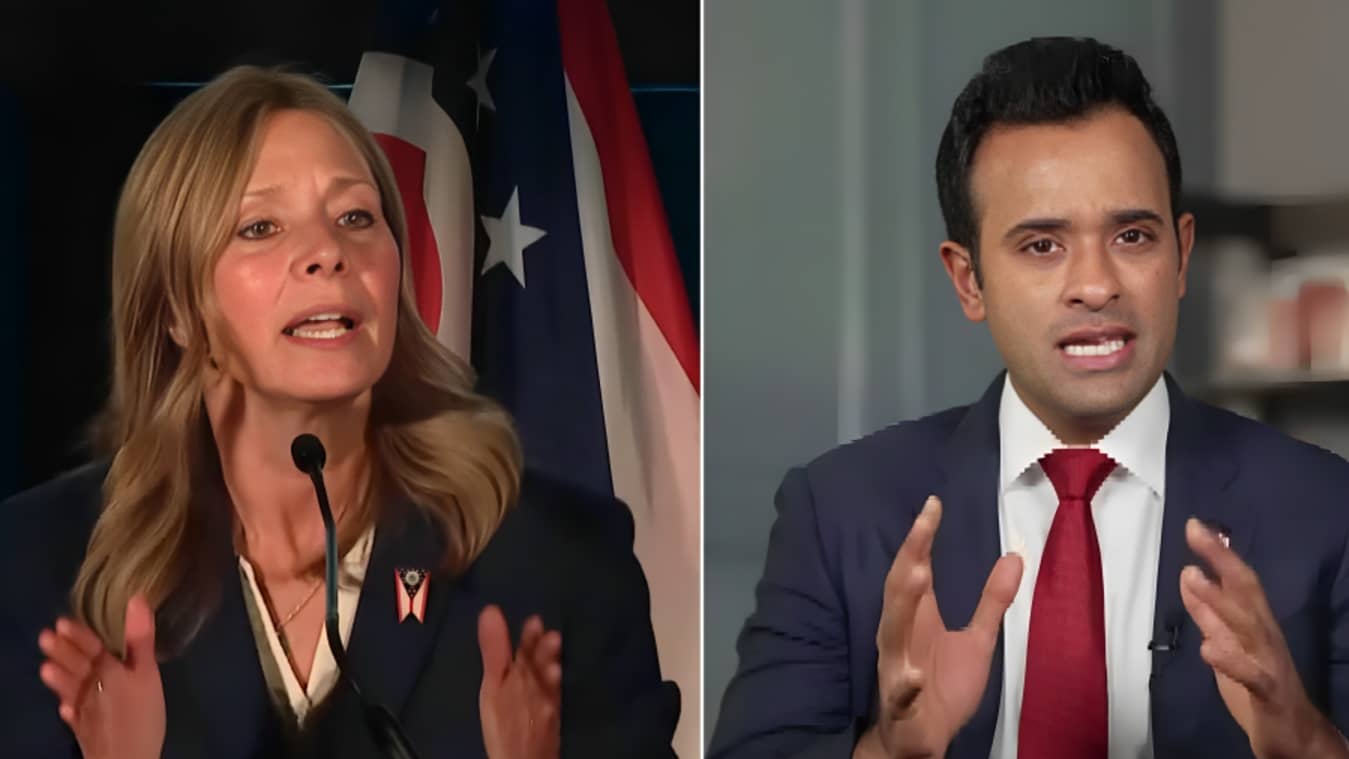
Who Is Amy Acton? Ohio Democratic Governor Nominee Faces Controversy Over Vivek Ramaswamy’s Political Ad
Amy Acton, the Democratic nominee for governor of Ohio, has become a major focus of political debate after Republican candidate Vivek Ramaswamy acknowledged that his campaign produced a controversial advertisement featuring Acton’s estranged mother. The advertisement has drawn widespread attention because it challenges Acton’s account of her childhood and brings a deeply personal family history into the final stages of the 2026 gubernatorial election.
The controversy has raised questions about campaign ethics, political advertising and the use of personal experiences to influence voters. It has also renewed interest in Acton’s professional background and her journey from public health leadership to electoral politics.
Who Is Amy Acton?
Amy Acton is a physician and public health expert who previously served as director of the Ohio Department of Health. Appointed by Republican Governor Mike DeWine in 2019, she became widely recognised during the COVID-19 pandemic for her role in communicating public health guidance and helping shape Ohio’s response to the public health emergency.
Acton became a familiar face to residents through regular briefings alongside DeWine during the early months of the pandemic. Her work brought her national attention, while the restrictions and public health decisions associated with the pandemic also attracted criticism from some sections of the public.
Before her time in state government, Acton worked in public health education, advocacy and community service. She also served as an assistant professor at Ohio State University’s College of Public Health. Her professional experience helped establish her credentials in healthcare and public policy before she entered the governor’s race.
Why Is Vivek Ramaswamy Targeting Amy Acton?
The controversy centres on an advertisement featuring Donna Arthur, Acton’s biological mother. In the video, Arthur accuses her daughter of lying about her upbringing and urges voters not to elect her governor.
The advertisement began circulating on social media in October 2026. Its original circulation did not clearly identify the campaign responsible for producing it. Ramaswamy subsequently confirmed that his campaign had created the advertisement and announced plans to spend four million dollars promoting it.
Ramaswamy defended the campaign’s approach by arguing that voters should examine Acton’s credibility and that she should address questions about her record. Acton, however, criticised the advertisement as an inappropriate personal attack that exploits a painful family history.
The dispute has attracted attention beyond the two candidates because the advertisement focuses on events from Acton’s childhood rather than solely on her public service, political positions or proposed policies.
What Do Records Say About Acton’s Childhood?
Acton has previously spoken about experiencing instability, abuse and housing insecurity during her childhood. She has said that she and her brother experienced difficult living conditions, including a period when the family lived in a tent at a campground.
According to Acton’s account, she was removed from her mother’s custody at the age of 12 after her stepfather was charged with sexually abusing her. She has said that she has not had contact with her mother since the family court proceedings during that period.
The advertisement challenges parts of Acton’s account through her mother’s statements. However, a review by FactCheck.org reported that court documents, historical news coverage and statements from Acton’s brother corroborate key elements of her description of her childhood.
Court records cited in reporting indicate that her stepfather was charged in 1978 following allegations of sexual abuse. The case did not proceed to trial, and records indicate that he failed to appear for a court date. These details are important when assessing the competing claims, although a criminal charge should not be presented as a conviction.
Acton’s brother has also publicly supported her account of their childhood experiences. The available documentation therefore provides important context that viewers would not necessarily obtain from the advertisement alone.
Political Reactions and Campaign Debate
The advertisement has prompted criticism from people across the political spectrum. Some Republican figures have questioned the decision to use a candidate’s estranged family member in a campaign advertisement, while other prominent Republicans have defended Ramaswamy or declined to condemn the campaign tactic.
Acton’s campaign has argued that the advertisement attempts to damage her reputation by exploiting traumatic personal experiences. Ramaswamy has maintained that questions about his opponent’s credibility are relevant to voters.
The dispute illustrates the challenges candidates face when campaign messaging shifts from policy disagreements to personal accusations. Political advertisements are a common feature of American elections, but advertisements involving family disputes and childhood trauma can generate intense scrutiny over fairness, context and accuracy.
The controversy has also created a wider discussion about the responsibilities of political campaigns when using statements made by relatives who have been estranged from a candidate for decades.
What Does the Controversy Mean for the Ohio Governor’s Race?
The 2026 Ohio gubernatorial election is a significant contest between Acton and Ramaswamy. Acton’s background in medicine and public health is central to her public profile, while Ramaswamy has built his campaign around his business background and conservative political positions.
The advertisement could influence how voters evaluate both candidates. Some voters may view it as a legitimate attempt to question an opponent’s credibility, while others may see it as an unnecessary personal attack that distracts from issues affecting Ohio residents.
The controversy also places greater importance on independent verification. Voters must distinguish between accusations made in campaign advertisements, responses from the candidates and facts supported by documentary evidence.
As the election approaches, healthcare, education, economic conditions, public spending and other policy issues remain important areas for voters to consider alongside the dispute.
Conclusion
Amy Acton’s rise from public health leadership to Democratic nominee for Ohio governor has brought her into one of the state’s most closely watched political contests. The advertisement produced by Vivek Ramaswamy’s campaign has shifted attention towards her childhood and estranged family relationship, generating criticism and debate over campaign conduct.
While the candidates continue to dispute each other’s credibility, available court records and historical reporting support key elements of Acton’s account of her childhood. The controversy highlights the importance of checking evidence, understanding context and evaluating political claims carefully before drawing conclusions.
The ultimate impact of the advertisement on the Ohio governor’s race remains uncertain. Its immediate effect, however, has been to make campaign ethics and the treatment of personal trauma major topics in the election debate.