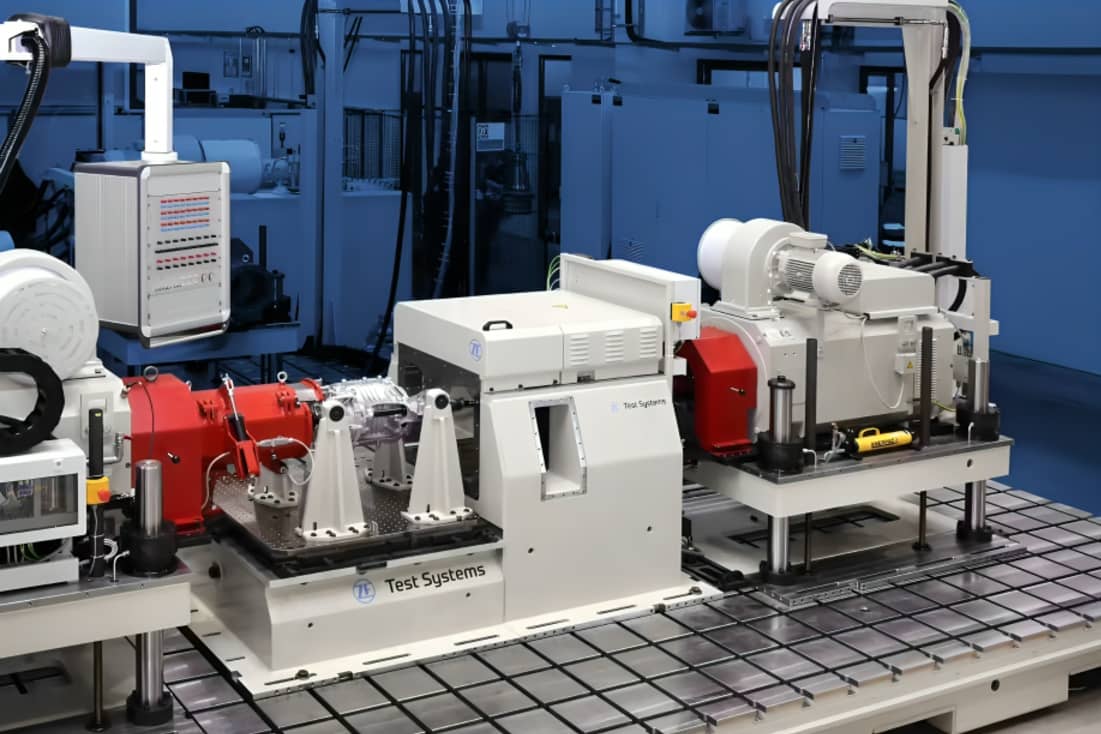

ZF Group India has announced that it has secured three separate government orders to supply advanced automotive testing systems for battery, tyre, and electric axle testing. The company stated that the contracts were awarded by independent testing agencies functioning under national automotive testing programmes supported by the Government of India.
According to the company, the new orders represent an important milestone in its efforts to support India's rapidly evolving automotive industry. The testing systems will be used to evaluate vehicle components and technologies in accordance with established performance, durability, safety, and quality standards.
The contracts have been awarded by agencies operating under the National Automotive Testing and R&D Infrastructure Project, the Ministry of Road Transport and Highways, and other Government of India-supported automotive testing programmes. These institutions play a key role in strengthening India's automotive research, certification, and product development capabilities.
The battery testing systems supplied by ZF Group India are expected to support the evaluation of energy storage technologies used in electric vehicles. Such systems help engineers assess battery performance, charging characteristics, thermal behavior, safety, durability, and lifecycle under different operating conditions.
The tyre testing equipment will enable laboratories to conduct detailed assessments of tyre performance, including grip, rolling resistance, wear characteristics, load capacity, and durability. These evaluations contribute to improving vehicle safety, fuel efficiency, and overall driving performance.
The company will also provide testing systems for electric axles, commonly known as e axles. These integrated propulsion systems combine electric motors, transmission components, and power electronics into a single unit and have become an important technology in modern electric vehicles. Testing helps verify efficiency, reliability, noise levels, thermal management, and long-term operational performance.
India's automotive industry is undergoing a significant transformation driven by increasing adoption of electric mobility, stricter emission regulations, enhanced vehicle safety standards, and continuous technological innovation. As manufacturers introduce more advanced vehicle platforms, the demand for sophisticated testing infrastructure has grown substantially.
The National Automotive Testing and Research and Development Infrastructure Project was established to strengthen India's testing, certification, and research capabilities for the automotive sector. Modern testing facilities help manufacturers develop products that comply with domestic regulations as well as international quality and safety requirements.
ZF Group India stated that these new orders reinforce its expertise in automotive engineering and testing technologies. The company has been actively involved in supplying advanced mobility solutions, driveline technologies, safety systems, and testing equipment to customers across the automotive industry.
Industry experts believe that investment in high-quality testing infrastructure is essential for supporting innovation in electric mobility. Accurate testing enables manufacturers to validate new technologies before commercial production while ensuring compliance with evolving regulatory standards.
The growing focus on electric vehicles has further increased the importance of specialized testing for batteries, electric powertrains, and related components. Government-supported testing facilities are expected to play a crucial role in accelerating product development and improving consumer confidence in next-generation vehicle technologies.
ZF Group India's latest contracts reflect the continued expansion of India's automotive testing ecosystem. By providing advanced testing systems to national laboratories, the company is expected to contribute to research, product validation, and technology development across multiple segments of the automotive industry.
As India continues its transition toward safer, cleaner, and more technologically advanced mobility solutions, investments in testing infrastructure will remain an important part of strengthening the country's automotive manufacturing capabilities and supporting long-term industry growth.