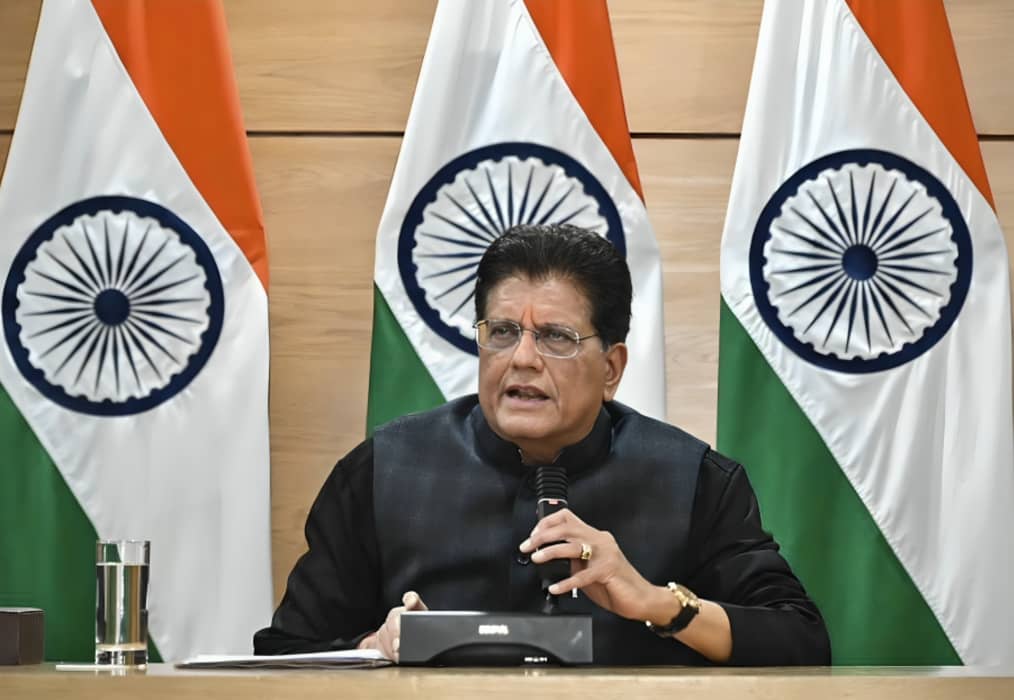
India is expanding its free trade agreement strategy, with Commerce and Industry Minister Piyush Goyal saying that the country is negotiating with at least eight to nine more groups of countries and individual nations. Together, these economies represent about 15 trillion dollars in gross domestic product. The announcement was made on August 24 during Goyal's visit to Japan, where he is leading a large Indian business delegation focused on trade and investment opportunities.
The proposed agreements are part of India's broader effort to expand preferential market access for Indian businesses and deepen the country's integration with global value chains. Goyal said India is working towards a situation in which its free trade agreements would eventually cover around 75 percent of global trade.
India has already expanded its trade agreement network considerably in recent years. According to Goyal, the country has signed nine free trade agreements during the past four years. These agreements cover 38 developed countries and economies with a combined GDP of about 60 trillion dollars.
In addition to these newer agreements, earlier trade arrangements with countries including Japan and South Korea, as well as the ASEAN region, have provided India with access to additional markets worth around 10 trillion dollars in economic output. Taken together, Goyal said, India now has preferential market access to economies representing approximately 70 trillion dollars.
The latest round of negotiations could further increase that coverage by another 15 trillion dollars. If successfully concluded and implemented, these agreements could expand opportunities for Indian exporters in sectors such as manufacturing, services, technology, pharmaceuticals, engineering products and processed goods.
Free trade agreements generally seek to reduce or eliminate tariffs and other trade barriers between participating economies. They can provide exporters with improved access to overseas markets while also creating opportunities for imports, investment and greater integration into international supply chains.
For India, the strategy is also linked to the government's ambition of making the country a more important participant in global value chains. Goyal has described India as having a large domestic market while simultaneously becoming more open to international trade through its expanding network of agreements.
The minister was speaking to business representatives from India and Japan during his official visit to Tokyo. He is leading a delegation of more than 200 representatives aimed at strengthening trade and investment relations between the two countries. The discussions are expected to cover areas including manufacturing, technology and future investment opportunities.
Japan is particularly important in India's trade strategy because the two countries already have an economic partnership agreement. Goyal has also been encouraging Japanese businesses to increase investment in India and develop larger manufacturing and technology operations.
South Korea and the ASEAN region are similarly important components of India's existing trade network. Expanding market access through these relationships can help Indian companies diversify their export destinations and reduce dependence on individual markets.
The government's approach is also intended to encourage Indian businesses to make greater use of the trade agreements already in place. In February 2026, the Ministry of Commerce and Industry said India's nine FTAs had secured preferential access to nearly two-thirds of global trade. The ministry highlighted the importance of quality, value addition, market diversification and stronger local ecosystems in using these agreements effectively.
Goyal has also pointed to investment opportunities in India in areas such as data centres, manufacturing and artificial intelligence. Greater trade integration could potentially support these sectors by improving access to overseas markets and encouraging international companies to establish operations in India.
At the same time, negotiating FTAs involves balancing export opportunities with the interests of domestic industries. Tariff reductions can increase competition from imported products, making it important for Indian manufacturers and businesses to improve productivity, quality and value addition.
The proposed expansion of India's trade agreements therefore represents both an opportunity and a challenge. Indian exporters could gain access to larger markets, but they may also face stronger international competition within the domestic market.
The government's stated objective is to create a broader and more diversified trade network. By negotiating with additional countries and groups, India seeks to strengthen its position as a reliable partner for global companies looking to develop supply chains across Asia and other regions.
The next stage will depend on the outcome of negotiations with the eight to nine additional countries and blocs. Trade agreements can take considerable time because negotiations cover tariffs, services, investment, intellectual property, rules of origin and other issues.
For Indian businesses, successful completion of these negotiations could open new opportunities for exports and international partnerships. For the broader economy, greater integration with global markets could support investment, manufacturing and services growth, provided domestic industries are prepared to compete effectively.
Goyal's latest announcement shows that India intends to continue expanding its FTA network rather than relying only on existing agreements. The proposed negotiations covering another 15 trillion dollars in economic output could become an important part of India's longer-term strategy to increase exports and deepen its participation in global trade.