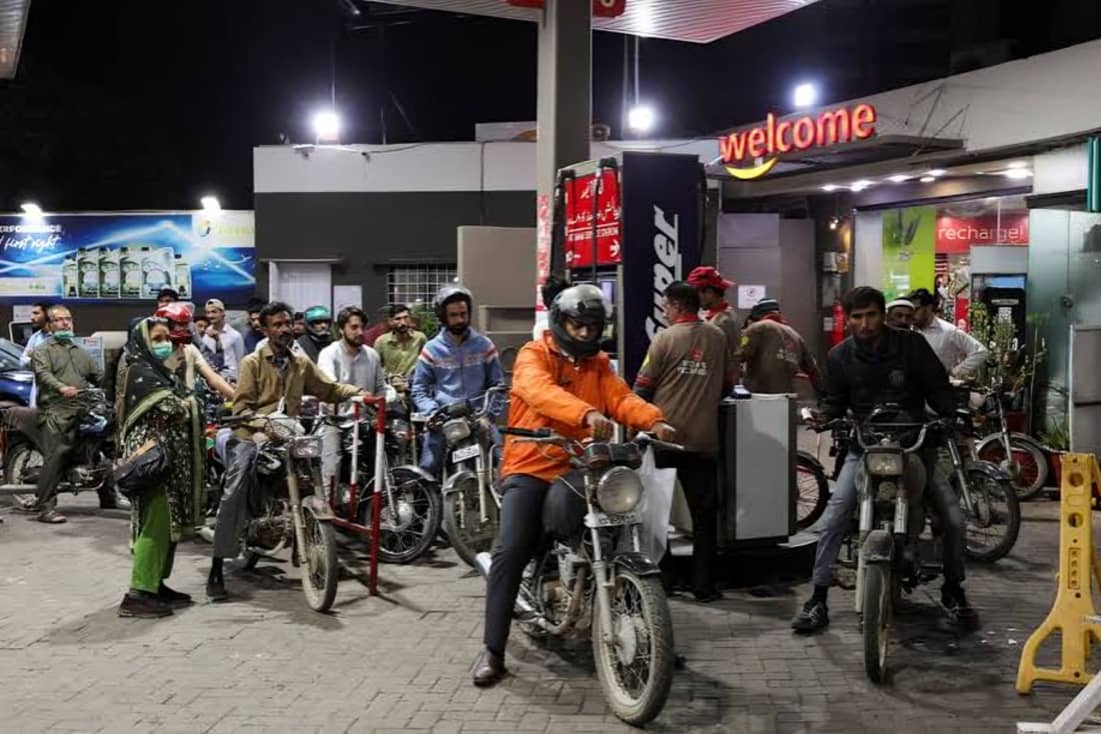
Pakistan has announced another increase in domestic fuel prices, with petrol becoming costlier by Rs 5.77 per litre and high speed diesel rising by Rs 6.47 per litre.
The latest increase comes at a time when international crude oil markets are facing significant volatility because of geopolitical tensions and uncertainty surrounding energy supplies. The increase is expected to place additional pressure on consumers, transport operators and businesses across Pakistan.
Following the latest revision, the price of petrol has crossed the Rs 331 per litre mark, while the price of high speed diesel has moved close to Rs 390 per litre.
Petrol price crosses Rs 331
Petrol is one of the most widely used fuels in Pakistan and is particularly important for private vehicles, motorcycles and several commercial activities.
With the latest increase of Rs 5.77 per litre, the petrol price has moved above Rs 331.
The increase could affect household budgets because transportation expenses are closely linked to petrol prices. Consumers may also face indirect increases in the cost of goods and services if businesses pass higher fuel expenses through to customers.
Diesel price reaches around Rs 390
High speed diesel has also recorded a substantial increase.
The government has raised the diesel price by Rs 6.47 per litre, taking the rate to around Rs 390 per litre.
Diesel is particularly important for Pakistan's transport and logistics sectors. Heavy vehicles, buses, trucks and various commercial operations depend heavily on diesel.
As a result, an increase in diesel prices can have a wider economic impact than a petrol price increase alone.
Higher diesel costs can raise freight charges and increase the cost of transporting agricultural products, industrial goods and consumer products across the country.
Global crude oil market remains volatile
The latest price revision comes against the backdrop of volatility in global crude oil markets.
International oil prices have been affected by developments in the Middle East, concerns over supply disruptions and uncertainty surrounding geopolitical conditions.
When global crude prices rise, oil-importing countries such as Pakistan face higher import costs.
Pakistan depends substantially on imported petroleum products and crude oil to meet domestic energy requirements. Therefore, international price movements can have a direct influence on domestic fuel prices.
Middle East tensions add uncertainty
Tensions in the Middle East have become an important factor for international energy markets.
The region is strategically important for global oil production and transportation. Any escalation that threatens production facilities, shipping routes or major energy corridors can cause crude oil prices to rise.
The possibility of prolonged instability has therefore kept traders and governments closely monitoring developments in the region.
For Pakistan, higher international crude prices can increase the cost of importing petroleum products and put additional pressure on foreign exchange reserves.
Impact on transportation
The immediate impact of higher fuel prices is likely to be felt in the transportation sector.
Private motorists will have to spend more on fuel, while commercial transport operators could face higher operating expenses.
Bus operators, freight companies, delivery services and other businesses that depend heavily on fuel could see their costs increase.
If transport operators raise fares to compensate for higher expenses, consumers could ultimately face additional costs.
Impact on food prices
Fuel prices can also influence food prices indirectly.
Agricultural products often travel considerable distances from farms to wholesale markets and then to retail outlets.
Higher diesel prices can increase the cost of operating agricultural machinery and transporting crops.
If these additional expenses are passed through the supply chain, food prices could come under further pressure.
This is particularly important for households already dealing with high living costs.
Inflation concerns
An increase in petrol and diesel prices can contribute to inflationary pressure.
Fuel is an important input for transportation, manufacturing, agriculture and distribution.
When energy costs rise, businesses may have to pay more for production and transportation.
Some companies may absorb part of the increase, while others may pass the additional expense on to consumers.
The overall impact depends on the duration and scale of the increase in international oil prices.
Currency pressure
Exchange rate movements are another factor influencing Pakistan's fuel prices.
Because petroleum products are largely imported, the value of the Pakistani rupee against major international currencies affects the local cost of fuel.
A weaker currency can make imports more expensive even if international crude prices remain stable.
Conversely, a stronger currency can reduce some of the pressure created by higher global oil prices.
Therefore, fuel prices in Pakistan are influenced by both international crude prices and domestic currency conditions.
Government revenue and fuel pricing
Fuel prices are also important for government finances.
Petroleum products can generate significant revenue through taxes, levies and other charges.
However, governments must balance revenue requirements with the economic impact of higher fuel prices.
A sharp increase in fuel costs can increase public dissatisfaction and add pressure on household budgets.
At the same time, keeping domestic prices artificially low for an extended period can increase the government's financial burden.
Effect on businesses
Businesses across Pakistan are likely to monitor the latest fuel increase closely.
Companies involved in logistics, transportation, construction, agriculture and manufacturing are particularly sensitive to fuel costs.
Higher transportation expenses can reduce profit margins if businesses are unable to increase prices.
Small businesses may face greater difficulties because they often have less flexibility to absorb unexpected cost increases.
Global oil supply remains a key concern
The outlook for international crude oil prices will depend heavily on developments in global supply and demand.
Any disruption to oil production or transportation could push prices higher.
On the other hand, a reduction in geopolitical tensions or stronger global supply could help bring prices down.
Pakistan's fuel prices are therefore likely to remain sensitive to developments outside the country.
What consumers can expect
For Pakistani consumers, the latest increase means higher fuel expenditure.
Motorists may look for ways to reduce fuel consumption, while businesses could review transportation and logistics arrangements to control costs.
Public transport users may also be affected if operators revise fares because of higher diesel expenses.
The broader impact will depend on whether the increase remains limited to fuel or contributes to wider price increases across the economy.
Broader economic implications
The latest fuel price increase highlights Pakistan's exposure to international energy markets.
As an oil-importing economy, Pakistan is vulnerable to sudden increases in global crude prices.
Higher oil import bills can put pressure on the country's external finances and increase demand for foreign currency.
If international prices remain elevated for a prolonged period, the government could face additional economic challenges.
Regional impact
Higher crude prices can affect several South Asian economies because many countries in the region rely substantially on imported energy.
Pakistan's latest price increase is therefore part of a broader global energy story rather than an isolated domestic development.
India, Bangladesh, Sri Lanka and other regional economies also closely monitor international crude prices because changes in energy costs can influence inflation, trade balances and economic growth.
Outlook for Pakistan fuel prices
The direction of Pakistan's next fuel price revision will depend on international crude prices, exchange rate movements, domestic taxation and the government's pricing policy.
If global oil prices remain elevated, further pressure on domestic fuel prices could continue.
If geopolitical tensions ease and crude prices decline, Pakistan could see some relief in future pricing revisions.
For now, the increase in petrol and diesel prices is likely to remain a significant concern for consumers and businesses.
The petrol price crossing Rs 331 per litre and diesel approaching Rs 390 represent another challenge for an economy already dealing with cost pressures.
The latest revision demonstrates how developments in international energy markets can quickly affect domestic consumers.
For households, the immediate concern will be higher transportation expenses. For businesses, increased fuel costs could affect logistics, production and distribution expenses.
The wider economic impact will depend on how long global oil prices remain elevated and whether geopolitical tensions continue to disrupt market expectations.