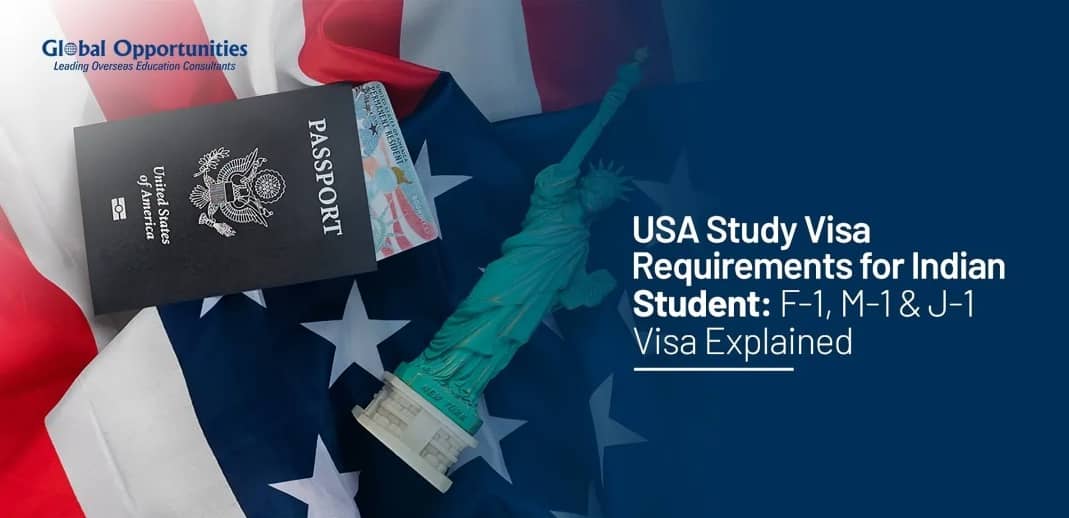
The United States remains one of the most sought after destinations for Indian students pursuing higher education. To study in the US, students must obtain either an F-1 visa for academic and language training programmes or an M-1 visa for vocational and non academic courses. The eligibility criteria and application steps for both visa categories follow a structured process established by the US Department of Homeland Security.
To be eligible for an F-1 or M-1 visa, the applicant must secure admission to a Student and Exchange Visitor Program approved institution. The programme of study must be full time, and applicants must show proficiency in English or enrol in preparatory language courses before their academic programme. They must also demonstrate the financial ability to cover tuition fees, living expenses and other costs throughout the course. A key requirement is maintaining a foreign residence, which the applicant does not intend to abandon.
The visa process begins after the student receives an admission offer from a SEVP approved school. Once admitted, the institution issues Form I-20, which outlines programme details, duration and estimated expenses. The next essential step is payment of the SEVIS I-901 fee, which maintains the student’s record in the SEVIS database. The receipt for this payment must be presented during the visa interview.
Students must then complete the DS-160 online visa application form and upload a recent passport size photograph. Upon submission, applicants must print the DS-160 confirmation page. The next step is payment of the visa application fee, also known as the MRV fee, generally amounting to 185 US dollars. The payment receipt is required at later stages of the process.
Applicants are required to schedule two appointments. The first is the Visa Application Centre appointment for biometrics, including fingerprints and a photograph. The second appointment is the visa interview at a US Embassy or Consulate, located in Delhi, Mumbai, Chennai, Kolkata or Hyderabad. During the interview, students may be asked about their academic choices, financial capability, reasons for selecting a particular institution and intentions after completing their studies.
Documentation plays a vital role in the approval process. Mandatory documents include a valid passport, Form I-20, DS-160 confirmation, SEVIS fee receipt, visa fee receipt and the visa appointment letter. Academic records such as mark sheets, degree certificates, English proficiency scores and standardised test results must also be submitted. Financial documents including bank statements, income proof, loan sanction letters, affidavits of support and scholarship letters help demonstrate economic preparedness.
Once the visa is approved, the applicant’s passport is retained for stamping and later returned through the selected delivery method. Students may travel to the United States up to 30 days before the programme start date listed on their Form I-20.
Work rules differ across visa categories. F-1 students may work only on campus during their first academic year, while off campus employment requires authorisation and is available through CPT, OPT or the STEM OPT extension. M-1 students are permitted practical training only after completing their programme.