Actress and environmental advocate Dia Mirza has addressed the criticism she received after making comments linking patriarchy with climate change. Her remarks sparked a heated discussion on social media, with some users questioning the connection between gender based power structures and environmental degradation.
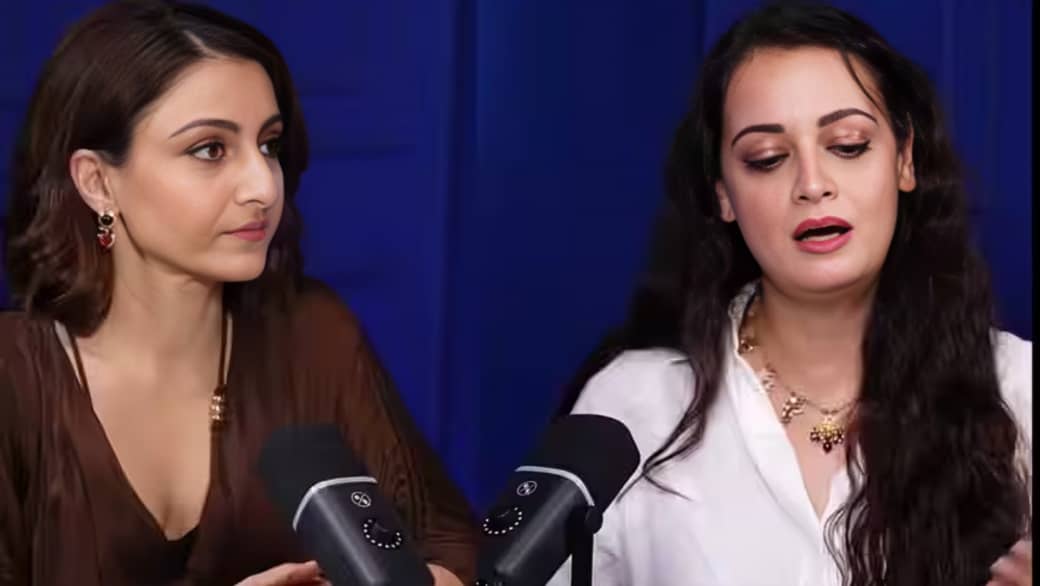
The controversy began after Dia participated in a conversation about climate change and ecofeminism. During the discussion, she connected environmental destruction with systems that prioritise domination, extraction and short term economic gains.
Her comments were interpreted by some social media users as blaming men for the climate crisis. The criticism included accusations that she was expressing hostility towards men. However, Dia later explained that her argument was not about blaming individual men but about examining broader social and economic structures.
Dia subsequently shared an explanation of her position and said she continued to stand by her earlier statement linking patriarchy and climate crises. She argued that climate change should not be viewed only as an environmental problem but also as an issue connected to inequality and social justice.
According to Dia's explanation, patriarchal systems have historically concentrated power and encouraged models of development that place greater emphasis on extracting resources than protecting ecosystems. She drew a connection between the treatment of natural resources and the unequal treatment of vulnerable communities.
The actress also pointed to the effects of climate change on women and girls, particularly in vulnerable communities. She noted that environmental problems such as water shortages, food insecurity, displacement and loss of livelihoods can place a greater burden on women.
Her comments have been part of a broader discussion around ecofeminism, an approach that examines the relationship between environmental exploitation and gender inequality.
The original remarks generated mixed reactions. Some people supported Dia's argument and said that examining historical power structures was important when discussing environmental destruction. Others argued that climate change has multiple complex causes and that reducing the issue to patriarchy could oversimplify the problem.
The debate also became personal on social media, with Dia saying that she faced trolling and offensive language after expressing her views. The actress has been an environmental campaigner for several years and has frequently spoken publicly about sustainability, climate action and environmental protection.
Dia's response focused on explaining the context of her statement rather than withdrawing it. She argued that climate action should also involve discussions about justice, equality and the way societies value natural resources.
She further explained that women are often among the people most affected by environmental changes while remaining underrepresented in many decision making spaces related to climate policy and environmental management.
The controversy also highlights the challenges faced by celebrities who speak publicly about political, social or environmental issues. Public figures often receive strong support from some sections of social media while facing intense criticism from others.
For Dia, environmental advocacy has been an important part of her public work alongside her acting career. Her latest comments have once again brought attention to her views on climate change and the relationship between environmental protection and social equality.
The discussion around her statement also reflects a larger debate about the causes of climate change. Scientists and policymakers generally examine a wide range of factors, including fossil fuel consumption, industrial activity, land use changes, energy production, transportation and economic policies. Dia's comments focused specifically on the social structures and systems that she believes influence these activities.
She has therefore clarified that her criticism is directed at systems of domination and extraction rather than at men as individuals.
The controversy has continued to generate discussion online, but Dia has maintained that climate action needs to go beyond reducing emissions. In her view, addressing inequality and reconsidering how societies interact with nature should also form part of the response to the climate crisis.
The actress has also argued that women should have a stronger role in environmental decision making. She pointed to examples of women contributing to forest conservation, water management, sustainable agriculture and community resilience.
Her comments have consequently opened up a wider conversation about gender, environmental responsibility and climate justice.
At the same time, the criticism demonstrates how quickly statements made by public figures can spread across social media. A comment made during a longer discussion can often be reduced to a short phrase, leading to different interpretations among audiences.
Dia's subsequent clarification was aimed at providing more context to her original remarks. She explained that the connection she sees between patriarchy and climate change involves historical patterns of power, resource extraction and inequality.
The debate surrounding her comments is therefore likely to continue, particularly as discussions about climate change increasingly include questions about social justice and the unequal effects of environmental crises.
Dia Mirza remains an active voice on environmental issues, and her latest comments have placed her once again at the centre of a public discussion about climate change, gender and social responsibility.
While some critics continue to disagree with her interpretation, Dia has made clear that she intends her comments to be understood as a criticism of systems and structures rather than a blanket attack on men.
The controversy ultimately reflects a broader disagreement over how climate change should be discussed and which social, economic and political factors should be examined alongside environmental science.
For now, Dia Mirza has stood by her position while attempting to clarify the reasoning behind it. Her response has added another dimension to the debate, shifting the focus from the controversial wording of her original statement towards questions about inequality, environmental exploitation and climate justice.