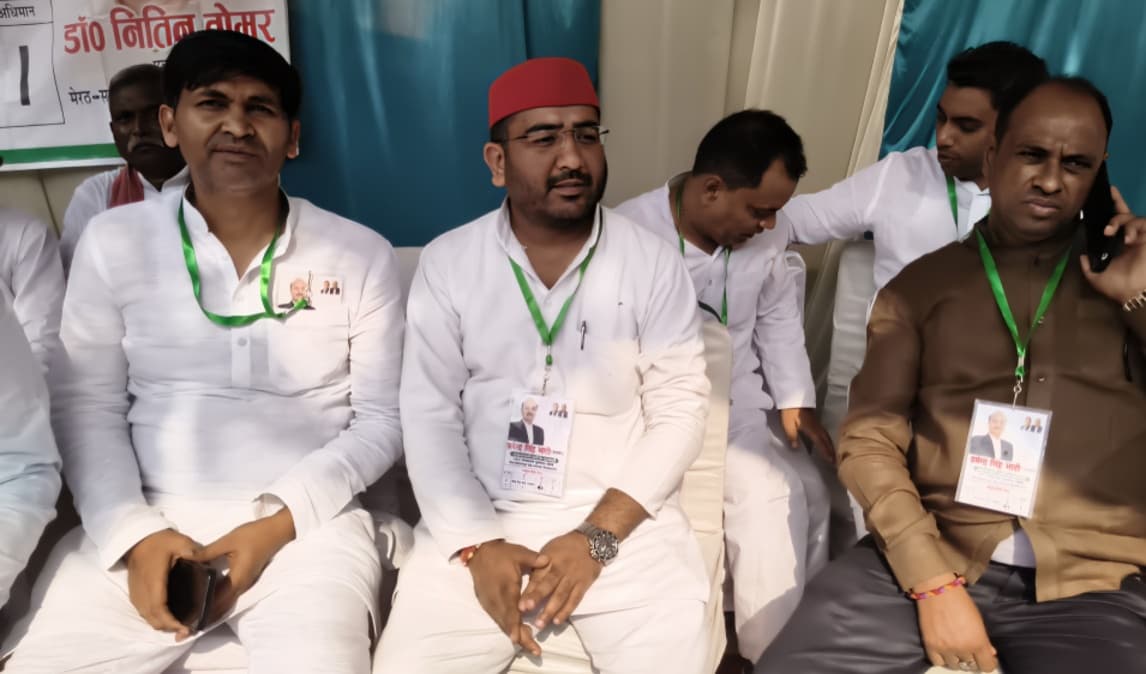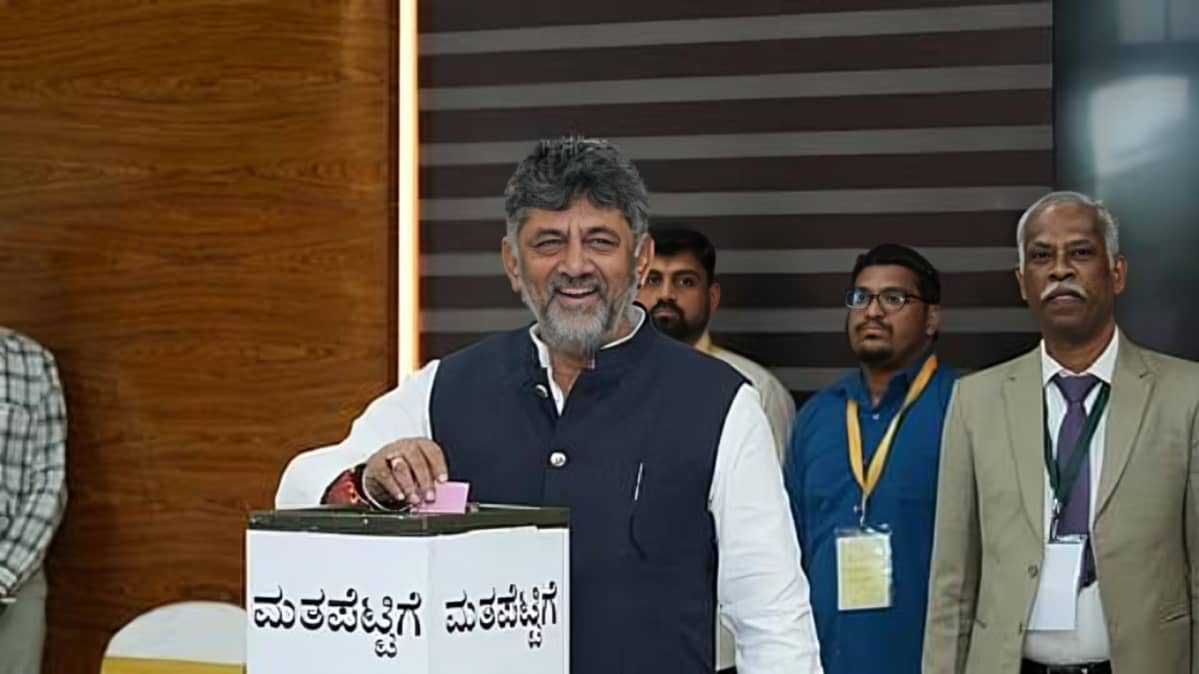
The Bharatiya Janata Party and Janata Dal Secular alliance has won all four seats in the Karnataka Legislative Council elections held on October 23, delivering a significant political setback to the ruling Congress party. The results covered two graduates' constituencies and two teachers' constituencies, strengthening the alliance's position in the state ahead of the next Legislative Assembly elections.
The outcome has drawn attention to the political challenges facing the Congress government and Deputy Chief Minister DK Shivakumar. The BJP and JD(S) alliance defeated Congress candidates in all four constituencies, giving the opposition a strong result in an election that focused on graduates and teachers.
BJP leaders welcomed the victory and described it as an indication of dissatisfaction among voters with the Congress government's performance. The results have also provided the alliance with an opportunity to strengthen its political campaign and organisational activities ahead of the next state Assembly elections, which are expected in less than two years.
However, the outcome of these four Legislative Council constituencies should be viewed in its specific electoral context. While the results represent a setback for Congress, they do not by themselves establish the voting preferences of the entire Karnataka electorate.
Four Seats Go to the BJP JD(S) Alliance
The Karnataka Legislative Council elections were held on October 23 for four constituencies, comprising two graduates' seats and two teachers' seats. These constituencies represent specific groups of eligible voters and differ from general Assembly constituencies in their electoral composition.
The BJP and JD(S) alliance secured victories in all four seats, preventing the Congress from winning any of the contested constituencies. The result has given the alliance a political advantage in these segments and strengthened its position in the Legislative Council election contest.
Graduates' and teachers' constituencies are important parts of the Legislative Council electoral system. Voters in these constituencies elect representatives who participate in legislative discussions and decision-making in the state.
The result has attracted attention because of the complete sweep by the BJP JD(S) alliance. Winning all four seats has allowed the opposition alliance to highlight its electoral performance and question the popularity of the ruling party among these voter groups.
The detailed implications for the balance of power in the Legislative Council would depend on the council's existing composition and the terms of the elected members. The four victories nevertheless represent a clear electoral success for the alliance in the constituencies that went to the polls.
Political Setback for DK Shivakumar and Congress
The results are being viewed as a setback for the Congress party and Deputy Chief Minister DK Shivakumar, who is one of the senior leaders of the Karnataka Congress. The defeat comes at a time when political parties are preparing for the next phase of electoral competition in the state.
For Congress, losing all four seats creates questions about its performance in the graduates' and teachers' constituencies. The outcome may lead the party to review its campaign strategy, voter outreach and organisational preparations in the areas covered by the elections.
The BJP and JD(S), meanwhile, can use the results to strengthen their argument that voters are dissatisfied with the state government's performance. BJP leaders have presented the victories as evidence of public discontent with the Congress administration.
However, the election results alone do not establish the reasons behind individual voting decisions. Voters may have considered a range of local and state-level issues when choosing their representatives. Assessing the broader political impact would require examining constituency-level results, voter turnout and other relevant electoral information.
BJP and JD(S) Strengthen Their Alliance
The results also highlight the electoral performance of the BJP and JD(S) alliance in Karnataka. By winning all four seats, the two parties have demonstrated their ability to secure victories in the constituencies contested in this election.
Cooperation between political parties can influence candidate selection, campaigning, voter mobilisation and the distribution of electoral support. The four-seat victory gives the alliance a positive result to build on as it prepares for future electoral contests.
For the BJP, the outcome offers an opportunity to challenge the Congress government's political standing. For JD(S), the alliance's success provides an opportunity to reinforce its role in Karnataka's political landscape.
The longer-term impact will depend on whether the alliance can maintain its coordination and translate its performance in these constituencies into broader political support. Assembly elections involve a much larger electorate and a different set of constituency-level considerations, so the Legislative Council results cannot automatically predict the next state election outcome.
Focus Shifts to the Next Karnataka Assembly Elections
Karnataka's next Assembly elections are expected in less than two years, making the latest Legislative Council results politically significant for the major parties. Congress, the BJP and JD(S) are likely to assess the outcome as they plan their future campaigns and voter outreach programmes.
For the ruling Congress party, the result highlights the need to examine its performance in the constituencies where it suffered defeats. The party's response may include reviewing local campaign strategies, strengthening its organisation and addressing concerns raised by voters.
The BJP and JD(S) alliance will seek to build on the momentum generated by the victories. Its leaders may use the outcome to reinforce their criticism of the Congress government and present the alliance as a competitive alternative in the state.
At the same time, the political landscape may change before the next Assembly elections. Government policies, local issues, candidate choices and public opinion will all influence the eventual contest.
Conclusion
The BJP JD(S) alliance's victory in all four Karnataka Legislative Council constituencies marks an important development in the state's political landscape. The results have dealt a setback to Congress and DK Shivakumar while giving the opposition alliance an electoral success ahead of the next Assembly elections.
Although BJP leaders have described the outcome as a sign of dissatisfaction with the Congress government, the broader political implications will become clearer through subsequent elections and developments in the state. For now, the four-seat sweep has strengthened the alliance's position and placed renewed focus on the political strategies of Karnataka's major parties.