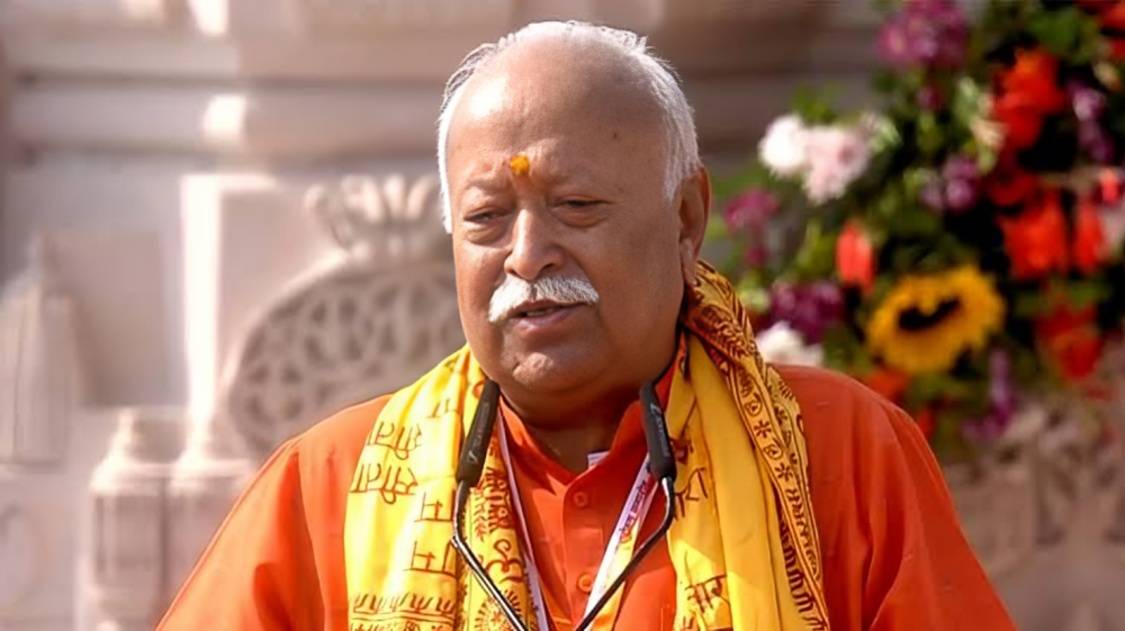
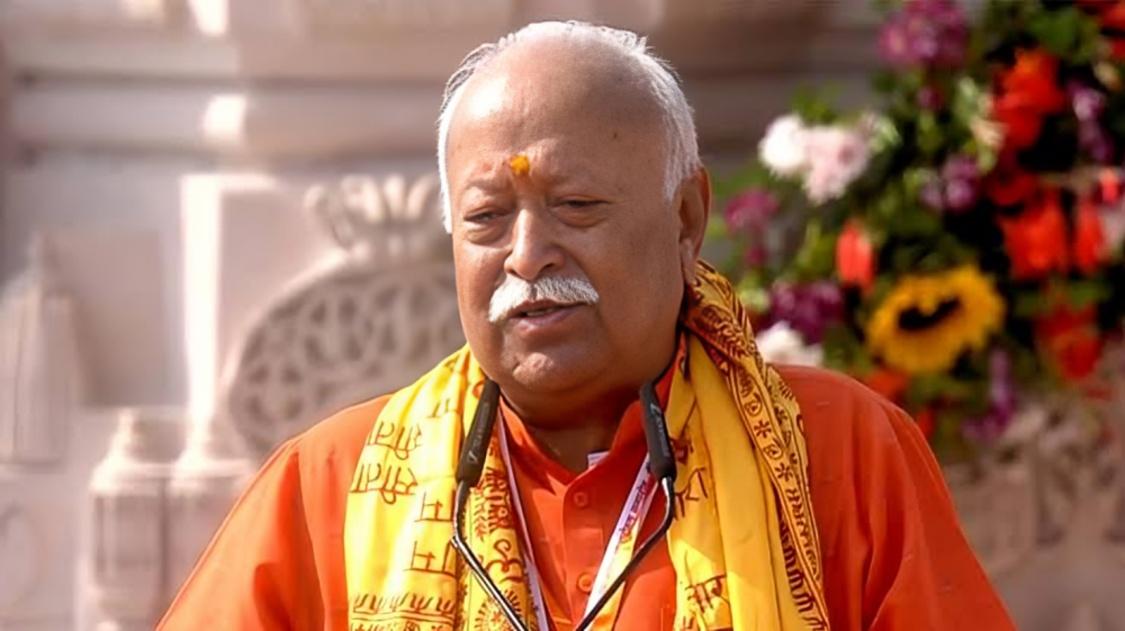
Rashtriya Swayamsevak Sangh chief Mohan Bhagwat has said India should use its traditional knowledge, cultural experience and principles of self-reliance to present a new model of development to the world. He emphasised that economic and social progress should not come at the cost of nature and that human beings, animals and the environment must be viewed as interconnected parts of the same system.
Bhagwat made these remarks on Thursday, November 12, 2026, at an event in Ramtek in Maharashtra's Nagpur district. He was speaking after the inauguration of an agriculture college and veterinary hospital established by the Datta Meghe Foundation. Maharashtra Chief Minister Devendra Fadnavis and Union Minister for Road Transport and Highways Nitin Gadkari also attended the programme.
Bhagwat Highlights the Connection Between Human, Animal and Environmental Health
During his address, Bhagwat said the world was increasingly looking towards India for solutions to various challenges. He suggested that the country's traditional knowledge and holistic approach to life could help create a development model that benefits people as well as the natural environment.
He stressed that human beings should not consider themselves the masters of nature. Instead, people should recognise that they are part of the natural world and depend on it for their well-being.
According to Bhagwat, biodiversity, ecological balance, animal health and environmental conservation are essential for maintaining human health. He called for a lifestyle that considers the welfare of all living beings rather than focusing only on individual interests.
He also emphasised that people should practise self-restraint and avoid activities that damage the environment. Development, he said, should be planned in a way that protects natural resources and supports the well-being of future generations.
One Health Concept and India's Traditional Knowledge
Bhagwat also discussed the concept of One Health, which recognises the close relationship between human health, animal health and the environment.
He observed that the concept had become more widely recognised internationally over the past two to three decades. However, he said that the underlying principles had been part of India's traditional knowledge and way of life for centuries.
He explained that environmental damage can directly affect human health. Similarly, diseases affecting animals can sometimes spread to people, creating wider public health challenges. Animal health is also closely connected with agricultural productivity and the livelihoods of communities that depend on livestock.
His remarks highlighted the importance of cooperation between agriculture, veterinary science, public health and environmental protection.
Bhagwat said India should draw upon its traditional practices while also using modern scientific knowledge to address present-day challenges. He indicated that combining traditional experience with research and innovation could help create a more sustainable development approach.
Focus on Indigenous Cattle Breeds and Self-Reliance
The RSS chief also raised concerns about the limited development and use of India's indigenous cattle breeds. He said the country had historically depended on foreign cattle varieties to improve milk production, while its own native breeds had not received sufficient attention.
Referring to India's indigenous cattle resources, Bhagwat said the country had breeds with considerable potential that could have been developed further through research and scientific breeding programmes.
He also pointed out that cattle originating from India had contributed to livestock development in other countries, while India had not fully utilised its own resources.
Bhagwat called for greater attention to indigenous breeds, traditional agricultural knowledge and domestic capabilities. He said strengthening these resources could reduce dependence on external support and contribute to national self-reliance.
He further stated that self-reliance was important not only for individuals but also for the country as a whole. According to him, India's development should contribute to global welfare rather than focusing exclusively on domestic progress.
Devendra Fadnavis Highlights Climate Change Challenges in Agriculture
Maharashtra Chief Minister Devendra Fadnavis also addressed the gathering and discussed the difficulties faced by the agricultural sector due to climate change.
He said changing weather conditions were having an adverse impact on farming and highlighted the need to improve agricultural productivity. He stressed that research, innovation and trained human resources would be important in helping farmers respond to changing climatic conditions.
Agriculture remains a major source of livelihood in Maharashtra, particularly in rural areas. Unpredictable rainfall, changing temperatures and other weather-related challenges can affect crop production, farm incomes and the availability of agricultural resources.
Fadnavis emphasised the importance of developing new solutions through research and institutional support. Strengthening agricultural education and improving access to technical knowledge can help farmers adopt more effective practices.
The inauguration of the agriculture college was therefore significant in the context of improving educational and research opportunities in the region.
Nitin Gadkari Discusses Dairy Development in Vidarbha
Union Minister Nitin Gadkari spoke about the dairy sector and its potential for development in the Vidarbha region of Maharashtra.
He referred to the difference in milk production between Vidarbha and Kolhapur. According to his remarks, Vidarbha produces approximately one crore litres of milk, while Kolhapur accounts for around eight crore litres.
Gadkari said the expansion of the Mother Dairy plant in Nagpur would help strengthen the dairy sector in Vidarbha. Improved processing facilities can support milk collection, storage and distribution, while creating opportunities for farmers and people associated with the dairy industry.
He also highlighted the importance of establishing agriculture and veterinary colleges to support regional development. Such institutions can provide professional education, encourage research and help address the technical requirements of farming and animal husbandry.
Veterinary education is particularly important for improving livestock health, dairy productivity and the management of animal diseases. Better access to veterinary services can also support farmers who depend on cattle and other livestock for their income.
Agriculture and Veterinary Education Gain Importance
The inauguration of the agriculture college and veterinary hospital formed the central focus of the event. These institutions are expected to contribute to education, research and professional training in agriculture and animal health.
Agriculture and animal husbandry are closely connected in many rural communities. Livestock provides milk and other products, while also supporting agricultural activities and household incomes. Veterinary services help protect animal health and reduce the risk of diseases that can affect livestock production.
Agricultural institutions can also support research into crop improvement, soil management, water conservation and climate-resilient farming methods.
The participation of Bhagwat, Fadnavis and Gadkari brought together discussions on traditional knowledge, modern agricultural research, veterinary education and regional economic development.
India's Development Model and the Road Ahead
Bhagwat's address focused on the idea that India's future development should combine traditional knowledge with modern scientific progress. He said the country should work towards a system that supports human welfare while maintaining a balance with animals and the environment.
Fadnavis highlighted the need to protect agriculture from the effects of climate change through research and innovation. Gadkari focused on strengthening dairy infrastructure and improving opportunities for farmers in Vidarbha.
Together, the remarks placed agriculture, veterinary science, environmental protection and self-reliance at the centre of the discussion.
The establishment of new educational and veterinary facilities in Nagpur district is expected to support these objectives by providing opportunities for learning, research and regional development. The broader challenge will be to translate these ideas into practical programmes that improve farmers' incomes, strengthen animal healthcare and protect natural resources.
Bhagwat said India should aim to make its development beneficial not only for its own people but also for the wider world. His message was that traditional wisdom, when combined with modern knowledge and responsible practices, could contribute to a more balanced approach to global development.