Prime Minister Narendra Modi has recalled an interesting incident from 2001, when a group of journalists reportedly learned about his appointment as Gujarat Chief Minister before the decision was widely known within the Bharatiya Janata Party. Sharing the memory at a Diwali Milan programme organised for journalists at the BJP headquarters in New Delhi, Modi spoke about his long association with the media and the changes he has witnessed in journalism over the past several decades.
During his address on Thursday, November 12, 2026, the Prime Minister also highlighted how news reporting and communication have changed with technology. He described the transformation from an era when press releases had to be sent through fax machines to the present time, when journalists and media organisations use social media platforms, digital channels and Instagram reels to reach audiences.
Journalists Predicted Modi's Appointment as Gujarat Chief Minister
Recalling the events of 2001, Modi said that only a handful of senior BJP leaders knew about the decision to appoint him as Gujarat Chief Minister. At the time, he was spending much of his time at the party's office at 11 Ashoka Road in New Delhi.
According to Modi, one day a group of journalists unexpectedly entered his room. He said that such an interaction was unusual because journalists normally did not walk into his room in that manner.
He recalled that a group of women journalists, whom he informally described as a powerful women's brigade, approached him and demanded that he distribute sweets.
When he asked them why they wanted sweets, the journalists reportedly told him that he was going to Gujarat to become the Chief Minister. Modi said he initially denied knowing anything about the development.
However, the journalists insisted that they already knew about the decision and accused him of hiding the information. Modi said their information eventually proved correct, even though only a few senior people in the party were aware of the appointment at that stage.
He narrated the incident humorously and remarked that journalists had a way of catching political leaders off guard. The story highlighted the close interaction he had with members of the media during his early years in the BJP organisation.
Journalists Attended His 2001 Swearing-In Ceremony
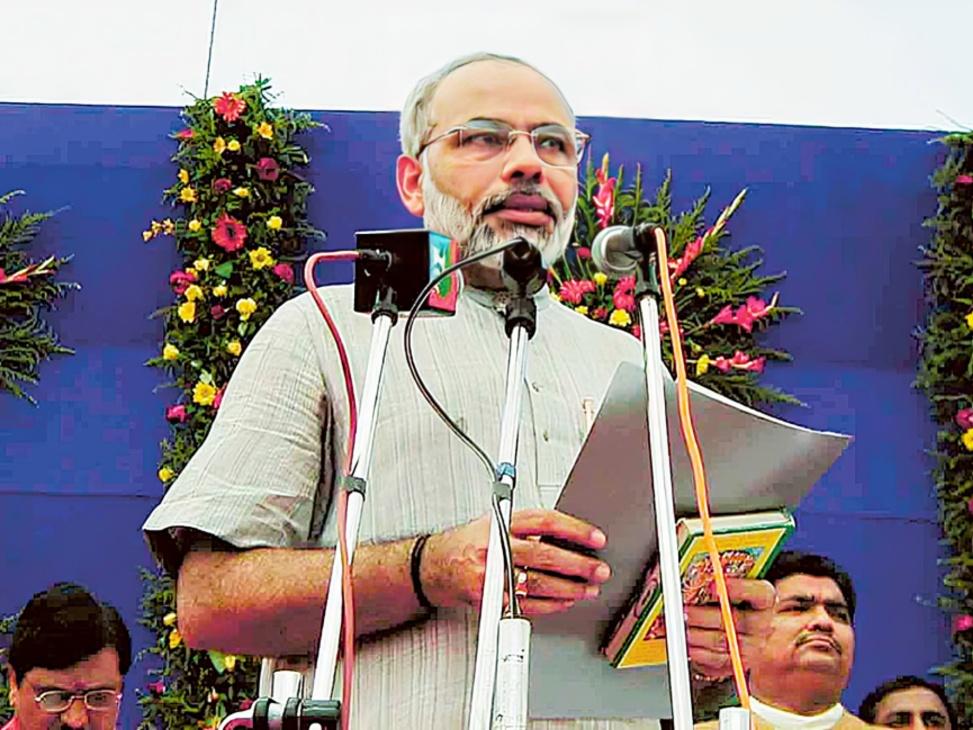
Modi also recalled the journalists who attended his swearing-in ceremony as Gujarat Chief Minister in October 2001.
According to the Prime Minister, several journalist friends travelled to attend the ceremony using their own money and making their own arrangements. He said they had not come to cover the event as part of their professional responsibilities but had attended because of their personal affection and friendship.
Modi remembered meeting some of them after the ceremony and asking why they had not informed him about their visit earlier. He said he could have made arrangements for them if he had known they were coming.
The journalists reportedly replied that they had travelled independently because they wanted to attend the occasion.
The Prime Minister said the gesture made him happy and reflected the personal relationships he had developed with journalists over the years. He used the incident to highlight how professional interactions between political representatives and members of the media could also develop into long-standing personal connections.
From Fax Machines to Instagram Reels
Another major part of Modi's address focused on the transformation of the Indian media industry.
He said he had witnessed the evolution of journalism from the period of traditional press releases to the present era of Instagram reels and digital communication.
Recalling his responsibilities during the early 1990s, Modi said he had been assigned media-related work for two major nationwide political campaigns. At that time, sending a press release was not as simple as it is today. People often had to search for an available fax machine to transmit information to newspapers and other media organisations.
He said he continued handling media-related responsibilities even after moving to Delhi. During those years, the BJP operated from its office on Ashoka Road, where Diwali gatherings and other interactions with journalists were regularly organised.
Modi also recalled that his responsibilities at such events included arranging chairs and welcoming journalists. Although there were fewer cameras and fewer digital communication facilities at the time, he said the warmth of relationships remained strong.
He described the present media environment as significantly different, with almost every individual having access to a personal platform, channel or podcast.
Mobile Phones Have Changed News Reporting
The Prime Minister also discussed how mobile technology has transformed the way news is gathered and reported.
He pointed out that television news organisations previously depended on large outside broadcast vans to cover events and transmit footage. Today, mobile phones can perform many of the functions that once required extensive broadcasting equipment.
According to Modi, smartphones have become an important tool for field reporters, allowing them to capture events, record interviews and share information quickly.
He said that traditional media organisations may find certain aspects of their work easier because of technological developments, but new challenges have also emerged.
The rapid growth of digital platforms has changed how audiences receive information and how journalists compete to deliver breaking news. Independent creators, podcasters and social media users now operate their own platforms, increasing the number of voices participating in public discussions.
Modi also made a comparison with the popularity of cricket discussions in India. He observed that people who once offered opinions about cricket matches in every neighbourhood now frequently act as experts on almost every news development.
Modi Praises Journalists for Their Commitment
During the programme, Modi appreciated journalists for continuing their professional responsibilities even during festivals and other important occasions.
He observed that while many people try to spend time with their families during festivals, journalists often remain occupied with breaking news and reporting assignments.
He thanked media representatives for attending the Diwali Milan gathering despite their busy schedules. He also acknowledged the contribution of reporters who travel to difficult locations to cover emergencies, disasters and other important developments.
The Prime Minister said journalists play an important role in keeping democracy vibrant. He highlighted the importance of communication and the media's ability to bring information to the public.
The gathering also provided an opportunity for Modi to interact with journalists from different generations, including experienced reporters who had covered his early political career and younger media professionals working in the digital news environment.
Modi Completes 25 Years as Head of Government
The Prime Minister's recollections came shortly after he completed 25 years as the head of a government on October 7, 2026.
Modi first took oath as Gujarat Chief Minister on October 7, 2001. He later became Prime Minister of India on May 26, 2014, and has continued in that position since then.
His journey from the Gujarat Chief Minister's office to the Prime Minister's Office has included several major political developments and election victories.
The Diwali Milan event offered him an opportunity to revisit some of the early experiences that shaped his public and political life, particularly his interactions with journalists during his time in the BJP organisation.
His account of the 2001 incident also highlighted the role of political reporting in identifying important developments before their formal announcements.
The Prime Minister's remarks reflected on the changing relationship between politics and journalism, as well as the technological developments that have transformed news gathering and communication in India.