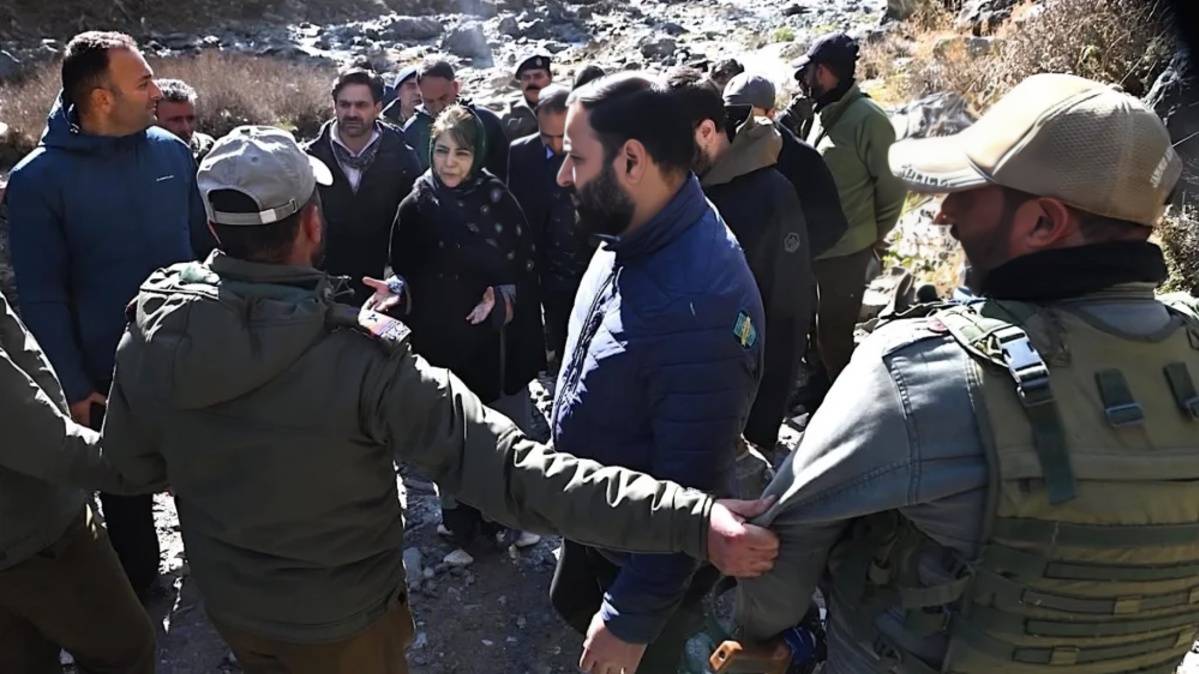
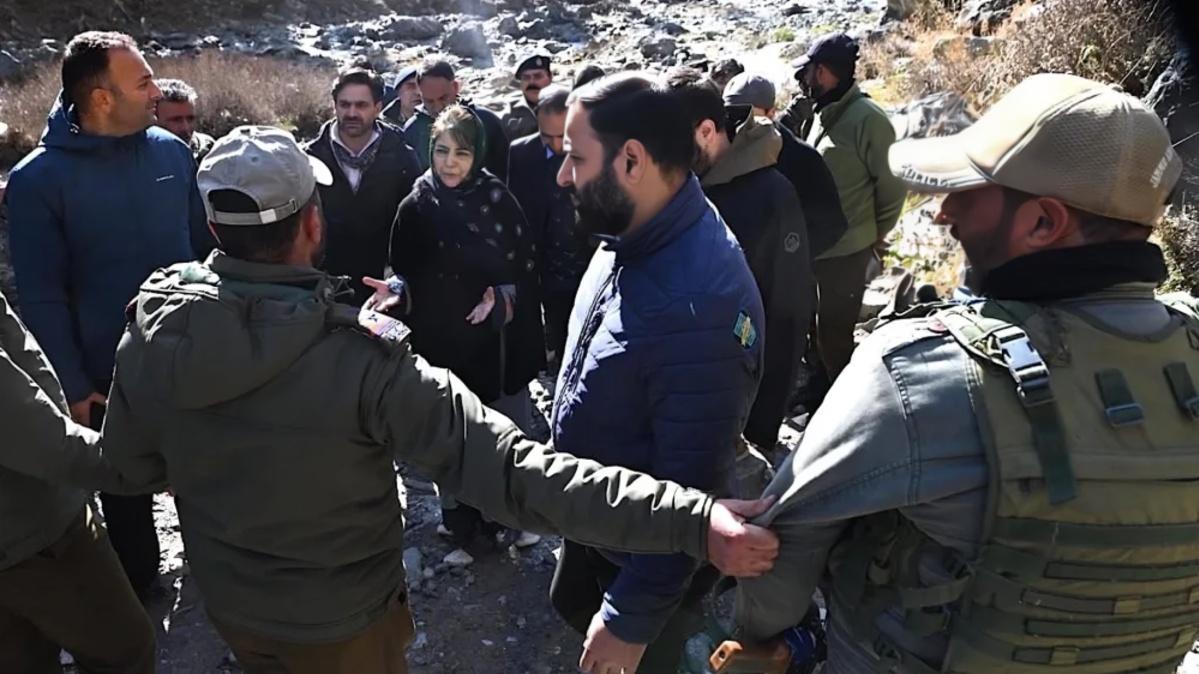
Former Jammu and Kashmir Chief Minister and Peoples Democratic Party president Mehbooba Mufti was prevented from proceeding towards Sheshnag Lake near the Amarnath cave shrine in Kashmir. The development comes amid growing concerns regarding construction activities in the environmentally sensitive Himalayan region.
Political parties and environmental organisations have expressed concern over the potential consequences of infrastructure development near the glacial lake and surrounding mountainous areas. They have called for a detailed scientific assessment to determine whether the ongoing construction activities could affect the ecological balance of the region.
The incident has renewed discussions about the need to balance infrastructure development, environmental conservation and the safety of pilgrims undertaking the Amarnath Yatra.
Environmental Concerns Over Construction Activities
Sheshnag Lake is a high altitude glacial lake situated along the traditional pilgrimage route leading to the Amarnath cave shrine. The surrounding region is characterised by mountainous terrain, glaciers, seasonal snowfall and sensitive natural ecosystems.
Construction activities in such areas require careful planning because disturbances to the natural landscape may affect slope stability, water drainage and local biodiversity.
Environmental groups have raised concerns that extensive construction without adequate scientific assessment could increase ecological pressure on the region. They have emphasised the importance of examining the potential long term consequences before undertaking major infrastructure projects.
However, the actual environmental impact of the ongoing construction activities would need to be established through detailed scientific studies.
Political Parties Raise Concerns
The construction controversy has attracted the attention of several political parties in Jammu and Kashmir. Concerns have been raised regarding the possible environmental consequences of development activities near Sheshnag Lake and the Amarnath cave.
Mehbooba Mufti has drawn attention to the need to protect the environmentally sensitive region. Her attempted visit to Sheshnag Lake has brought further public attention to the ongoing controversy.
Political discussions surrounding the issue have highlighted the importance of transparency, environmental safeguards and scientific consultation when implementing development projects in vulnerable mountainous regions.
The precise reasons for preventing Mufti from proceeding towards the lake and the official position of the authorities require further clarification.
Importance of Sheshnag Lake
Sheshnag Lake holds religious, geographical and environmental significance in Kashmir. Located along the traditional Amarnath pilgrimage route from Pahalgam, the lake is surrounded by high mountain ranges and receives water from melting snow and surrounding natural sources.
The lake is an important landmark for pilgrims travelling towards the Amarnath cave shrine. Its scenic landscape and natural surroundings also contribute to the environmental heritage of the Kashmir Valley.
Protecting such high altitude water bodies is important for maintaining local ecological balance and preserving natural water systems.
Changes to the surrounding landscape could potentially influence water quality, natural drainage patterns and the stability of nearby mountain slopes.
Potential Risks to the Himalayan Ecosystem
The Himalayan region is particularly vulnerable to environmental disturbances because of its geological characteristics, steep slopes and changing climatic conditions.
Unplanned construction, excessive excavation and inadequate drainage management can increase the risk of soil erosion and slope instability in mountainous areas.
Environmental assessments are therefore important for identifying potential hazards before infrastructure projects are implemented.
Climate change has also increased concerns regarding glacier retreat, changing rainfall patterns and extreme weather events across several Himalayan regions.
These factors underline the importance of adopting scientifically informed development practices in environmentally sensitive locations.
Safety of Amarnath Pilgrims
The Amarnath Yatra attracts pilgrims from different parts of India every year. The pilgrimage involves travelling through challenging mountainous terrain, where weather conditions can change rapidly.
Heavy rainfall, snowfall, landslides and other natural hazards can affect travel conditions along high altitude pilgrimage routes.
Infrastructure development may improve accessibility, emergency response and essential facilities for pilgrims when undertaken with appropriate environmental and safety measures.
However, construction that alters natural drainage channels or destabilises mountain slopes could introduce additional risks.
Environmental groups have therefore called for greater attention to the relationship between construction activities and pilgrim safety.
Calls for Comprehensive Scientific Assessment
Concerns surrounding the Sheshnag construction controversy have led to demands for a comprehensive assessment involving qualified environmental scientists, geologists and other relevant specialists.
Such an assessment could examine geological stability, glacial conditions, water drainage, biodiversity and the potential cumulative impact of construction activities.
Scientific studies could also help authorities identify appropriate locations for infrastructure development and recommend measures to reduce environmental risks.
A transparent assessment process would allow policymakers and the public to better understand the potential benefits and consequences of proposed development projects.
Lessons from Environmental Disasters in Himalayan Regions
Environmental concerns surrounding the construction activities have also drawn attention to natural disasters experienced in other Himalayan regions, including Nepal.
Landslides, flash floods and glacial lake outburst floods have demonstrated the vulnerability of mountainous communities and infrastructure to extreme environmental events.
These incidents highlight the importance of disaster preparedness, scientific monitoring and responsible land use planning.
However, comparisons with previous disasters do not establish that similar events will occur near Sheshnag Lake. Location specific scientific evidence is necessary to determine the actual level of risk.
Balancing Development and Environmental Protection
Infrastructure development and environmental conservation are both important considerations in managing pilgrimage destinations.
Improved medical facilities, communication systems, sanitation services and emergency shelters can contribute to the welfare and safety of pilgrims.
At the same time, development activities must account for the ecological sensitivity and geological characteristics of the surrounding region.
Careful planning, environmental monitoring and consultation with relevant stakeholders can help minimise potential damage while supporting essential public infrastructure.
The Sheshnag construction controversy has renewed calls for a balanced approach that prioritises environmental protection and public safety. Further clarity regarding the construction projects, their environmental approvals and the response of the authorities will be important in addressing the concerns raised by political parties and environmental organisations.