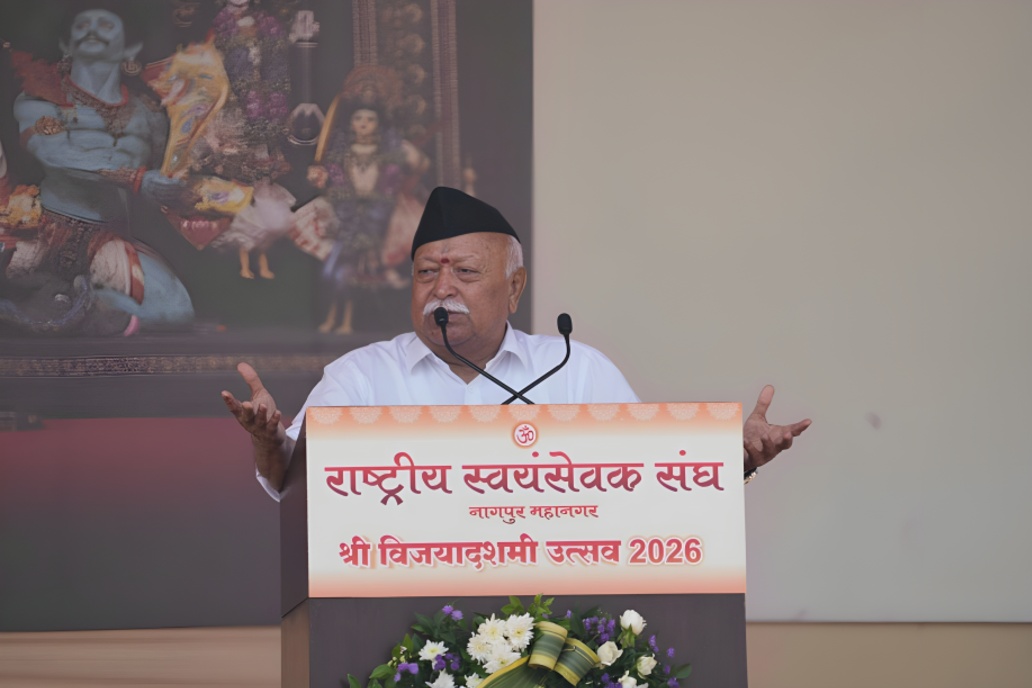
Mohan Bhagwat Warns Protests Could Serve Political Interests and Deepen Social Divisions
Rashtriya Swayamsevak Sangh (RSS) chief Mohan Bhagwat has cautioned that protests seeking a change of government may not necessarily solve fundamental public problems. He warned that demonstrations could become instruments of political interests and deepen divisions in society if their objectives move away from addressing genuine grievances.
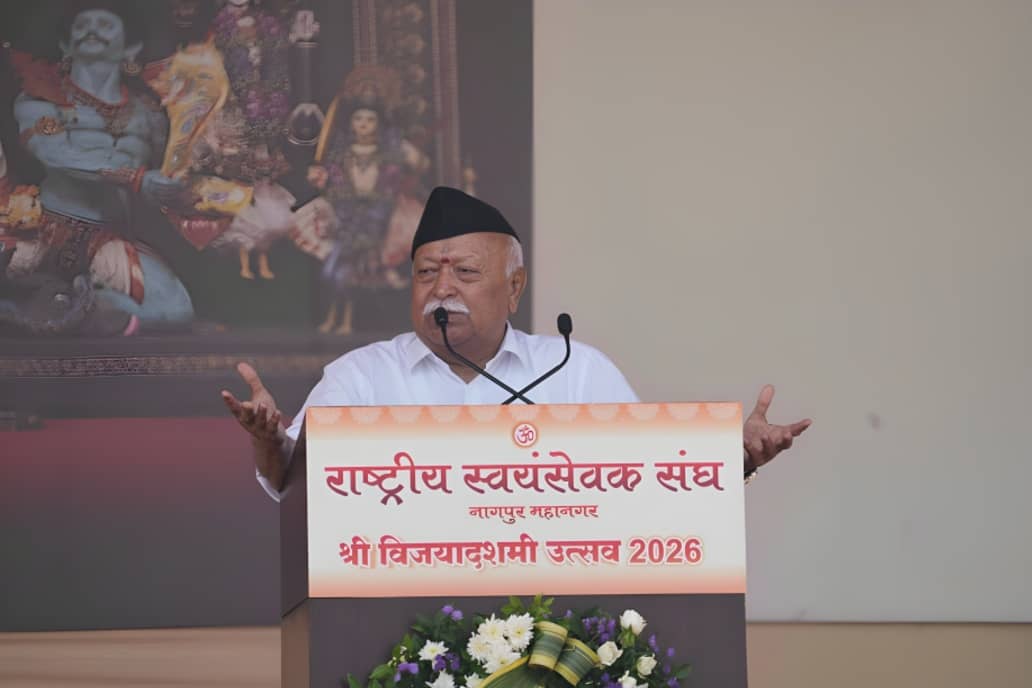
Bhagwat made the remarks while addressing the RSS's annual Vijayadashami gathering in Nagpur on October 20, 2026. His speech covered the role of public movements, national unity, political developments in other countries and the importance of maintaining constitutional and social boundaries during protests.
Bhagwat on the purpose of protests
Speaking about demonstrations in a democracy, Bhagwat said protests are an inevitable part of public life, particularly when people face problems or believe that existing systems are not meeting their needs. However, he stressed that the primary objective of a protest should be to find solutions rather than create further conflict.
According to reports on his address, Bhagwat warned that movements could be diverted from their original purpose when they become driven by hostility towards particular individuals, groups or ideologies. In such circumstances, he argued, political interests could take precedence over the concerns that initially prompted public participation.
He urged those involved in social and political movements to remain focused on constructive outcomes. His remarks highlighted the distinction between raising public grievances and using demonstrations to encourage antagonism or deepen divisions.
References to political developments abroad
During his address, Bhagwat referred to political upheavals in Bangladesh, Nepal, France and Albania. He argued that changing a government or political leadership does not automatically resolve a country's underlying problems.
He suggested that political forces may use demands for regime change to advance their own interests. In his view, the consequences of such developments depend on whether the deeper social, economic and administrative issues are addressed.
Bhagwat also expressed the view that India's growing strength could challenge the interests of some global powers. He alleged that certain external forces might seek to weaken the country by exploiting differences within society. These were claims made by Bhagwat during his speech and should be understood as his stated assessment rather than independently established conclusions.
Call for constitutional conduct
A key theme of Bhagwat's address was the need to respect constitutional limits and maintain standards of public conduct, even when emotions run high. He urged political leaders, protesters and the administration to ensure that their actions did not generate unnecessary bitterness or divisions.
His comments emphasised that democratic participation carries responsibilities alongside the right to express disagreement. Public demonstrations can draw attention to issues, create pressure for action and give citizens a platform to voice concerns. However, Bhagwat argued that they should not become a means of promoting hostility towards people with different political opinions or beliefs.
Respect for constitutional principles and civil public discourse, he said, should remain important regardless of the intensity of a disagreement.
National unity and social harmony
Bhagwat connected his concerns about protests with the broader question of national unity. He warned that disagreements could be exploited when differences of opinion turn into hostility and distrust. In his assessment, this could create an atmosphere of discord and weaken social cohesion.
He called for greater vigilance against efforts that, in his view, might take advantage of internal divisions. He also highlighted the importance of collective responsibility and constructive participation in national life.
His remarks placed social harmony at the centre of his message, arguing that public movements should contribute to addressing problems instead of increasing confrontation.
Significance of the address
The comments came during the RSS's annual Vijayadashami event in Nagpur, an important occasion in the organisation's calendar. Bhagwat used the address to discuss both domestic social concerns and wider political developments.
His observations raise questions about how public protests should balance political demands, peaceful dissent and the pursuit of practical solutions. While Bhagwat warned about demonstrations being used for political purposes, protests can also be an important democratic means of expressing grievances and seeking accountability. The specific circumstances and conduct of each movement remain relevant when assessing its objectives and effects.
Bhagwat's central message was that protests should aim to resolve problems, respect constitutional boundaries and avoid encouraging hostility between communities or groups. He urged political leaders, demonstrators and public authorities to act responsibly and preserve social harmony.
The remarks form part of his broader appeal for unity and constructive public engagement. His allegations about external interference and political motives remain his own assertions, while the wider question of how protests affect society continues to depend on the facts and circumstances of individual movements.